Chile and Peru Face Twin Disasters Across Shaking, Flooded Ground
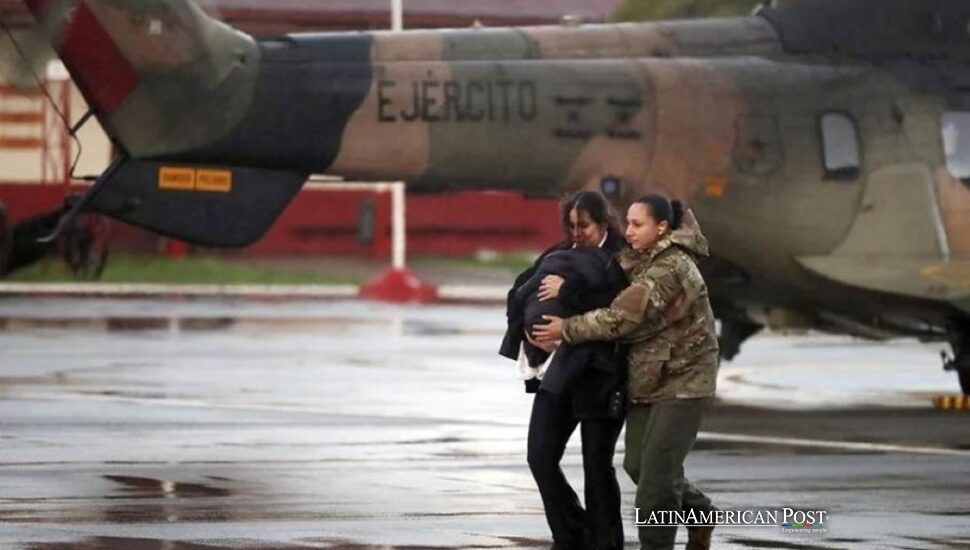
A deadly earthquake in Peru and a sprawling El Niño storm in Chile have exposed how disaster travels through weak housing, rural roads, public services and geography, turning sudden shocks into prolonged tests of state capacity and social inequality today.
Two Emergencies, One Unequal Map
In central Peru, the ground moved first. A magnitude 5.1 earthquake struck Junín on Saturday, followed 17 minutes later by a 3.7 aftershock. By Monday, two smaller tremors had rattled Chupaca again. Fear, however, does not read seismic charts with scientific calm.
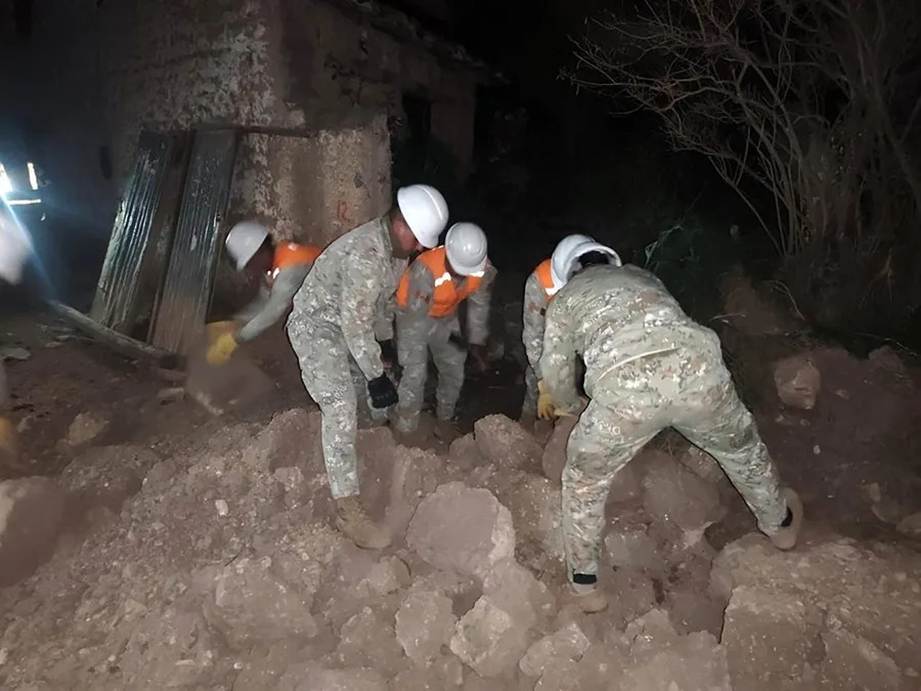
Families in Chongos Bajo had already buried five people, three men and two women. Thirty-two others were injured. Nearly 400 residents were left homeless, while 180 more were officially counted as affected. People slept near cracked walls and waited for engineers to decide whether home still meant shelter.
Peru’s government declared a 60-day emergency in five districts across the provinces of Chupaca and Huancayo. The measure would “accelerate reconstruction and multisector assistance,” the government said in a statement reported by EFE. Medical posts, brigades, temporary classrooms, housing support and heavy machinery were authorized.
The response sounds comprehensive because the damage is intimate and wide. The quake destroyed 52 homes, left 43 uninhabitable and damaged 74. Four schools, three health facilities, two churches, two cultural heritage structures and one kilometer of roadway were also hit.
Those figures describe more than broken masonry. In an Andean district, a damaged road can cut a farmer off from market, a patient from a clinic and a child from school. One collapsed house may shelter several generations. A damaged church can also be a meeting place and archive of communal memory.
The earthquake was moderate in magnitude. Its consequences were not. That gap is the clearest measure of vulnerability.
When Weather Occupies a Country
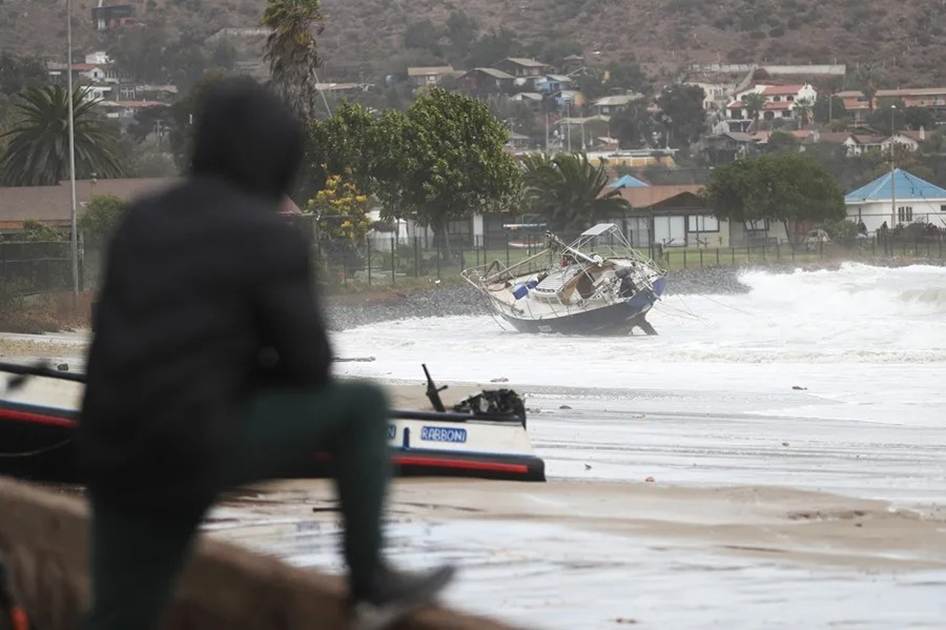
Farther south, Chile faced a disaster with no single epicenter. A violent storm linked to El Niño began in the center-south and pushed northward, eventually affecting 10 of the country’s 16 regions. Rain flooded streets. Rivers rose. Power and water failed. Boats ran aground. Winds reached 160 kilometers per hour, tearing down trees and electrical lines.
Five people were dead by Monday, matching Peru’s toll. At least four others were missing in Coquimbo and Atacama. Yet the scale unfolded differently. Around 100,000 people were isolated in northern communities, and nearly 16,000 homes had been damaged nationwide.
President José Antonio Kast declared a constitutional state of catastrophe across Coquimbo and in Huasco province. “All material and economic resources are available to confront this emergency,” he wrote in a message quoted by EFE.
The declaration gives Chile’s presidency broad authority to mobilize resources and take immediate control of affected areas. It can also restrict civil liberties. That power may speed rescue work, but it carries a familiar Latin American tension. Emergency government can move faster than ordinary bureaucracy, yet concentrated authority still requires scrutiny.
Chile’s disaster is also a lesson in territorial length. The country’s narrow geography often encourages a national imagination centered on Santiago, but this storm stretched across coast, valleys, river basins and dry northern zones. When water arrives where infrastructure was not built to absorb it, the result is not abundance. It is isolation.
The Chilean weather service called the storm one of the most significant episodes in recent years because of its geographic reach and intensity. A system spanning most of the country’s populated spine forces agencies to divide crews, machinery, shelters and political attention across distant communities at once.
Recovery Begins After the Cameras Leave
Peru and Chile are confronting different hazards, but the data point toward the same political truth. Disasters are natural only at the moment of impact. Afterward, losses are sorted by housing quality, road access, income, public investment, and distance from the capital.
The harder test will be coordination. Peru has repeatedly struggled to convert emergency declarations into durable recovery, particularly in rural highland communities where municipal capacity is thin and national attention fades quickly. Sixty days may accelerate deployment, but walls, schools and livelihoods cannot always be restored on a bureaucratic clock.
Chile enters recovery with a developed disaster response system, yet the numbers remain daunting. Sixteen thousand damaged homes mean thousands of inspections, repairs and temporary living arrangements. One hundred thousand isolated people represent not one emergency but many, scattered across places with different roads, water systems and local capacities.
The comparison should not become a contest over which country suffered more. Peru’s concentrated destruction and Chile’s sweeping weather crisis expose different versions of the same regional problem. Infrastructure is usually financed for normal times, while Latin American geography keeps producing abnormal ones.
For families, the distinction is simpler. In Junín, someone stands before a house marked unsafe and wonders where grandparents will sleep. In Coquimbo, a family watches floodwater move through a street that yesterday carried buses and children. In Atacama, relatives wait for news of the missing.
Official numbers will change as assessments continue. What should not change is attention to people whose emergencies outlast the headlines. A rebuilt wall is not recovery if the clinic remains fragile. A cleared highway means little if farmers cannot replace what they lost.
Chile and Peru now face the slower disaster, measured not in magnitude or wind speed but in promises kept. That reckoning begins when the shaking stops, the rain weakens, and the state is asked to stay.
Also Read: When Cartels Become Terrorists: The Dangerous Reframing of Latin America’s Crime Crisis