When Cartels Become Terrorists: The Dangerous Reframing of Latin America’s Crime Crisis
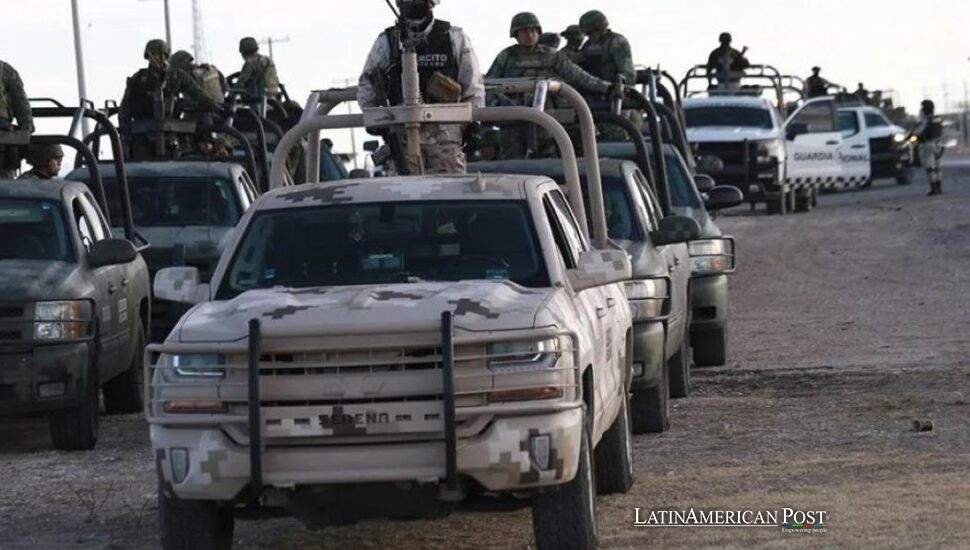
Latin America’s Cartels Become Terrorists as Washington Redefines the Battlefield
Washington’s July 16 designation of two Mexican cartels as terrorist organizations promises sharper financial weapons and tougher prosecutions. Across Latin America, however, the new label risks turning extortion, migration and local corruption into a battlefield where civilians absorb the consequences.
The Label Arrives in Michoacán
In Michoacán, an avocado can leave the orchard carrying a hidden surcharge. Los Viagras has used extortion against an export economy sustained by farmers, packers, and truckers. For people moving fruit through contested territory, payment may not signal allegiance. It may mean the harvest reaches the market.
The United States now calls Los Viagras a foreign terrorist organization. On July 16, Washington placed it in the same legal category as the Juárez Cartel, one of Mexico’s oldest trafficking groups. They joined six Mexican organizations already designated, while gangs from Venezuela, Brazil, Ecuador and El Salvador have entered Washington’s expanding terrorism architecture.
The pairing is revealing. The Juárez Cartel grew around the border opposite El Paso, making geography profitable through drugs, human smuggling, and armed control. Los Viagras emerged around 2014 from the fractured aftermath of Michoacán’s armed self-defense movement, shifting alliances while taxing local commerce and producing synthetic drugs. One is an old border machine. The other is a regional predator born from institutional collapse.
Both use spectacular violence and territorial control. Yet their central purpose is not revolution, religion, or an ideological state. It is revenue. Calling them terrorists does not change what they want. It changes what governments are permitted and politically encouraged to do about them.
The Law Widens Its Net
The designation is powerful, but it is not a declaration of war. It expands material-support prosecutions, immigration restrictions, and financial controls. A parallel designation as a specially designated global terrorist permits the blocking of assets under U.S. jurisdiction. Prosecutors can pursue harsher narcoterrorism charges in cases once treated as ordinary drug crimes.
It does not automatically authorize American troops inside Mexico. Legal analysts note that the Foreign Terrorist Organization statute grants no military permission. Still, law and political imagination are different things. A label built for groups such as al-Qaida can make intervention sound less exceptional, even when the statute provides no such authority.
That possibility strikes a historical nerve. Mexican nationalism was shaped partly through resistance to foreign intervention, and President Claudia Sheinbaum answered the first cartel designations by seeking stronger constitutional protections for sovereignty. Her government argues that cartels are profit-seeking criminal enterprises, not political movements, and that cooperation with Washington cannot become subordination.
The distinction is real, but incomplete. Cartels may not seek the presidential palace. Often, they need only the road, the police commander, the mayor’s silence and the power to decide which business opens. They collect informal taxes, regulate movement, and impose punishment. Terror is a tool, even when ideology is not the engine.
The legal net creates another problem. Reuters reported potential exposure for companies making protection payments and migrants paying cartel-linked smugglers. In a 2024 survey of 218 companies by the American Chamber of Commerce in Mexico, 45 percent reported protection demands. This is not a fringe condition. It is a coercive business environment.
A farmer paying to keep workers alive is not a financier laundering profits. A migrant handing over money under threat is not a political supporter. Material-support cases require proof, but the framework can blur the lines between survival, complicity, and collaboration before a courtroom sorts them out. Those with the least freedom to refuse may face the greatest scrutiny.
When Decapitation Multiplies the Enemy
War vocabulary favors visible victories. A commander was captured. A laboratory burned. A convoy was seized before cameras. Mexico has spent years pursuing such successes, only to watch large organizations splinter into smaller groups fighting over routes, neighborhoods, and municipal budgets.
Los Viagras carries that warning. Michoacán’s self-defense uprising drove out older criminal powers in 2013 and 2014, but the vacuum did not stay empty. New factions, former vigilantes, and shifting alliances competed for territory. Force rearranged the armed map. It did not build trustworthy police, capable prosecutors, or durable local government.
A 2023 study in Science modeled cartels as organizations constantly replacing members lost to arrests and violence. It estimated there were 160,000 to 185,000 cartel members in 2022 and calculated that about 350 recruits a week were needed to prevent a decline. In the model, increased incapacitation alone raised killings, while reduced recruitment produced stronger long-term results.
Those figures are estimates, not a census. Their lesson is harder to dismiss. Criminal markets regenerate when young people see no credible livelihood, witnesses expect no protection, police can be bought, and cases collapse. Counterterrorism can freeze accounts and punish international enablers. It cannot make a municipal prosecutor safe enough to work.
Washington’s regional expansion may produce useful intelligence and sharper financial pressure. It may also create a security order designed in the United States but lived under in Latin American orchards, border towns, and migrant corridors. War language is easier to announce than civilian institutions are to repair.
The test is not whether cartels deserve severity. They do. It is whether the label reduces their capacity to recruit, extort, and replace fallen leaders. In Michoacán, the grower still faces the demand. In Juárez, the border remains valuable. The bank account may become harder to move while the gunman’s local power survives.
Latin America’s criminal groups have acquired coercive power once associated with insurgencies. But fighting them only as armies risks hollowing out the institutions needed to defeat them. When crime becomes war, the state gains a larger arsenal. The civilian closest to the violence may gain another reason to be afraid.
Also Read: Mexico’s Cartels Recruit Teenagers With Jobs That Never Really Existed