Hostages Become Human Shields as Haiti Loses Ground in Kenscoff
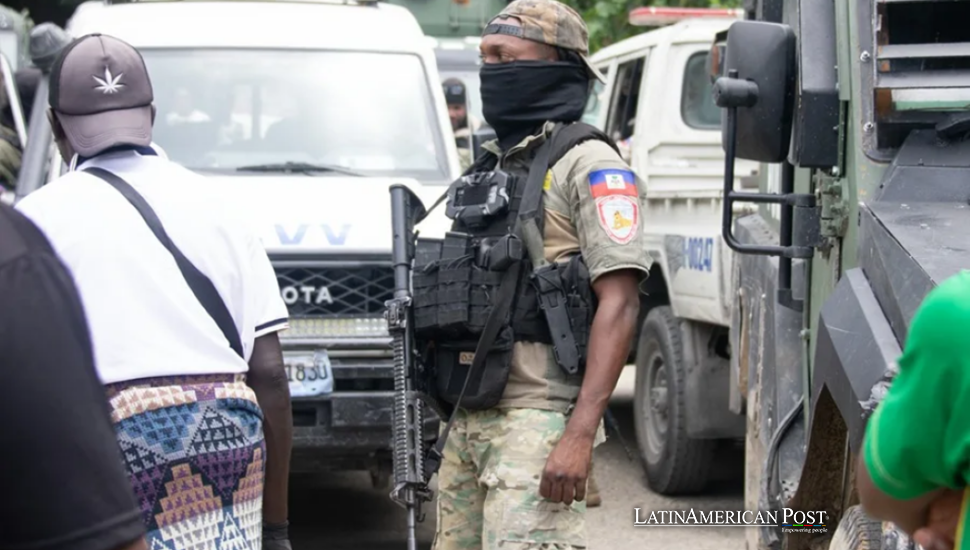
More than sixty civilians are being held under threat of execution after gangs killed forty-seven people in Kenscoff, exposing how Haiti’s armed coalitions now use civilians, territory and terror to negotiate directly with a state struggling to protect its capital.
A Massacre Becomes Leverage
In the video, the hostages are packed together under armed watch. Children, women and men sit together. Several mothers hold babies to their breasts. Their faces suggest they understand that a police operation could decide whether they live.
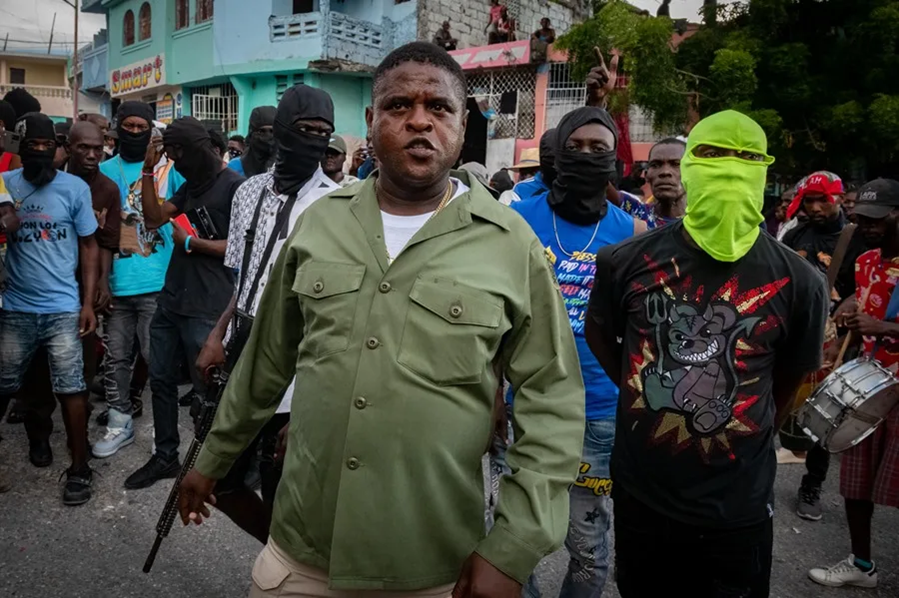
The gang leader known as Didi, or Izo 2, says more than sixty captives will be killed if authorities attack his position in Kenscoff, a hillside commune outside Port-au-Prince. He repeats the threat, phones his men and orders them to kill “everyone” if police retaliate, according to footage described by EFE.
Then he performs a brutal transfer of responsibility. The hostages’ safety, he says, depends not on him but on the state.
That sentence reveals the logic of the spectacle. Didi is not merely hiding behind civilians. He is forcing Haiti’s government into public negotiations. Rescue can be recast as provocation. Inaction can be presented as proof of weakness. The captives become both shields and messages.
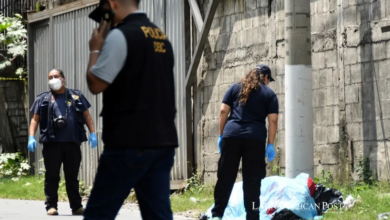
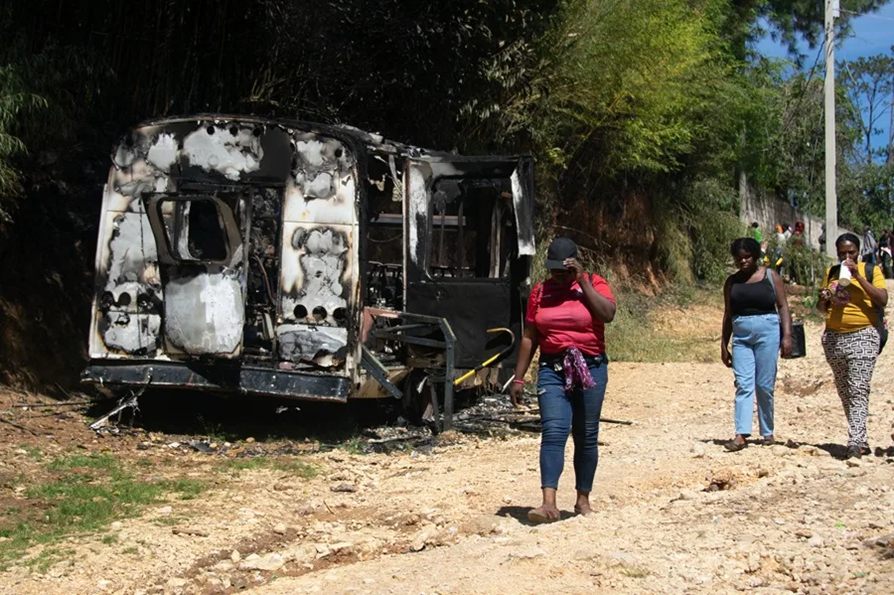
The abduction followed a massacre in the same area before dawn Monday. The United Nations put the death toll at forty-seven and said twenty-two victims were allegedly executed inside a church compound where they had sought refuge. Armed men burned houses and vehicles. Residents later protested what they saw as abandonment by security forces.
First came punishment, then captivity. Violence cleared space, frightened survivors and demonstrated that the gang could decide who moved, who stayed and who died. The hostage video extended that control beyond Kenscoff, turning private terror into a broadcast.
Why Kenscoff Matters
Kenscoff is not an incidental battlefield. Perched above the capital, it overlooks routes toward Pétion-Ville, home to embassies and temporary government offices. It also touches a road linking Port-au-Prince with the country’s south.
Control there offers more than local dominance. It creates leverage over movement, commerce and the political geography of the capital.
The commune has endured a dozen gang attacks since last year. During two months of assaults in early 2025, more than 260 people were killed, about 200 homes were destroyed or burned, and 3,000 residents fled, according to United Nations estimates. Later attacks brought kidnappings, rape, livestock theft and arson.
Those figures describe a campaign, not a burst of random criminality. Armed groups have expanded from neighborhoods in Port-au-Prince toward surrounding territory, testing police defenses and converting roads, ridges and communities into strategic assets.
Didi’s gang belongs to Viv Ansanm, the coalition led by former police officer Jimmy Chérizier, known as Barbecue. The alliance has helped powerful groups coordinate pressure while Haiti’s police remain outgunned and overstretched. Its rise shows how fragmented gangs can behave like a political force without offering public institutions, services or accountability.
Residents have little patience for official assurances. Some demanded the local police chief resign after people were killed only minutes from a station. One man, Coriolan Kendy, stood beside his cousin’s body wrapped in a bloodstained sheet and called his family victims. Another resident pleaded that Kenscoff was living in humiliation.
The prime minister’s office declared that Kenscoff would not be abandoned. Police chief Vladimir Paraison insisted officers had never surrendered. Yet for families fleeing burned homes, sovereignty is measured less by statements than by whether help arrives before the gunmen do.
A Country Held Beyond the Camera
The hostage crisis sits inside a catastrophe whose scale can become numbing. At least 3,050 people were killed and 1,401 wounded by violence during the first six months of the year, according to United Nations figures. About 1.4 million people were displaced last year, an unprecedented total.
Hunger follows insecurity. Roughly 5.8 million Haitians, about 52 percent of the population, face crisis-level food insecurity. When armed groups control roads and neighborhoods, food becomes more expensive, farmers lose access to markets, aid deliveries slow and displaced families lose the income that once kept them above hunger.
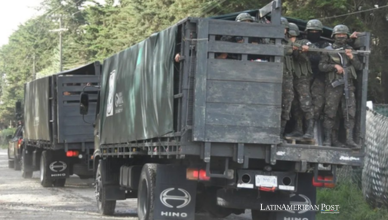
The planned United Nations-backed Gang Suppression Force is expected to build toward more than 5,500 personnel. But numbers alone will not answer the dilemma visible in Kenscoff. A force must confront armed groups without treating captive civilians as acceptable losses, while establishing enough lasting control that residents can return instead of fleeing after each operation.
The violence also shadows plans for presidential elections in December, Haiti’s first in a decade. Elections require more than ballots. Candidates must move, officials must work, voters must reach polling places and results must carry authority beyond fortified buildings. A country where gangs can close roads and hold communities hostage cannot easily convert voting into effective rule.
That is the darker meaning of Didi’s claim that the captives’ fate belongs to the state. He has placed the government inside an impossible choice and called the trap accountability.
But the hostages are not bargaining pieces. They are mothers feeding infants, young people staring into a camera, families caught in a struggle over territory they did not create. Haiti’s crisis will not be measured only by whether they are rescued. It will be measured by whether Kenscoff’s people can return home without waiting for the next armed man to decide who is allowed to live there.
Also Read: In Colombia, Armed Groups Recruit Children Through the Endless Scroll