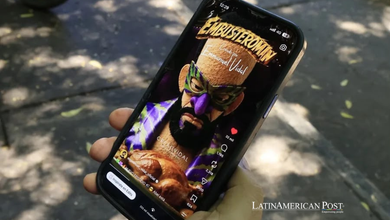
In Colombia, Armed Groups Recruit Children Through the Endless Scroll
Colombia’s armed groups are turning TikTok and Facebook feeds into recruitment corridors, using coded posts and recommendation algorithms to find vulnerable children. Human Rights Watch says platforms remove flagged material, yet their systems keep steering users toward more recruiters online.
The Recruiter Inside the Feed
The title of the Human Rights Watch report presented Monday in Bogotá sounded like the last line of a nightmare: “I Thought I Would Never See My Mother Again.”
Behind it were roughly 1,500 cases of children recruited by armed groups in Colombia since 2021, according to the organization. Juanita Goebertus, Human Rights Watch’s Americas director, told EFE that social media companies are not doing enough to stop illegal organizations from using their platforms to reach minors.
That gap matters because recruitment no longer has to begin on a rural road, outside a school or through a stranger already known in the community. It can begin privately, on a phone, with a video polished to look like adventure, belonging or power. The child does not initially search for the National Liberation Army, former FARC dissident groups or the Gulf Clan. The names may never appear.
Human Rights Watch researchers found accounts using emojis, hashtags and coded phrases that made armed-group content easy for young users to discover while keeping the organizations themselves partly concealed. Once a researcher followed some of those accounts, the platform’s recommendation system began suggesting others that also encouraged users to join armed groups.
The finding shifts the responsibility beyond individual posts. A recruiter uploads the bait, but the algorithm can widen the path.
Goebertus urged TikTok and Facebook to change their recommendation systems so they cannot continue facilitating criminal conduct and, when it involves children under 15, constitutes a war crime. Her point was not that software replaces the armed actor. It is that a platform designed to predict attention may become an unpaid guide from one recruitment message to the next.
From Coded Posts to Physical Control
After Human Rights Watch alerted Facebook and TikTok, the companies removed the identified material. Yet the posts had remained online for more than a month, Goebertus told EFE. More troubling, the algorithm continued recommending other accounts to the researcher afterward.
That sequence exposes the weakness of purely reactive moderation. Removing one video treats the visible symptom. It does not necessarily alter the machinery that recognized the user’s interest and searched for similar content.
For Colombia, this is not an abstract technology debate. The country’s armed conflict has always depended on geography, especially rivers, roads and territories where the state appears intermittently. Social media adds another kind of territory, one without checkpoints. Armed groups can enter a child’s room through a screen.
Mathew Charles, director of the Mi Historia foundation, offered an important correction during the report’s presentation at the University of the Andes. “Digital recruitment does not exist,” he said, according to EFE, because the process ultimately moves into the physical world.
His phrase rejects the comforting idea that online harm remains online. The videos are the approach. Algorithms help repeat it. Then comes direct contact, followed by an invitation to meet. The final act occurs in a real place, where a child can be separated from family and absorbed into an armed structure.
Effective moderation in Colombia requires specialists who understand the shifting symbols, aliases, and language used by the ELN, dissident factions, and the Gulf Clan. A universal ban written at corporate headquarters is weak if local signals remain legible to children and invisible to enforcement teams.
Children Younger Than the Statistics
The age data makes the failure harder to dismiss. Between 2020 and 2025, armed groups most frequently recruited children aged 15 and 16, according to Ombudsman’s Office figures included in the report. Defense Ministry data places the average recruitment age at 15 for both boys and girls between January 2016 and October 2025.
An average can hide the youngest victims. More than 30 percent of reported cases involved children between 10 and 14. Child protection officials also told Human Rights Watch they were learning of growing numbers of even younger recruits, including children only 9 or 10 years old.
At those ages, the language of informed choice becomes almost meaningless. A child may understand the promise in a video- money, identity, protection, excitement- without understanding the discipline, violence and loss of freedom behind it. The armed group controls the information at the moment of approach, and the platform rewards whatever keeps the child watching.
Ombudswoman Iris Marín said the government must address recruitment risks while placing victims at the center of its response. She emphasized, according to EFE, that everyone subjected to recruitment should be able to obtain administrative reparations without barriers.
That demand reaches beyond rescue. Children who leave armed groups can encounter suspicion and institutions that treat them first as security problems rather than victims. Repair requires education, psychological support and a route back into civilian life.
Colombia’s digital recruitment crisis therefore has three fronts of responsibility. Armed groups commit the crime. Technology companies can amplify the approach. The state must prevent recruitment and repair the damage without forcing survivors through another maze.
The phone is not the battlefield. But it has become one of its entrances. Until platforms redesign the systems that repeatedly lead children toward recruiters, taking down a flagged account will remain what it is now: a door closed after the corridor has already filled.
Also Read: Colombia Fights Wildfires While Tolima Counts the Cost in Ash