Argentina Finds Malvinas Leverage in Trump’s New Atlantic Power Game

Donald Trump’s suggestion that Washington could reconsider its Malvinas position gives Javier Milei a diplomatic opening. Still, it also reveals a harsher reality: Argentina’s sovereignty claim is becoming leverage inside a wider struggle over NATO, Atlantic routes, and American power.
The Sacred Cause Meets Transactional Washington
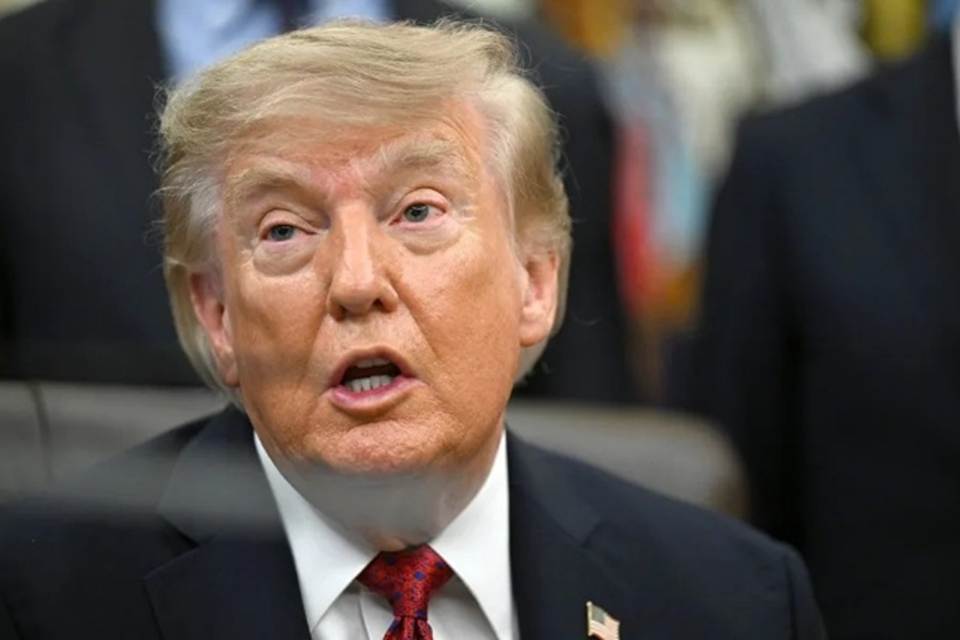
Javier Milei heard more than ambiguity in Donald Trump’s answer. When the American president said he reviews every position, including Washington’s stance on the Malvinas, Milei returned to language Argentines know by heart. The islands, he said in an interview reported by EFE, are the country’s “most important and sacred” cause. Trump had not endorsed Argentina’s claim. He had merely declined to close the door.
The distinction matters. Washington recognizes British administration of the archipelago while taking no position on sovereignty. Days before Trump’s comment, the U.S. ambassador in Buenos Aires said that neutrality had not changed. A presidential review is not recognition or mediation. It is uncertainty inserted into a dispute where every word is examined for movement.
Milei has argued that alignment with the United States is the key to recovering the islands peacefully. Argentina, he says, can become Washington’s trusted partner near the passage between the Atlantic and Pacific. The pitch recasts the Malvinas from a historic grievance into a security asset. Milei is wagering that proximity to power can achieve what decades of resolutions could not.
Yet Trump’s interest appears rooted less in Argentine decolonization than in leverage over Britain. British reporting described the Malvinas question as one possible instrument for pressing London toward NATO’s 5 percent defense spending goal. If so, Argentina’s sacred cause has entered Washington’s bargaining inventory. A claim born from nineteenth-century dispossession and the trauma of 1982 may be useful to the White House chiefly as a threat against another ally.

A Latin American Cause Goes Bilateral
For Latin America, the shift reaches beyond Buenos Aires. The Malvinas claim has long survived the region’s ideological swings. Governments divided over markets, Cuba, Venezuela, or Washington have repeatedly supported negotiations between Argentina and the United Kingdom. The United Nations decolonization process has also maintained its call for a peaceful solution through renewed talks. That multilateral history is more durable than one president’s favor.
Milei’s approach could produce a symbolic breakthrough, but it also risks shrinking a regional sovereignty question into a favor exchanged between leaders. If Washington changes course because Trump admires Milei, dislikes London’s defense spending, or wants a reliable South Atlantic partner, the precedent may suggest that territorial claims advance only when useful to the hemisphere’s dominant power.
Argentina has seen this hierarchy before. During the 1982 war, the Reagan administration initially tried to mediate between a Latin American government and a close NATO ally. When diplomacy failed, the United States supported Britain. The conflict killed 649 Argentines, 255 Britons, and three islanders. For families carrying photographs of young conscripts, American neutrality has never felt entirely neutral.
Trump’s willingness to unsettle that Atlantic architecture is historically significant, but it is not the same as adopting Argentina’s legal case. His pressure may weaken London’s confidence in Washington. It could also harden Britain’s refusal to negotiate if the islands appear to be punishment for an unrelated NATO dispute.
The islanders remain the hardest political fact. In a 2013 referendum, 99.8 percent of voters chose to retain the islands’ status as a British overseas territory. London treats that result as self-determination. Buenos Aires rejects the referendum as a mechanism for deciding sovereignty and emphasizes territorial integrity and bilateral negotiation. A U.S. shift would not dissolve that collision of principles.
The Opening Could Become a Trap
Inside Argentina, Milei has gained something immediate. He has linked his relationship with Trump to an issue that crosses party lines. The symbolism deepened after Argentina’s soccer team displayed a “The Malvinas are Argentine” banner following its World Cup semifinal victory over England. Football turned doctrine into popular theater. Trump’s remark let Milei suggest that his alignment was moving.
But personal diplomacy is volatile capital. Trump can review a position, threaten a partner, or reverse emphasis without building a policy that survives his administration. Britain can raise defense spending without conceding anything. A successor in Washington can restore familiar language. Argentina would then discover that the leverage was always American.
The real test is formal action: an explicit U.S. call for sovereignty negotiations, support for renewed United Nations mediation, or sustained pressure on London. Anything less may remain political theater. Even a stronger American tilt would only shift the balance at the negotiating table, assuming Britain agreed to sit there.
For Latin America, the warning is clear. A regional claim can benefit from fractures among great powers, but it should not become dependent on them. Argentina has an opening because Washington’s bond with London has become more transactional. That makes the moment both valuable and dangerous.
Milei may be right that alliances create opportunities. He would be wrong to confuse borrowed leverage with recovered sovereignty. The Malvinas cause will be strengthened only if Argentina converts Trump’s ambiguity into durable diplomacy, preserves regional support, and addresses the people living on the islands. Otherwise, a sacred national demand will become one more chip on somebody else’s Atlantic table.
Also Read: Colombia Cannot Bomb Child Recruitment Out of the Jungle Alone