Colombia Cannot Bomb Child Recruitment Out of the Jungle Alone
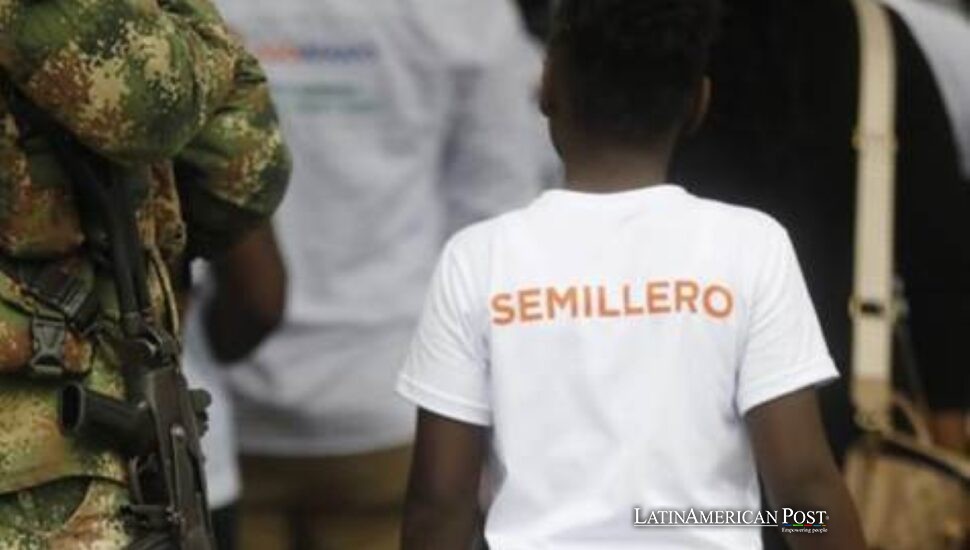
Colombia’s renewed air war in Guaviare promises security through overwhelming force. Yet the bodies of recruited teenagers expose a harder truth: a state does not defeat armed groups by accepting the same children those groups stole as expendable battlefield losses.
The Forest Keeps the Receipts
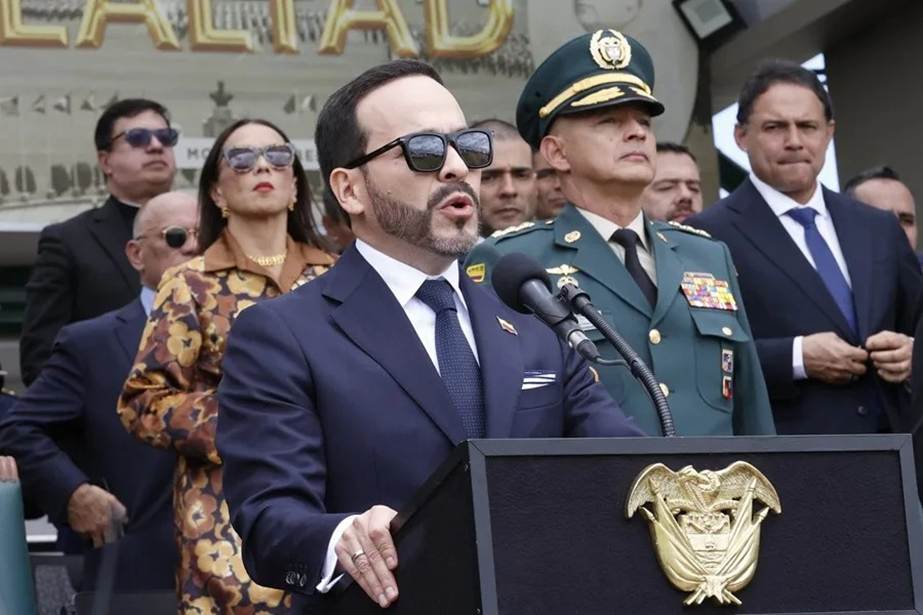
In Guaviare, numbers arrive before names. President Abelardo de la Espriella announced that Operation Azarías left 20 members of the Carolina Ramírez structure dead, five captured and two minors “recovered.” EFE reported the target was a faction tied to Iván Mordisco, commanded by alias El Tigre or Pintado. The weapons, territorial reach, and attributed attacks make the threat plain. Colombia is not confronting an invented enemy.
But another operation in the department has made the government’s victory language harder to hear. Operation Amón, near El Retorno, killed ten people. Forensic identification found three were children, two aged 15 and one 16. Another minor reportedly died in an earlier Catatumbo strike. Their ages became certain only after the bodies reached laboratories in Florencia and Villavicencio. Military certainty came first. Childhood was discovered afterward.
Armed organizations that recruit children carry the first and heaviest guilt. Recruitment is not a rustic rite of passage or side effect of rebellion. It is coercion, exploitation, and territorial control. Commanders who draw teenagers into camps, train and arm them, then place them near military objectives should be investigated up the chain, not merely denounced.
Still, the recruiter’s crime does not cancel the state’s duty. It intensifies it. International humanitarian law requires distinction, proportionality and feasible precautions. Children affected by armed conflict receive special protection, and the ICRC says parties must take feasible precautions in determining whether someone is a civilian and directly participating in hostilities. Colombia’s Constitutional Court treats recruited minors under 18 as victims.
A recruited adolescent may, depending on verified conduct, lose protection from direct attack while directly participating or performing a continuous combat function. That is the hard legal reality. Yet it does not make childhood irrelevant or erase the duty to verify, reassess, and choose a less harmful feasible alternative. The law does not ask commanders to pretend rifles are toys. It asks them not to pretend everyone near a rifle is targetable.
A Thirty Percent Warning
The most revealing number in Operation Amón is not ten. It is three. Children represented 30 percent of those killed. That is not incidental harm at the edge of a large formation. It is a warning that the camp’s composition, the intelligence, or the assumptions behind authorization required more scrutiny.
The longer record makes partisan excuses impossible. Figures cited in the reporting behind this case attribute 367 bombing deaths to the Iván Duque administration, including 42 minors, and 458 to Gustavo Petro’s, including 62 minors. In those counts, children made up about 11.4 percent under Duque and 13.5 percent under Petro. Combined, 104 of 825 people killed were minors, roughly one in eight.
That continuity matters. Petro’s “total peace” did not prevent children from dying in air operations, including a Guaviare strike that killed seven minors between 12 and 15. De la Espriella’s hardline turn does not become lawful because it is more candid about force. A human rights standard that changes with the president is not a standard. It is party loyalty wearing humanitarian language.
Guaviare exposes an old Colombian imbalance. Armed groups recruit where the civilian state is thin, opportunity scarce, and distance shields criminal authority. Then the national state arrives at its most powerful and least intimate, from the air. Colombia pays for institutional absence with military urgency. A bomb may destroy a camp. It cannot replace a school, protect a family, investigate a recruitment network, or give a teenager a credible exit.
Blaming only the armed group, though morally satisfying, is strategically weak. It treats recruited children as proof of enemy depravity but not as intelligence the state must incorporate. Save the Children argued that possible child presence must be anticipated during intelligence and planning, not discovered in the forensic balance afterward. The two minors recovered alive during Operation Azarías show military pressure and child protection are not opposites. Planning, timing and control can make rescue possible.
Security Measured by Who Comes Home
Colombia needs a doctrine of double caution for attacks on camps in regions known for child recruitment. That means a higher authorization threshold when intelligence indicates minors may be present, mandatory reassessment immediately before weapons are released, and cancellation when age, role or target composition remains materially uncertain. Commanders should document why capture, containment, surveillance or a ground operation was not feasible.
When a child dies, an independent review should follow automatically. The government should publish a redacted account of target verification, expected military advantage, civilian harm estimates, alternatives considered, and precautions taken. Secrecy may protect sources and tactics. It should not protect weak reasoning. “All legal standards were met” is a conclusion, not public accountability.
Success must be measured differently. Body counts reward visible force. Better measures include recruiters captured, children removed alive, surrender channels opened, financing networks dismantled, communities protected, and territory held by civilian institutions after troops leave. The dead cannot defect, testify, or identify who recruited them. Rescued children can expose the machinery, provided they are treated first as victims rather than intelligence trophies.
De la Espriella is right that Colombia cannot offer endless negotiations to armed groups that use talks as cover. His opponents are right that the state cannot normalize dead children as the unavoidable price of resolve. Those positions are not mutually exclusive. Mature security policy lies between rhetorical absolutes: relentless pursuit of recruiters, disciplined force against verified military objectives, and an operational presumption that a stolen childhood remains worth saving.
The question is not whether Colombia should defend itself. It must. The question is what kind of state it becomes while doing so. A republic proves its strength not only by reaching a camp hidden beneath the jungle canopy, but by recognizing who was taken there, who can still be brought home, and whose life cannot be written off as someone else’s crime.
Also Read: Colombia and Ecuador Court Cartels While Washington Courts the Border