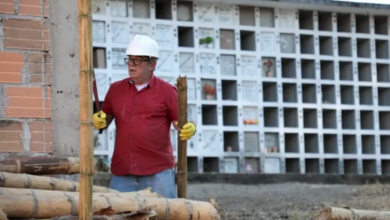
Colombia’s Earthquake Exposes Buenaventura’s Fault Lines Beyond the Shaking Ground
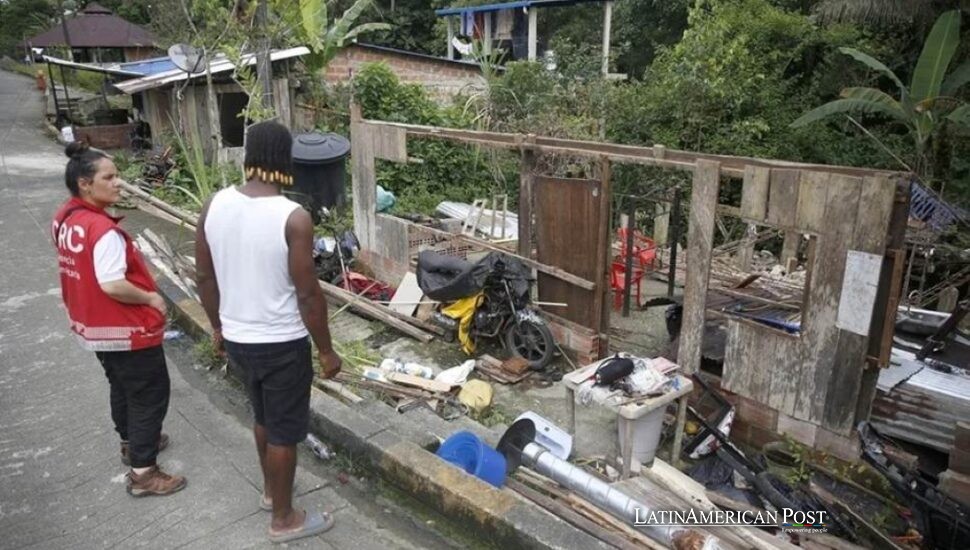
After a 7.4-magnitude earthquake shattered homes and schools in Buenaventura, aid reached communities already living without reliable water, education, or security, revealing how Colombia’s largest Pacific port can power national commerce while its rural families remain dangerously abandoned and exposed.
Aid Arrives Where the State Rarely Does
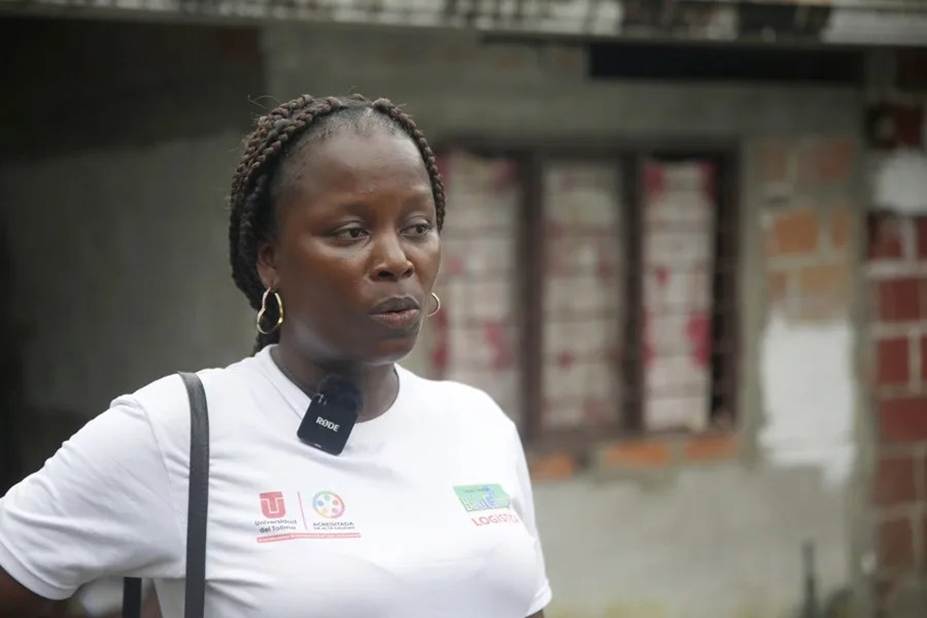
Maricruz Angulo smiled when the first humanitarian supplies reached Bajo Calima. Then the smile disappeared. She lowered her voice, looked toward the vegetation, and warned that armed men were still nearby.
Three weeks after the Aug. 10 earthquake, residents of rural Buenaventura were receiving food while calculating another danger, one older than the quake.
Angulo coordinates health services for the Bajo Calima Community Council, an Afro-Colombian organization linking seven villages, including La Estrella, Las Brisas, and Crucero. These are settlements reached by dirt roads and river routes, where the state often appears late, briefly, or in uniform.
The earthquake magnified every absence. In Buenaventura, 26 people died, 476 were injured, and 38,175 were affected. Of 9,362 damaged homes, 4,265 were declared uninhabitable. Nearly 46 percent of the houses counted as damaged were unsafe.
With roughly 320,000 residents, the district saw almost 12 percent of its population directly affected. That is not a narrow emergency. It is a civic rupture in the city that anchors Colombia’s Pacific trade while many surrounding communities lack dependable water, schools, jobs, and roads.
“After the earthquake, it is not the same,” Angulo told EFE. “We worked our whole lives to have our little house, and today we are left with practically nothing.”
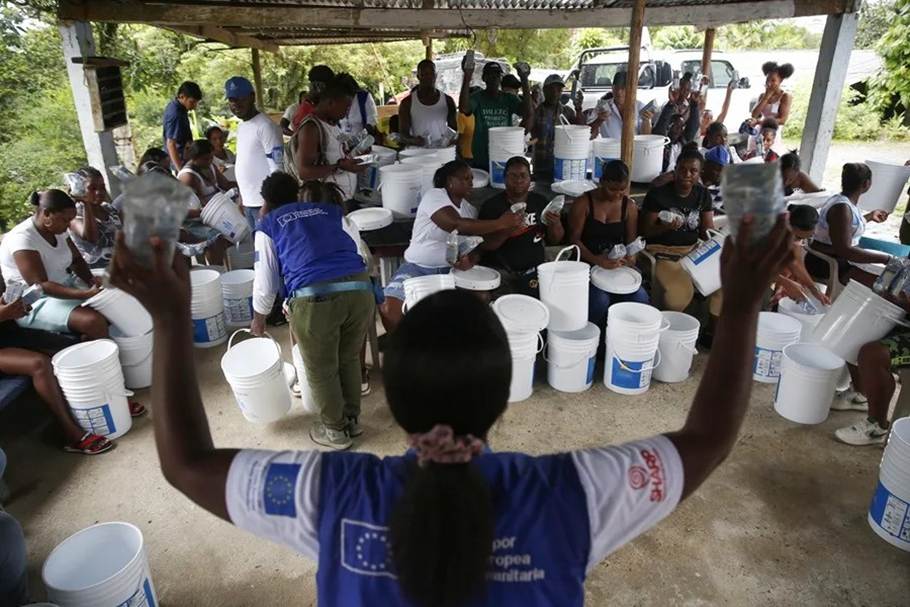
The Sharp Consortium, financed by the European Union, brought the assistance. María Alejandra Celis, emergency manager for the Danish Refugee Council in Colombia, told EFE that hard-to-reach communities were already highly vulnerable. The earthquake made that condition worse.
Families collect rainwater because pipes do not reach them. Some storage tanks cracked during the quake. Food began running short. A disaster lasting seconds damaged systems residents had built over years to compensate for official neglect.
The Ground Shook Beneath an Older War
Angulo pointed down a dirt path through dense vegetation. Armed groups had planted flags farther ahead, she said. Her voice dropped because conflict has its own acoustics. People learn when to speak and which names remain unsaid.
FARC dissident factions and the National Liberation Army operate around Buenaventura, alongside Los Espartanos, Los Shottas, and other criminal structures. Their competition turns rivers, roads, and neighborhoods into strategic corridors. For civilians, territory is the path to school, the route to a clinic, and the passage humanitarian workers must cross.
Celis described the settlements to EFE as facing a double crisis. Even that sounds too modest. The earthquake landed on top of armed control, unemployment, weak education, deficient services, and generations of racialized exclusion along Colombia’s Pacific coast.
Buenaventura embodies a national contradiction. Containers, imports, and exports move through its port with logistical precision. Families beyond the urban center may wait years for basic infrastructure. The disaster did not create vulnerability. It audited it.
Norma Rodríguez knows how one emergency can settle inside another. Forty years ago, armed conflict drove her from Tolima. She rebuilt her life in La Estrella. Now the house that received her after displacement has cracked walls, separated columns, and a sunken floor.
Rodríguez told EFE she had never experienced anything like the earthquake. The aftershocks left psychological wounds, as they did for others nearby. Still, residents remain inside damaged homes because there is nowhere else to go. Risk becomes shelter when every alternative is worse.
This is the hidden arithmetic of displacement in Colombia. A family may flee one region, spend decades constructing stability elsewhere, then lose it without insurance, savings, or a reliable safety net. Recovery cannot mean only roofing sheets and cement. It must recognize lives already rebuilt once.
When a School Roof Becomes the Future
In Las Brisas, the only school lost its roof and part of its walls. Desks sat beneath rubble, and children stopped attending classes. Across Buenaventura, 119 educational sites were damaged, six collapsed, and five faced imminent danger.
Rural communities in Bajo Calima already lack secondary education. Students who want to continue must travel to urban Buenaventura, adding cost, distance, and exposure to armed territorial control. Now even primary education has been interrupted.
For families, a damaged school is not one line on an infrastructure inventory. It is where children spend hours away from recruitment pressures, where meals may be available, and where a different future can still be imagined.
Fernando Advíncula, a Las Brisas resident, told EFE that families had struggled for decades to build their homes. Losing everything “in the blink of an eye,” he said, was difficult to comprehend. The school’s destruction similarly removes one of the few institutions connecting the village to possibilities beyond survival.
Colombia’s response will be judged by whether reconstruction reaches these roads after national attention moves elsewhere. Emergency kits matter. So do structural inspections, trauma care, safe housing, repaired water systems, classrooms, teachers, and guarantees that armed actors cannot control aid.
Angulo said residents continue to live in fear but remain because they have nowhere else. Children still play on dirt streets. Damaged homes await evaluation. Armed groups remain.
Buenaventura’s port tells the world Colombia is connected. Bajo Calima asks who is connected to Colombia. The earthquake opened walls, collapsed roofs, and exposed a national foundation weakened long before the earth moved.
Also Read: Mexico’s Influencer Killings Expose Cartels’ Deadliest Algorithm in Plain Sight