Fishermen Battle Oil Spills As Venezuela Fights for Petroleum Revival
Venezuela’s oil revival promises prosperity, but Lake Maracaibo’s fishermen face ruined nets, longer trips, and unreliable refrigeration. Their struggle raises a harder question: will recovery repair decades of damage, or will coastal communities pay for another industry’s expansion?
The Price of Staying Afloat
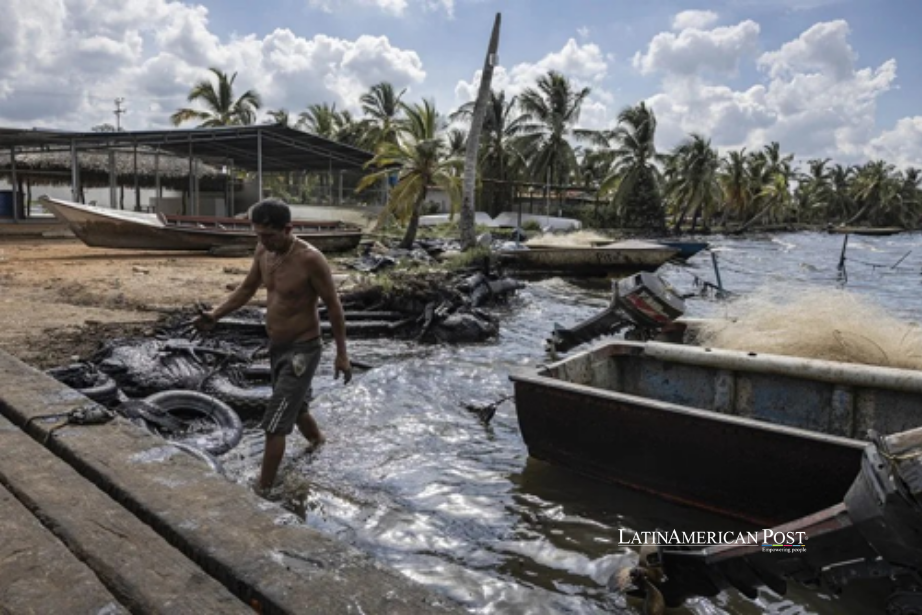
Medardo Hernández has a measure of Venezuela’s oil revival that never appears in an export forecast: how much gasoline it takes to clean his feet. “You need more gasoline to get the oil off your feet than to go out in the boat,” the 76-year-old fisherman told EFE.
His bitter comparison describes a livelihood working against itself. Fuel should carry him toward a catch. Instead, some goes toward removing the residue of another industry. Hernández said fishermen now travel farther from shore to escape spills and protect their nets.
Miguel Ruiz, 73, said the cost of replacing nets and other equipment runs from $3,000 to $4,000, he told EFE. That is not simply an expensive fishing trip. It is the potential loss of the equipment needed to earn anything on the next one. Damaged gear can turn an environmental incident into a household financial emergency before anyone calculates the fish lost.
Then comes the electricity. Fishermen report daily outages lasting six to seven hours, equivalent to roughly a quarter to three-tenths of each day. Ruiz told EFE that unreliable refrigeration forces them to adjust what they keep or buy ice for their coolers.
The percentage does not translate directly into an equivalent loss of sales. Timing matters. An outage when the catch arrives can be more damaging than one before departure. But unreliable storage narrows their choices: pay to preserve the fish or move it quickly, potentially sacrificing the freedom to wait for a better price.
The lake has become expensive before departure and uncertain after arrival. Neither burden appears in a tally of barrels exported.
A Recovery Running Through Broken Pipes
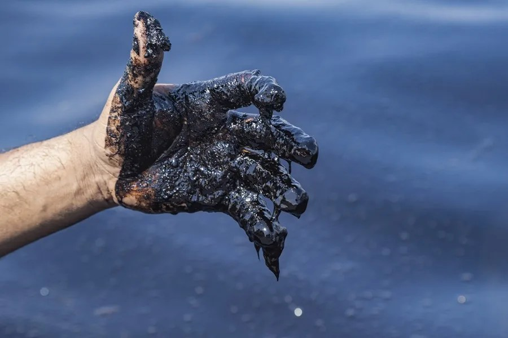
Yohan Flores, Zulia director of the Azul Ambientalistas foundation, told EFE his organization had recorded 36 broken pipelines, with spills affecting more than six municipalities and coating over 10 kilometers, about six miles, of coastline. He also reported gas leaks. EFE photographs taken in Bachaquero show oil coating chickens, the contamination reaching well beyond fishing equipment.
Those figures describe a geographically dispersed problem, not merely one dirty beach. They do not establish how much oil escaped, how long each rupture remained open, or the total financial damage. A pipeline count cannot substitute for a spill inventory. It does, however, suggest that cleaning a visible stretch of shoreline is only part of the work required.
Flores links worsening spills in 2026 to increased petroleum activity after agreements with Washington, against a background of deteriorated infrastructure. That is his assessment, not an engineering finding that assigns responsibility for every leak. The distinction matters: investigating the recent damage requires identifying which installations failed and who operated them.
Yet blaming decades of neglect cannot become a permanent exemption from responsibility today. Restarting production means confronting the condition of the equipment that production must pass through.
EFE found local fishermen hired to clean up the oil. Flores said the response lacked sufficient machinery and technology. The men whose work is disrupted are thus being paid to help remove the disruption.
That may provide welcome income. It is not necessarily compensation for ruined equipment or interrupted fishing. Cleanup wages purchase labor; compensation addresses losses. Calling both recovery risks hiding the difference.

Whose Wealth, Whose Cleanup?
The diplomacy has moved faster than the repair work described along the shore. After U.S. forces captured Nicolás Maduro in Caracas in January, interim President Delcy Rodríguez shifted relations toward cooperation with Washington, opening the way for new energy agreements.
President Donald Trump’s August announcement concerned access to fields containing about 65 billion barrels, slightly more than one-fifth of Venezuela’s reported reserves of more than 303 billion barrels. He presented the agreement as more than doubling American oil reserves. Venezuela subsequently insisted that ownership of its underground resources remained national.
Those competing descriptions deserve separation. Access to Venezuelan deposits does not physically relocate them to the United States. Nor are reserves the same as extracted oil, immediate export income, or money available to repair a damaged net.
This is where the grand bargain meets Zulia’s smaller, harsher arithmetic. A government can anticipate future petroleum revenues while a fisherman must replace damaged gear today. When unreimbursed spill losses fall on fishing households, the oil economy is effectively imposing costs on another productive sector without necessarily recording them in its own accounts.
For Rodríguez, the test is whether the new partnership protects both industries using the lake, not just the one selling petroleum. Repair obligations and compensation cannot remain secondary to production targets. Otherwise, Venezuela could recover oil revenue while sacrificing fishing income, replacing one form of economic decline with another that national export figures conceal.
Azul Ambientalistas has urged Rodríguez’s government and state oil company PDVSA to implement immediate containment measures and end what it calls environmental impunity. Those demands belong inside the recovery program, not after it.
Hernández and Ruiz are still fishing. Their persistence should not be mistaken for proof that the damage is manageable. Venezuela’s comeback will mean more on this shoreline when a net can return with fish instead of petroleum, and the catch can stay cold until it is sold.