Costa Rica Builds a Megaprison While Fear Keeps Locking Ordinary People Inside

Costa Rica’s new megaprison promises to contain organized crime. But behind the security crackdown lies a harder question: can a country reclaim streets emptied by drug violence without weakening the investigators and courts needed to turn criminal investigations into convictions?
The Prison Outside the Walls
For twenty years, Marjorie Hills sold lunches outside her home in Limón. Then her neighbors stopped wanting to linger outdoors, even in daylight. She closed the business two years ago. Violence had taken something less visible than a life: the everyday confidence that makes a neighborhood economy possible.
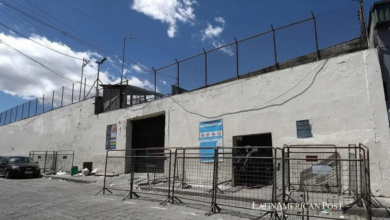
President Laura Fernández is offering a highly visible answer. On October 14, Costa Rica plans to inaugurate its Center for High Containment Against Organized Crime, known as CACCO, beside La Reforma prison in Alajuela province. Inspired by El Salvador’s prison model, the facility will hold 5,100 inmates. At roughly $35 million, that works out to about $6,860 per place.
It is a project figure, not the full cost of imprisonment, and certainly not a measure of crimes prevented. Those distinctions matter when a government presents prison capacity as evidence that security is returning.
The government has also reduced conjugal visits, limited family deliveries and removed electrical outlets from cells. Such measures advertise discipline. But restrictions on clothing or food containers do not, by themselves, demonstrate that criminal leaders have lost control of the networks operating beyond prison walls.
Homicides have risen 50 percent since 2020. With roughly 900 annually and authorities attributing 70 percent to drug trafficking, about 630 killings would be linked to that trade. That classification does not establish that everyone killed was a criminal. Innocent bystanders are also victims.
The appeal of tougher action requires no mystery. National police officer Gerson Rosales was 28 when alleged gang members killed him during a May patrol. His widow, Lariza Brenes, supports Fernández’s response. Families living with such losses are asking whether institutions can protect them, not debating prison architecture.
The Port and the Powder
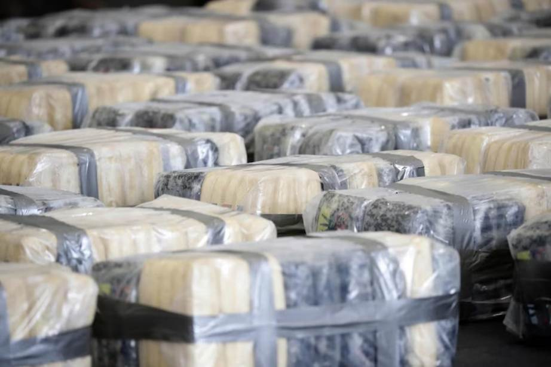
Costa Rica’s dilemma begins well beyond the prison gate. The Moín Container Terminal opened near Limón in 2019, expanding the country’s commercial reach. It handled more than six million tons of exports last year. That legitimate success also offers traffickers enormous volumes of cargo in which to conceal cocaine.
The crucial mechanism is payment. International criminal groups compensate local partners with cocaine rather than cash. Those partners must sell it, turning an export corridor into a domestic retail battlefield. Competition over neighborhoods follows. Limón province’s homicide rate is more than double the national average.
This helps explain why a borrowed Salvadoran prison model cannot be a complete Costa Rican security strategy. The problem includes international logistics, local markets and the recruitment of teenagers with few economic alternatives. Locking up a gunman matters. Leaving the business that hires his replacement intact matters too.
Municipal police chief Jeison Arce says his Limón force has only three patrol cars. That number cannot represent the resources of every national agency. Still, it exposes the distance between a monumental prison project and the modest equipment available to officers policing everyday streets.
Evidence shows additional enforcement effort. Drug Enforcement Police director Stephen Madden says his agency added 100 officers over two years and that seizures returned to 2021 levels last year. Cocaine seizures had fallen to 21.4 metric tons in 2023, their lowest level since 2015.
Neither direction settles the argument. Rising seizures can reflect stronger policing, larger flows, or both. Falling seizures can signal diminished supply or missed shipments. Without knowing how much cocaine passes undetected, confiscated tonnage is an incomplete scorecard. Persistently high homicide totals are harder to dress up.

Security Needs More Than Cells
The more consequential confrontation concerns the institutions that turn an arrest into a provable case. Fernández blames judicial decisions for releasing suspects and says her purpose is reform, not control. Critics see an attempt to weaken the branch her political movement does not command.
Her mentor, former President Rodrigo Chaves, now holds the finance and presidency ministries. His ministry announced tens of millions of dollars in judicial budget cuts in July, citing the national debt. The affected branch encompasses not just courts but prosecutors and the Judicial Investigation Department.
That institutional arrangement makes the arithmetic uncomfortable. Money removed from the judiciary can mean less capacity to investigate the same criminal networks the new prison is supposed to contain. A cell cannot trace a financial transaction, prepare forensic evidence or protect the integrity of a prosecution.
The government’s legislative majority is insufficient for constitutional changes to the judiciary. Budget pressure therefore deserves scrutiny, particularly amid attacks on judges. Judicial independence does not mean immunity from criticism or corruption investigations. Nor does a suspect’s earlier police encounter establish that a lawful conviction was available.
Costa Rica’s democratic reputation is not a substitute for public safety. Neither is the Salvadoran example a substitute for proving that specific measures work here. Effective containment, competent investigations, and courts capable of resisting intimidation belong in the same security policy, not opposing political camps.
For Hills, the meaningful opening would not be a prison inauguration. It would be the possibility of selling lunches outside again. For Brenes, no improvement can restore her husband. Those are the stakes against which Costa Rica’s new walls, and its treatment of democratic institutions, must ultimately be measured.