Brazil Gives Flávio Bolsonaro First Place, but Not Yet the Presidential Keys
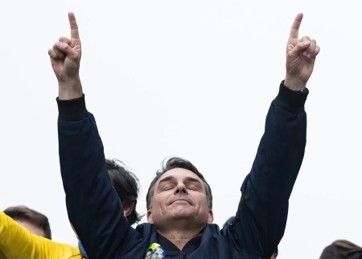
Flávio Bolsonaro led Brazil’s first presidential round by roughly two percentage points. The senator now faces Lula, carrying a familiar surname, a long legislative career, and proposals that combine his father’s political legacy with ambitions stretching from prisons to trade.
A Son With His Own Résumé
The succession began with a conversation in a prison cell. Flávio Bolsonaro told Reuters that his father, Jair, chose him in late 2025 with a short instruction: “Let’s go, it’s you.” The elder Bolsonaro was serving a 27-year sentence for plotting a coup after losing the 2022 election.
On October 4, the son finished ahead of the man his father had tried to remove. With almost all ballots counted, he had roughly 47% against President Luiz Inácio Lula da Silva’s 45%. Their runoff is scheduled for October 25. No one reached an outright majority.
At 45, the Liberal Party candidate is making his first presidential bid, not his first political appearance. Born in Resende, in Rio de Janeiro state, he studied law and entered the state legislature in 2003, aged 21. Four consecutive terms took him through 2019, when he entered the Senate.
He also ran for mayor of Rio de Janeiro in 2016 but did not advance to the second round of that municipal contest.
That is about 23 years in elected office. His résumé includes chairing the Senate’s Public Security Committee and serving as rapporteur, the lawmaker responsible for steering legislation, on the measure restricting prisoners’ temporary leave that became law in 2024. His emphasis on punishment predates this campaign.
The arithmetic deserves care. At the rounded figures, the two finalists received 92% of valid votes, leaving roughly 8% for everyone else. That concentration describes the ballots counted, not all Brazilians: abstentions and blank or invalid votes are outside the denominator. Other candidates’ supporters also aren’t automatically transferable through an endorsement.
Flávio’s national platform emerged because his father could not run. Yet the career behind it was built through state and federal institutions, not outside them.
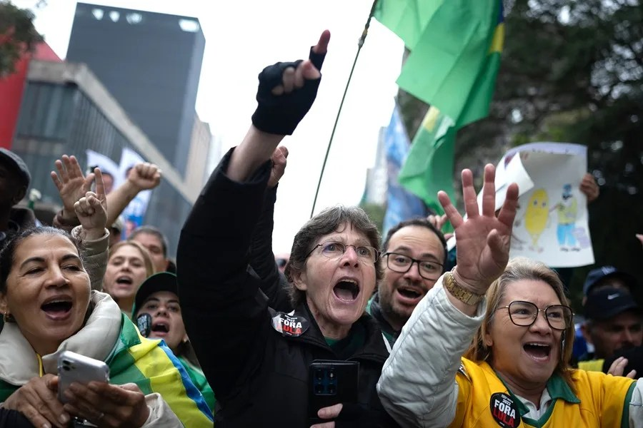
The Family Name in the Fine Print
“I may be calmer and more moderate, but I carry Bolsonaro blood,” he said when launching his candidacy. That is his description of his style, not proof that the program breaks with his father’s. Its 76 pages mention Jair Bolsonaro or his administration 22 times.
The references point to policies he proposes restoring, extending or completing. His campaign retains the family’s emphasis on conservative social values, market-oriented economics and tougher criminal penalties. The inheritance is therefore written into the governing document, not confined to photographs beside his father.
Under the slogan “Brazil Without Fear,” he proposes criminal responsibility from age 14 for certain offenses and a prison model inspired by El Salvador’s Nayib Bukele. The age proposal has a legislative history: Flávio introduced a constitutional amendment on the issue in 2019.
His platform also calls for an elite military border force and a minimum eight-year sentence for cellphone robbery. The latter connects a national campaign to an ordinary vulnerability: for someone using a phone to find work, receive payments or contact family, losing it can interrupt a livelihood.
Economically, he proposes eliminating at least ten ministries, lowering taxes and privatizing state companies while seeking fiscal balance. Those promises require separate accounting. Fewer ministries do not necessarily mean equivalent savings if their functions move elsewhere; tax reductions require a corresponding explanation of revenues, spending and borrowing.
Not everything repeats the previous administration. He proposes ending presidential reelection and expanding women’s economic independence and technological inclusion. His minerals strategy includes processing rare earths and other critical resources, not merely extracting them. That distinction concerns where industrial activity and employment occur, rather than how much ore leaves Brazil.
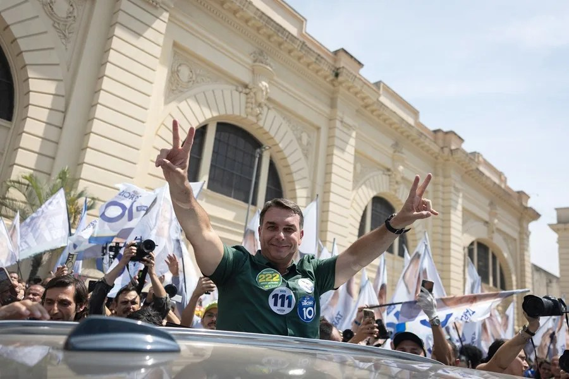
Allies Abroad and Cases at Home
Abroad, Flávio seeks closer relations with Donald Trump’s United States, Israel and Argentina under Javier Milei. He supports a hemispheric free-trade area and Brazil’s participation in the Shield of the Americas, the U.S.-promoted security coalition against organized crime.
These are different forms of integration. A trade agreement concerns commercial rules and market access; a security coalition concerns intelligence, enforcement, and potentially military operations. Joining one does not settle the terms of the other. His platform also promises commercial engagement with China and the European Union.
His legal record needs similar distinctions. The investigation into alleged diversions of staff salaries during his years in Rio’s legislature was archived after evidence was annulled. Flávio has denied wrongdoing. The case should not be described as a conviction, nor should its procedural history disappear behind a blanket claim of exoneration.
A separate federal investigation concerns financing for Dark Horse, a film about his father. Authorities are examining suspected corruption, money laundering and illicit transfers abroad. Flávio denies wrongdoing and describes the financing as lawful private sponsorship. An investigation is not a finding of guilt. Reuters
The family connection thus runs through both his political program and a current legal controversy. But neither his father’s conviction nor his surname substitutes for examining his own actions. The same applies to the vote: finishing first records an electoral result, not approval of every policy or resolution of every allegation.
On October 25, Brazilians will choose between the two finalists. Flávio arrives as a son selected by his father, a senator with an established record and a candidate whose proposals now carry his own name.