Uruguay Seeks Carlos Gardel Birthday Tribute as His Birthplace Debate Dances On
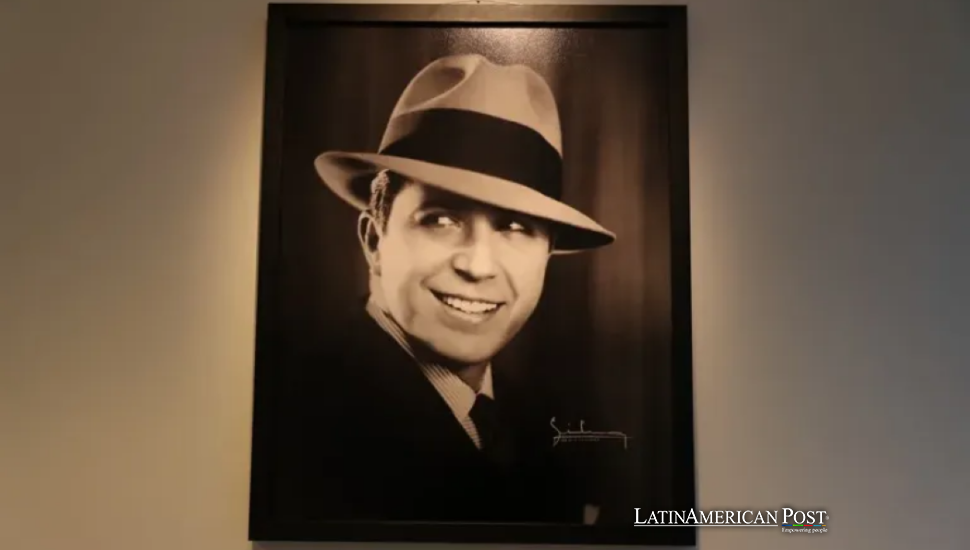
Uruguay’s lawmakers have advanced a Carlos Gardel birthday tribute, reviving a dispute that crosses the Río de la Plata and reaches France. Behind the unanimous vote lies a question about what official documents establish, and what cultural belonging can mean.
A Birthday in the Legislature
When Carlos Gardel’s remains reached Buenos Aires, tens of thousands gathered to receive a singer who would never give another encore. His journey from Colombia had taken months, passing through Panama and New York. His death produced an international procession of grief. His birth would leave a different kind of unfinished business.
On Wednesday, September 16, Uruguay’s Chamber of Representatives approved legislation designating December 11 as the Day of Carlos Gardel’s Birth. All 82 lawmakers present supported it, EFE reported. The proposal now goes to the Senate. The unanimity describes the vote in that chamber, not agreement among historians about the singer’s origins.
The bill contains only two articles, but its wording carries considerable weight. It recognizes Uruguayan state documentation recording Gardel’s birth in Tacuarembó on December 11, 1887. It also declares commemorations held within Uruguay to be of cultural interest. The proposal honors a musician while explicitly anchoring that honor to a disputed biographical account.
Gustavo Guerrero, a representative of the governing Frente Amplio, told Parliament that the objective was to recognize Gardel’s importance to regional heritage and identity, particularly Uruguay’s, according to EFE. That stated purpose places the measure within cultural commemoration rather than presenting it as a new historical investigation.
For organizers, recognition and resources remain separate questions. Neither article provides a budget. An official anniversary could furnish an occasion for performances or exhibitions, but the text alone offers no basis for calculating attendance, tourism revenue, or employment. Its immediate instrument is symbolic recognition, not a funded cultural development program.
The Ledger and the Missing Years
Guerrero’s central evidence comes from the Foreign Ministry’s historical diplomatic archive. On November 28, 2025, the Comisión Gardel Rioplatense of Fundación Fans de la Música located the official volume containing Gardel’s consular registration. He described the finding as “categorical,” EFE reported.
The parliamentary proposal supplies an important qualification: copies of the document were already known. Researchers located the original ledger and its archival setting. Gardel had appeared at Uruguay’s consulate in Buenos Aires on October 8, 1920, declaring himself born in Tacuarembó in 1887.
That distinction changes what is new. The discovery establishes where a familiar declaration was preserved. It does not turn a statement made by an adult into a record created at his birth. Archival provenance and the accuracy of information in an archive are related questions, but not identical.
The volume includes more than 1,000 other registrations made between January 1915 and mid-1924. Those entries place Gardel within an ordinary administrative practice extending across nearly a decade. They show how people documented identity abroad, not 1,000 independent confirmations of his birthplace.
Guerrero said the registration had now been documented through a notarial act and incorporated into the civil registry. He emphasized its historical and legal significance: Uruguay had officially registered Gardel. The question remains what that registration establishes about nationality, and what additional evidence is required to establish birth.
The competing chronology is not merely another national preference. The Smithsonian describes birth in France in 1890, followed by migration with his mother to Argentina in 1893, as the most widely accepted and supported account. Toulouse’s municipal archives identify a December 11, 1890, birth record.
The dates are three years apart. Both chronologies agree on December 11; the disagreement concerns year and birthplace. More fundamentally, the sources differ in when and why they were created. Some biographers have suggested Gardel’s paperwork reflected concerns about military obligations, the Smithsonian notes. That explanation remains speculation, not a documented confession. Neither patriotic affection nor suspicion supplies the missing certainty.
A Voice Beyond the Border
The career that followed is less elusive. Gardel built his audience in bars and restaurants before becoming an international celebrity. His 1917 recording of “Mi Noche Triste” became a landmark in tango singing. In 1931, he played a gaucho in a sound film, opening another route to audiences.
Recordings and movies made the performer portable. A voice first encountered in a local venue could become familiar to listeners who never stood near its owner. That helps explain the scale of mourning when Gardel and his collaborator Alfredo Le Pera died in a Colombian plane crash in 1935.
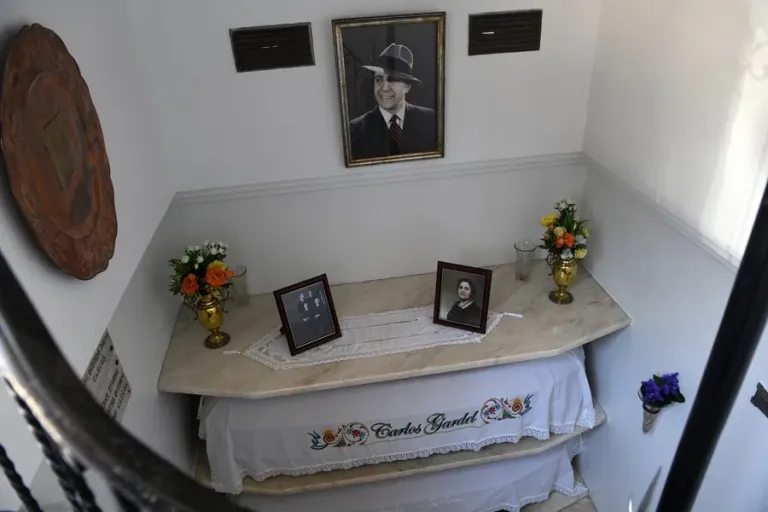
It also clarifies why the birthplace dispute cannot contain the whole story. A birth location, a citizenship document, and a public’s attachment describe different relationships. Gardel’s remains were returned to Buenos Aires for burial, while Uruguay continued to recognize him as part of its cultural inheritance.
Pablo Inthamoussu, another Frente Amplio representative, addressed that overlap directly. He said supporting the bill was not meant to divide Uruguay from the Argentine people, in remarks reported by EFE. He described Gardel as “a profoundly Rioplatense singer,” invoking the region shared across the river.
That phrasing lets a national commemoration and a shared musical history occupy the same sentence. The Senate will consider the proposed recognition; researchers will keep weighing documents created decades apart. Neither process changes the crowds that gathered when Gardel came home in a coffin. Their grief belonged to a world his voice had already crossed.
Also Read: Colombia Counts Earthquake Losses While Survivors Face Mental Health Aftershocks