Colombia Targets Stolen Fuel as ELN Rebels Keep the War Machine Running
Colombia’s new Urano task force targets the stolen fuel sustaining guerrillas, cocaine production, and illegal mining. Behind the military offensive lies a struggle over who profits from national resources, who controls rural territory, and who pays when pipelines become battlefields.
The Fuel Behind the Fighting
For a farming family downstream from an oil spill, a repaired pipeline is not the same as a recovered livelihood. Pumping can restart while contaminated land remains unusable. That distinction belongs at the center of Colombia’s latest military offensive, not somewhere beneath the production figures.
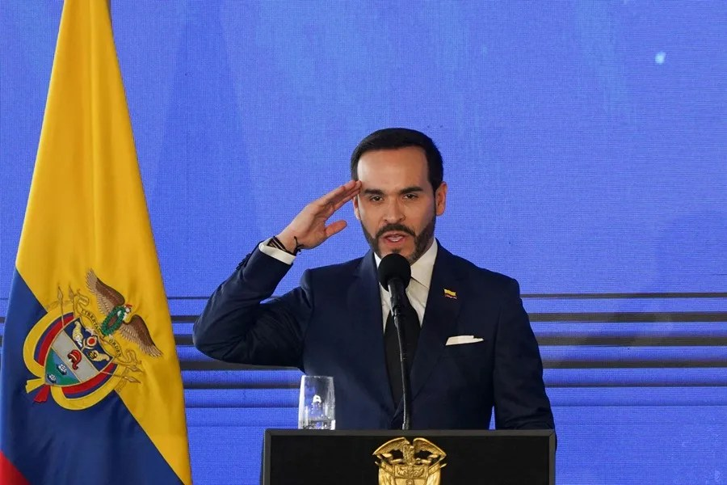
President Abelardo de la Espriella launched the Urano joint task force in Valledupar on October 5, targeting rebel groups and drug gangs in the northeast. A central mission is stopping the National Liberation Army, or ELN, from stealing gasoline and diesel along a pipeline connecting the Caribbean coast with Barrancabermeja.
The president accused the guerrillas of using that fuel for cocaine production, illegal mining and financing violence. His answer combines military personnel with police officers, part of a broader rejection of negotiations with the remaining rebel organizations.
“There will be no negotiations or empathy with terrorism,” he said.
Fuel theft deserves that attention because its value extends beyond the stolen commodity. Gasoline and diesel can become operating supplies for other criminal businesses. Intercepting them could therefore impose costs on several activities simultaneously, rather than merely depriving an armed group of one sale.
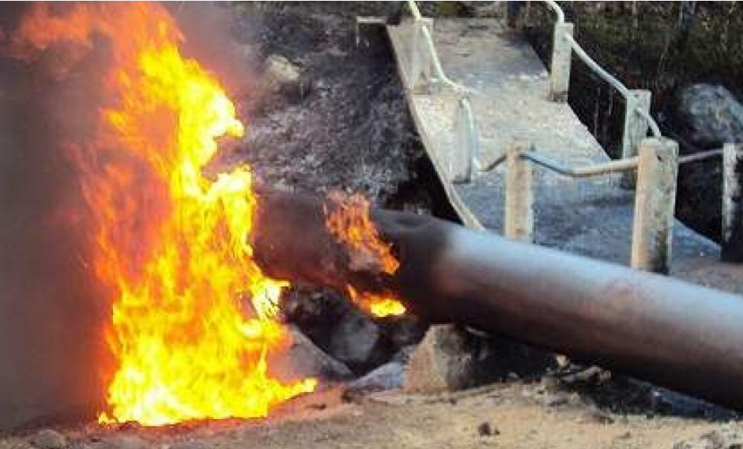
But theft and sabotage are not interchangeable. A clandestine tap profits from continued flow; an explosion can halt that flow to punish a company or pressure the state. The ELN’s relationship with petroleum has combined financing, extortion, and political messaging. Protecting a pipe requires understanding which purpose an attack serves.
That also explains the apparent contradiction of destroying infrastructure while depending on its contents. The organization does not need uninterrupted national production to exercise power. It needs enough access to extract value and enough destructive capacity to make others fear refusal.
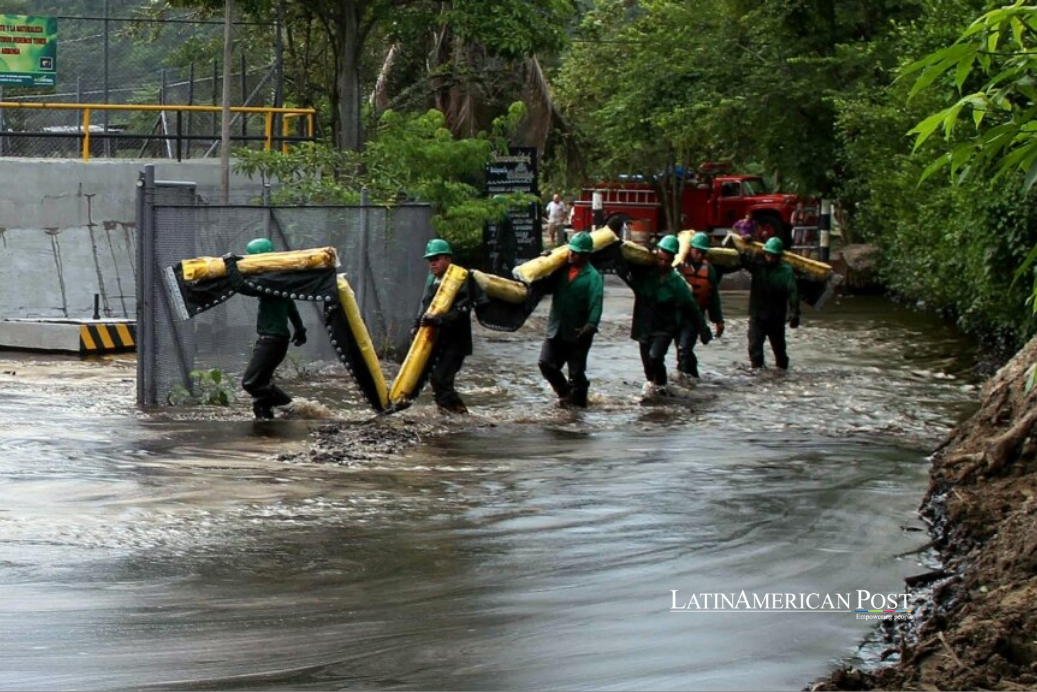
For an oil worker, extortion makes a routine job somebody else’s bargaining chip. For a farmer, damage can arrive downstream, with no warning and no share of the profits behind the violence.
Long Pipelines, Longer Bills
The scale becomes clearer in the figures for two separate crude oil pipelines, not the gasoline and diesel route identified for Urano. Bicentenario stretches 230 kilometers, with reported capacity of 150,000 barrels daily. Caño Limón extends 773 kilometers and can transport up to 210,000 barrels a day.
Caño Limón consequently covers about 3.4 times the distance while offering only 40 percent more capacity. That does not establish its relative vulnerability, which depends on terrain and security conditions. It does show why guarding infrastructure cannot be planned simply in proportion to the volume it carries.
Nor are those capacities measures of oil stolen, spilled or permanently lost. An interruption may delay shipments rather than erase their value. Estimating the damage requires actual flow, downtime and available alternatives. Multiplying maximum capacity by an oil price would produce a dramatic number, not necessarily an honest loss estimate.
The wider bill nevertheless reaches beyond the operator. Repairs and cleanup consume money without creating new productive capacity. Where disruption curtails production, public royalties and sales can suffer. For rural and Indigenous communities, damaged water sources and agricultural land add costs that a restored pumping schedule does not cancel.
Here the ELN’s language of national sovereignty meets its ugliest contradiction. The group portrays foreign participation in oil extraction as exploitation of Colombian wealth. Yet contaminating the landscape transfers another burden onto the communities it claims to defend. An attack on corporate infrastructure can become an attack on somebody’s means of survival.
Recognizing that contradiction does not require dismissing grievances over where oil wealth goes. It requires refusing the guerrillas’ claim to settle those grievances through coercion. The government’s corresponding obligation is to show that protecting extraction also protects the people living beside it.
An Old Formation, a New Test
Urano revives an organizational approach used for almost two decades: joint military formations overseen from Bogotá. Gustavo Petro’s administration abandoned that model two years ago to give regional army commanders greater operational control. Critics called the change a weakening of the military; restoring it now is not, by itself, proof of improved performance.
Central coordination could help pursue a criminal supply chain across operational boundaries. Regional commanders, however, still need local knowledge. Success depends less on where an order originates than on whether intelligence moves quickly enough to identify the people financing, transporting, and buying stolen fuel.
The earlier task forces helped secure important victories against the FARC before the 2016 peace agreement. That record supports the value of coordinated force. It does not establish that military pressure alone delivered the political settlement. De la Espriella’s refusal of negotiations makes durable operational results especially important.
Including police could help turn seizures into cases against commercial intermediaries, rather than leaving soldiers to dismantle replaceable equipment repeatedly. The meaningful test is whether the network becomes harder to rebuild. Counting closed taps without tracking replacement taps would confuse activity with disruption.
Colombia should judge Urano by falling theft volumes and fewer attacks over comparable periods, along with the recovery of damaged livelihoods. A pipeline can be guarded while the people beside it remain exposed. Winning this campaign means denying armed groups their fuel without treating rural Colombians as incidental to the infrastructure.