Mexico Watches UNAM’s AI Exam Crisis Make Merit Pay Twice
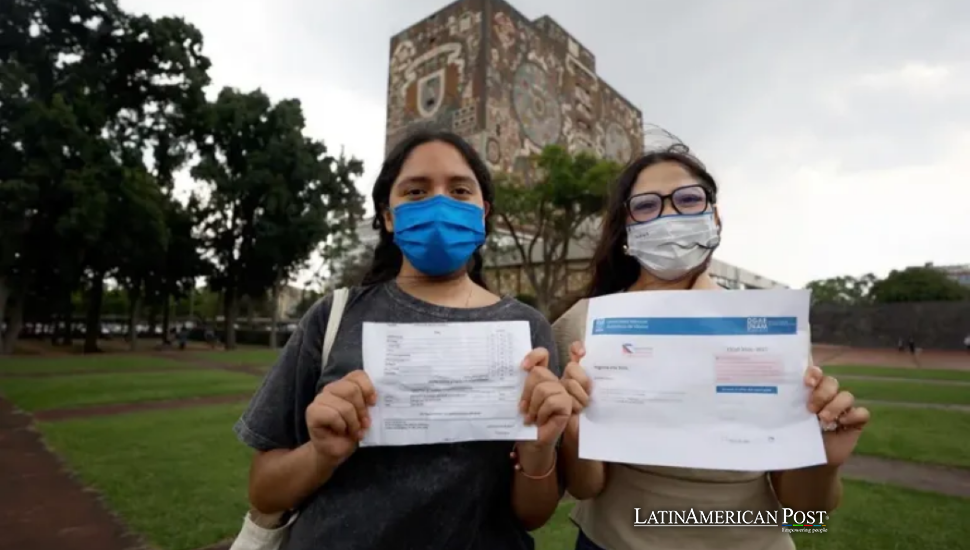
UNAM’s first fully online admissions test promised wider access across Mexico. Instead, suspected artificial intelligence cheating triggered a mass retest, leaving qualified applicants without appointments, families absorbing travel costs, and the university’s credibility caught between fraud prevention and educational fairness.
The Test After the Test
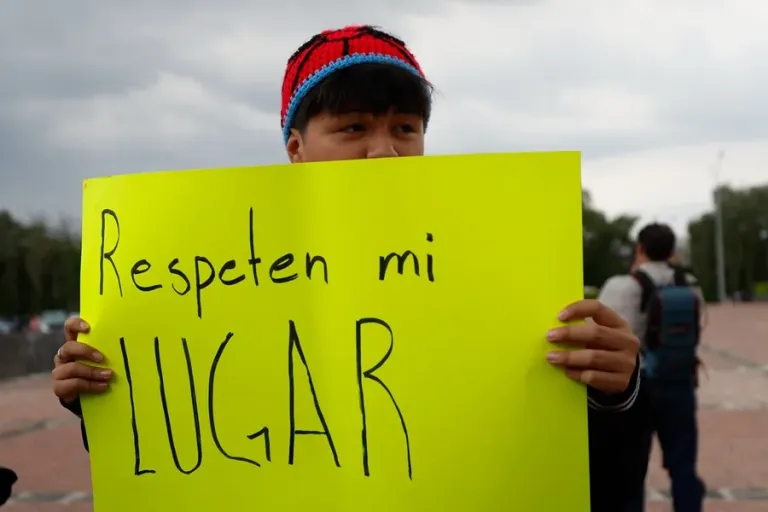
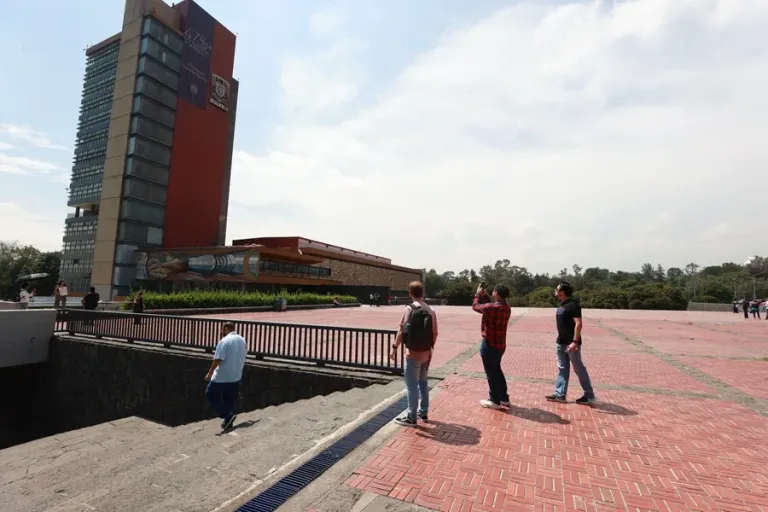
Outside the rectory of Mexico’s National Autonomous University, the signs fit easily on cardboard: “Respect my place.” “Respect my right to education.” Behind them stood a far more complicated grievance.
Applicants were not refusing another examination. They were protesting because, with the new test only two days away, some had no appointment, no dependable answer, and no assurance that scores already strong enough to earn admission would still mean what the university first said they meant.
“If it has to be done again, then we’ll do it,” a medical-school applicant identified as Grecia told EFE, using a protected name after reporting online harassment against candidates. “But the problem here is that they are not letting us do it.”
Grecia scored 104 correct answers, enough to be selected for medicine. She had visited university offices and sent emails, only to be redirected. The appointment offered for assistance would come after the control examinations, when any solution would be useless.
Her father, Javier Ramos, traveled with her from Cuernavaca in Morelos. The family had already rented an apartment after learning she had been selected. Now they faced additional transportation costs and the possibility that responsible planning had made them more exposed.
For Ramos, the worst part was watching his daughter do what the system asked, succeed, and then be stranded outside it without a clear explanation.
Between May and June, UNAM, Mexico’s largest public university, administered its undergraduate admissions examination entirely online for the first time. The format reduced the need for travel and let applicants compete from their own communities. Then the data raised alarms.
UNAM detected statistically atypical results and suspected artificial intelligence or other outside assistance. It suspended enrollment and summoned 58,783 applicants to an in-person verification examination from August 12 through August 19.
The university has a legitimate problem. An admissions score loses meaning when some candidates may have used forbidden tools. Yet the remedy created another inequality among students who had followed the rules.
Four Cities for a National Crisis
The retest will be offered only in Mexico City, León, Oaxaca, and Tijuana. Those four points span a large country, but they do not erase distance. They transfer the logistical burden from the institution to families.
Emiliano De la Cruz, a protest spokesperson, told EFE that some selected applicants received messages excluding them from the verification test. Others were assigned to locations that no longer matched where they lived.
One young man from Oaxaca had moved to Mexico City after his acceptance, De la Cruz said, but was ordered to return home for the examination. Another applicant from Ameca, Jalisco, also relocated to the capital, only to be assigned a site in León, Guanajuato.
Rent was already being paid. Food had to be covered. Then came new bus tickets, missed work to accompany parents, and travel amid uncertainty. An online process designed to overcome geographic barriers ended with successful candidates crossing Mexico again because the system could not certify its own results.
By Sunday, UNAM said 43,619 applicants had obtained an appointment with a date, site, and time. That was 74.3 percent of those summoned. It also meant 15,164 people, more than one in four, still lacked that basic information.
The percentage may sound reassuring from an administrative desk. Outside the rectory, the remainder had names, leases, parents, and career plans. A process does not become fair simply because most users can enter it, even if the excluded minority could fill an arena.
There is also a crucial distinction between investigating suspicious results and treating an entire cohort as compromised. A control exam may identify inconsistencies, but protesters fear it could replace the original selection rather than verify it. They insist the new assessment must not cancel places already won.
“If the university made the mistake, we should not have to pay for it,” De la Cruz told EFE. The sentence carried both meanings of payment. Students could lose money and the institutional recognition their original scores had earned.
When Innovation Forgets the Student
UNAM’s dilemma reflects a broader Latin American contradiction. Public institutions are pressed to modernize quickly, with technology presented as a cure for distance, cost, and congestion. But digital expansion without strong verification, support, and appeals can reproduce old exclusions in a newer language.
Artificial intelligence destabilized confidence in what an online score represented. Still, suspicion is not proof against every applicant. Fairness depends not only on catching possible cheating but also on protecting those whose honest work is being questioned.
The university faces two inseparable obligations. It must preserve the credibility of admissions and avoid making innocent applicants finance an institutional design failure. A secure examination matters. So does due process.
For Grecia, the controversy is not an abstract debate over artificial intelligence. It is the apartment already rented, the unanswered email, the trip from Cuernavaca, and the appointment that may arrive after the door has closed.
That is why the signs outside the rectory asked for something more precise than sympathy. They asked UNAM to respect a place already earned. In Mexico’s newest admissions crisis, technology may have created the suspicion, but human beings are carrying the cost.
Also Read: Colombian Tiger Roars as Failed Peace Talks Lose Their Grip