Argentine Icon Mario Kempes Turned Valencia Doubt Into Mestalla Immortality
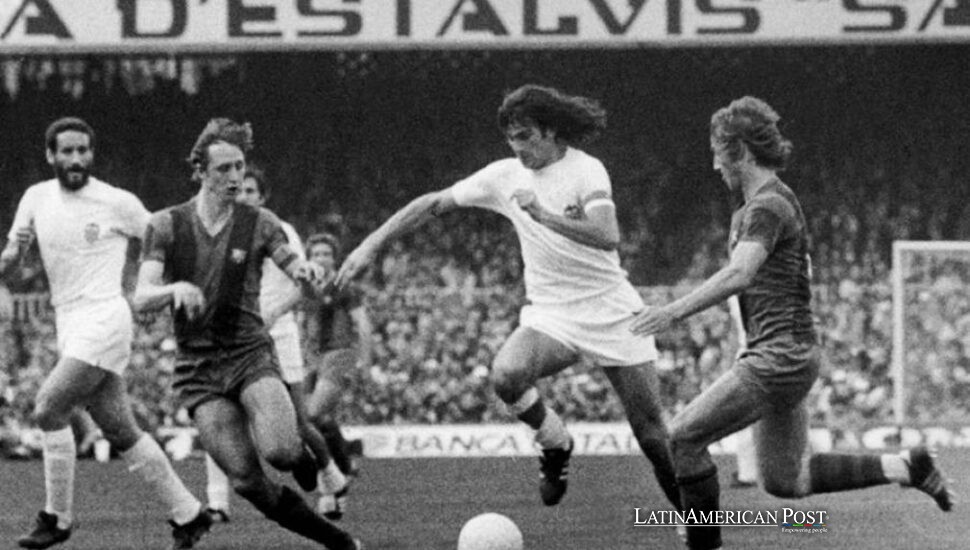
Fifty years after Mario Kempes landed in Spain as an uncertain 22-year-old prospect, Valencia still measures greatness by his goals, flowing hair, raised arms, and a career that transformed one transatlantic gamble into an enduring piece of Spanish football mythology.
A Stranger Arrives at Mestalla
On August 11, 1976, Mario Alberto Kempes Chiodi stepped off a plane in Spain with a name that meant far more in Argentina than it did at Mestalla. He had just turned 22. Valencia was betting on possibility, not certainty.
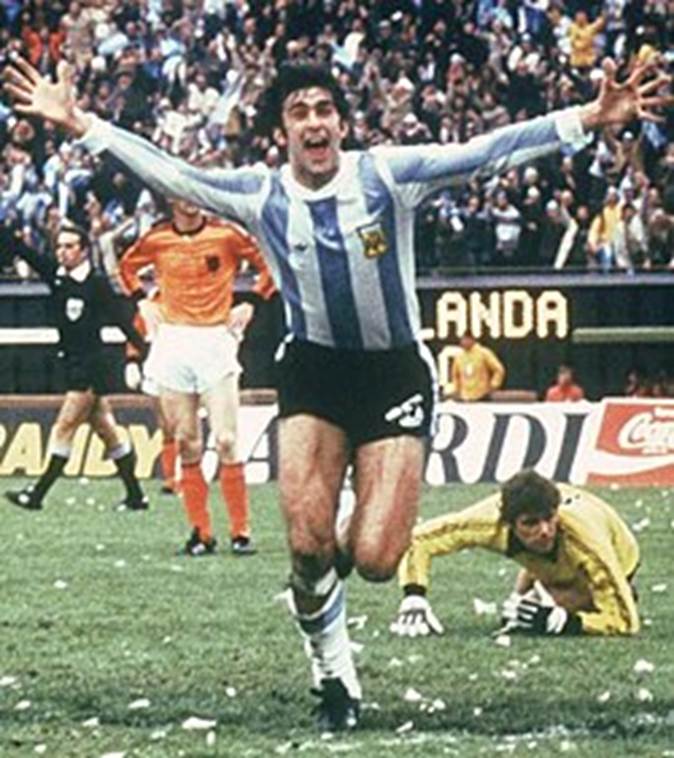
Half a century later, the wager looks almost absurdly successful. Kempes scored 149 goals in 246 official matches for Valencia, numbers that describe production but not the feeling he left behind. The flowing hair, long stride, sudden acceleration, and celebration with both arms raised became part of the club’s visual memory. Generations that never watched him live still recognize the pose.
Kempes drove the club to the 1979 Copa del Rey, scoring twice in the final. A year later, with fellow Argentine Alfredo Di Stéfano as coach, Valencia won the European Cup Winners’ Cup and then the European Super Cup. In his first two league seasons, Kempes finished as Spain’s top scorer. For a brief, blazing period, Valencia’s greatest player was also widely considered the finest footballer in the world.
That status was reinforced in Argentine colors. Kempes led the scoring for Argentina’s 1978 World Cup champions and struck twice in the final. The performance placed him in a national pantheon later occupied by Diego Maradona and Lionel Messi. Yet Kempes built his deepest club identity abroad, in a city that adopted him as its own.
His story belongs to an older geography of Latin American football migration. Before social media and endless highlight clips, reputation crossed the Atlantic slowly. A player could be famous at home and still arrive in Europe as a rumor.
The Magazine That Crossed an Ocean
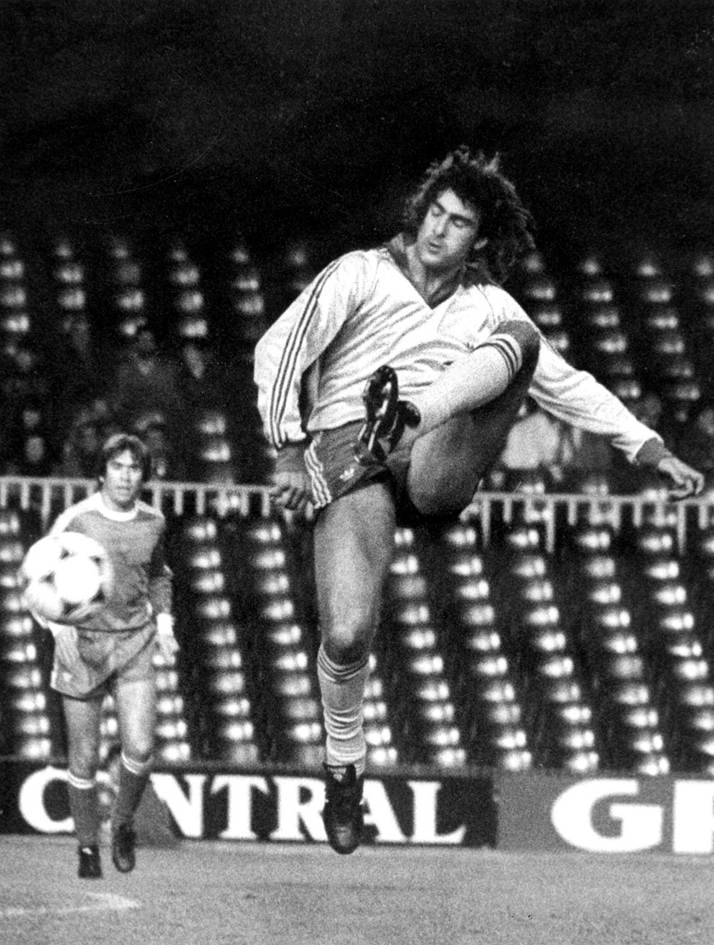
Valencia technical secretary Bernardino Pérez, known as Pasieguito, first noticed Kempes through his repeated appearances in the Argentine football magazine El Gráfico. The publication became a cultural bridge, carrying the authority of Argentine football into European offices where South American players were often evaluated through photographs, dispatches, and instinct.
Pasieguito was especially intrigued because Kempes did not play for River Plate or Boca Juniors, the Buenos Aires powers most visible abroad. He played for Rosario Central. The discovery challenged the assumption that Argentina’s exportable greatness belonged only to its capital.
Pasieguito traveled to Argentina to watch him and advance a $500,000 transfer. Rosario Central’s members had to approve the deal in a referendum, a reminder that football commerce in Latin America could still pass through the political rituals of member-owned clubs. Kempes was a sporting asset, a communal figure, and a financial decision at once.
Even then, the move nearly unraveled comically. Valencia president José Ramos Costa collected Kempes at Madrid’s Barajas airport, and the pair drove toward Valencia, stopping to eat partridge in Motilla del Palancar. During the medical examination the next day, doctors noticed black marks near the player’s stomach. In EFE’s account, they eventually realized the marks were shotgun pellets from the birds, not a hidden ailment.
The football examination was harsher. Kempes debuted in the Orange Trophy semifinal against CSKA Moscow and disappointed. A contemporary report reproduced by EFE suggested Valencia might have made “a bad deal.” He missed clear chances and then failed with the club’s first penalty in the shootout. The crowd had expected revelation and received nerves.
That debut later survived in culture through “Nostalgia de Bell Ville,” a 2022 song by La Gran Esperanza Blanca. Its title returns Kempes to his birthplace in Córdoba and captures the loneliness within transfer-market mythology. Before becoming El Matador, he was a young man far from home, judged after one night.
Ten days later, in his first official match, he scored twice against Celta—three more goals followed across the next three games. Doubt disappeared quickly.
The Injury That Divided a Reign
Kempes formed a formidable attack with Carlos “El Lobo” Diarte and Dutch forward Johnny Rep, while also creating for Rainer Bonhof, Enrique Saura, and Javier Subirats. His greatness included movement, service, force, and the sense that every attack might become history.
The statistics divide his seven Valencia seasons into two careers. From his arrival through October 1980, he scored 122 goals in 154 official matches. Then came a shoulder injury against German club Carl Zeiss Jena. He never fully recovered.
Afterward, Kempes scored 27 times in 92 matches. For almost anyone else, that would remain useful production. Besides his earlier pace, it looked like a collapse. Elite football is cruel that way. The body does not merely interrupt greatness. It changes how greatness is remembered.
Valencia sent him to River Plate in March 1981, but the Argentine club could not complete the 300 million peseta payment, about 1.8 million euros. Kempes returned, then left Valencia definitively in 1984. The failed payment exposed another reality of Latin American football: enormous prestige could coexist with fragile institutional finances, even at one of Argentina’s giants.
Still, no accounting dispute could reverse what had happened. Kempes became the only player to give his name to a stand at Mestalla. The honor is more than nostalgia. Stadiums decide whose memory becomes architecture.
He arrived unknown, stumbled in public, and then scored until Valencia’s idea of itself grew larger. Fifty years later, the club still lives up to the standard Mario Kempes set.
Also Read: Brazilian Star Kerolin Makes Barcelona Bet Big on Football’s Future