Colombian Tiger Roars as Failed Peace Talks Lose Their Grip
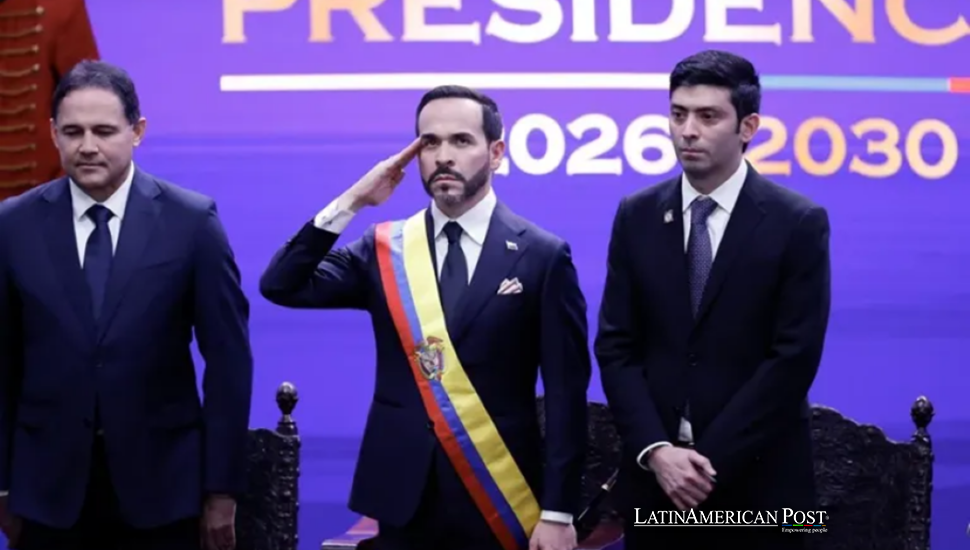
President Abelardo de la Espriella opened Colombia’s new era by ending armed-group talks, reviving crop fumigation and promising megajails. After coca acreage climbed and negotiations stalled, his hard turn may answer a public question diplomacy could no longer contain alone.
The Hour of the Tiger Arrives
Abelardo de la Espriella chose a military canton in Cali for the sentence that defined his first day as Colombia’s president.
“The time has begun for the recovery of order, authority and freedom,” he said Friday at Cantón Militar Pichincha, while guests followed the inauguration from the nearby Arena USC, according to EFE.
The setting mattered. So did the vocabulary. After years in which successive governments treated negotiation as the preferred road out of Colombia’s armed conflicts, De la Espriella announced that the road had ended.
“The option of dialogue is completely exhausted,” he said.
That declaration will alarm Colombians who remember what an unchecked security state can do. It will also sound painfully reasonable to communities where peace tables multiplied while armed groups kept taxing roads, recruiting young people and controlling rural economies. Negotiation became a national habit, but not always a mechanism for surrendering power.
De la Espriella called the new period “the hour of the tiger.” The phrase is theatrical, tailored to a president who campaigned on force and clarity. Beneath the performance lies a serious argument: a state that negotiates indefinitely without obtaining disarmament can reward the coercion it claims to end.
Colombia has not suffered from too little dialogue. It has suffered from dialogue without enough consequence.
The outgoing approach asked armed organizations to trust the state. It also asked civilians to keep trusting while illegal economies expanded around them.

Coca Fields Outgrew the Peace Table
The most damning number in De la Espriella’s address was 261,000 hectares.
That was Colombia’s estimated coca cultivation at the end of 2024, according to the latest report cited from the United Nations Office on Drugs and Crime. The total was 3.5 percent higher than in 2023.
That increase represents thousands of additional hectares feeding the country’s most durable war economy. Coca purchases weapons, finances territorial control, corrupts officials and gives criminal groups a reason to preserve the geography of abandonment.
The president blamed coca for death, corruption, forest destruction and displacement. His diagnosis is incomplete, but not wrong. Coca does not create state absence. It colonizes it. Where roads, courts, markets and legal credit remain weak, the illicit economy arrives with cash, rules and armed enforcement.
De la Espriella promised to restore aerial fumigation using what he described as next-generation herbicides that would not damage human health, violate Constitutional Court requirements or harm the environment. EFE reported his pledge, but the claim will need evidence, monitoring and judicial scrutiny.
Rejecting fumigation in all circumstances has also carried a cost. Manual eradication exposes workers and security forces, while voluntary substitution fails when payments arrive late, roads remain unbuilt and buyers for legal crops never materialize. Coca can be replanted quickly.
A more aggressive eradication strategy may therefore be justified, particularly in industrial cultivation zones controlled by armed networks. But it must distinguish between criminal capital and the farmer trapped at the bottom of the chain. Spraying without viable alternatives can destroy a family’s only income while leaving the trafficker’s finances intact.
The useful change is not fumigation alone. It is ending the fiction that crop substitution can work without security, infrastructure and deadlines.
Force Can Reset the Terms of Peace
De la Espriella also promised megajails for those posing the greatest security threat. He warned criminal organizations and “narcoterrorists” that they faced two routes: submit to the law or confront the state’s determined force.
Large prisons can become symbols before they become solutions. If filled with low-level suspects through weak investigations, they merely warehouse poverty. If they isolate commanders, prevent orders from leaving cells and dismantle financial networks, they can reduce criminal power.
The distinction is institutional competence.
Colombian security debates are trapped between two exaggerations. One treats every negotiation as appeasement. The other treats every use of force as a return to the conflict’s darkest years. A republic needs coercive capacity and legal restraint. The state must be feared by armed organizations, but bounded by courts.
Ending open-ended dialogue does not require abandoning peace as an objective. It may restore negotiations to their proper meaning. Talks should follow verifiable ceasefires, concentration, disarmament and submission to law, not replace them indefinitely.
De la Espriella’s first speech suggested that Colombia’s previous government crossed that line. “The state was historically noble,” he said, according to EFE. “Under the regime that has ended, the state was sufficiently complicit.”
The accusation is sweeping. Still, it captures a frustration that cannot be dismissed as thirst for punishment. When armed actors gain territory during negotiations, retain illegal revenue and face no clear deadline, the process begins to resemble strategic patience for criminals and strategic exhaustion for everyone else.
The new policy could be a needed correction if it produces more than spectacle. Success will not be measured by prison size, hectares sprayed or presidential ferocity. It will be measured by whether homicide, extortion, displacement, recruitment and territorial control fall.
The tiger must also know where to stop.
Colombia has learned that military victories without civilian government leave vacuums. It has also learned that peace promises without force leave civilians negotiating their survival. De la Espriella is betting that authority can rebalance that equation.
After years of talks and more coca, that may be a bet worth making.