Colombia Finds Water Democracy Beneath La Mojana’s Ancient Raised Fields
Across Colombia’s Caribbean wetlands, ancient farmers built raised fields and canals that controlled floods, survived droughts, and worked without kings. New research argues La Mojana’s vast hydraulic landscape was powered not by centralized rule, but by organized communities acting together.
A Landscape Built Sideways
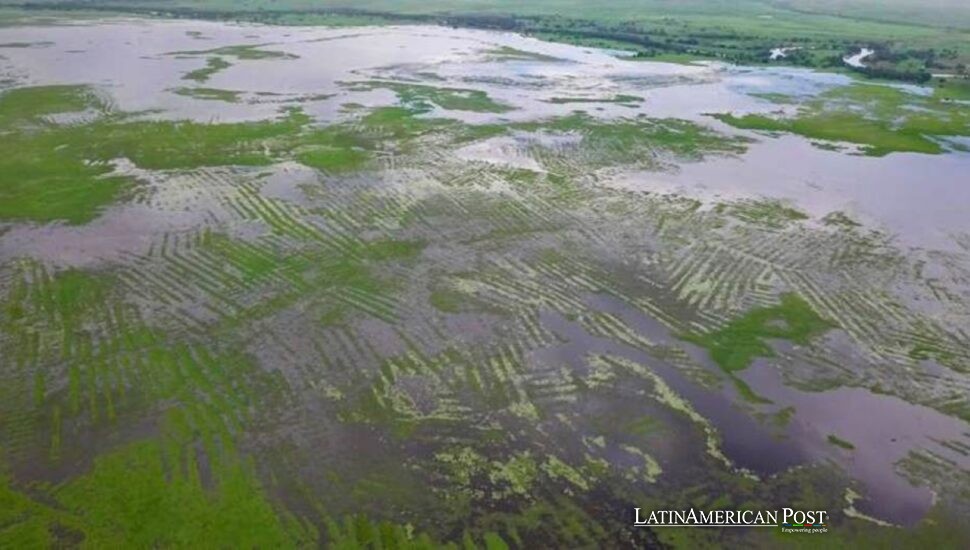
From an airplane, La Mojana does not look empty. Long ridges and old channels mark the Caribbean lowlands like faded writing, evidence of a society that learned to give water room.
Pre-Hispanic farmers built elevated agricultural fields across this flood-prone region of northern Colombia. The system covered roughly 500,000 hectares, an area comparable to Grand Canyon National Park and about three times the size of London. It operated from the final centuries before the Common Era until the 11th century, managing torrents during wet months and gradually releasing water as the land dried.
The scale encouraged an old archaeological assumption. Such engineering, scholars often believed, must have required powerful chiefs, strict hierarchies, and centralized command.
A study led by the University of Cambridge, in collaboration with Colombia’s Institute of Anthropology and History (ICANH) and the University of Santiago de Compostela, now argues otherwise. Published Tuesday in Communications Sustainability, the research concludes that local communities probably built and maintained the system through cooperation, far faster than previously imagined.
“These agricultural systems are so impressive that it has always been assumed they could only have been built under the command of hierarchical chiefdoms,” Cambridge archaeologist Jasmine Vieri said in comments provided to EFE. “But our data tell a very different story.”
That difference changes who receives credit for technological sophistication in the ancient Americas. Monumental work is often treated as the signature of kings. La Mojana suggests ordinary communities, acting repeatedly and collectively, could reshape an enormous landscape without palaces, standing armies, or a ruler’s coercive apparatus.
What the Satellite Revealed
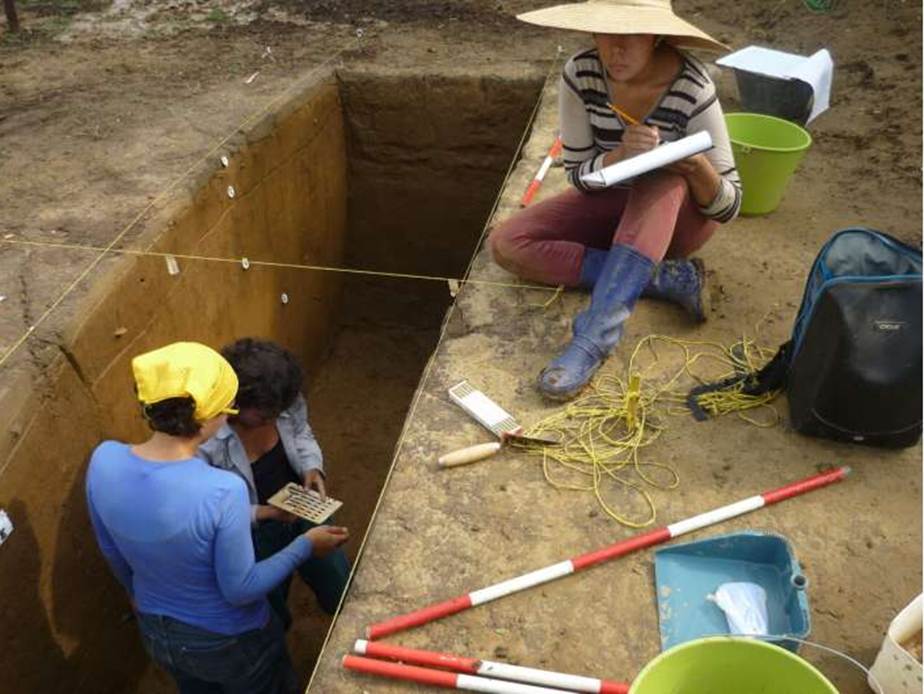
The researchers mapped 500 hectares around San Marcos, a municipality in Sucre. In that sample alone, satellite analysis identified 1,600 raised fields and 63 residential platforms. It was only a fragment of the larger hydraulic world, yet it joined farming, settlement, and water control.
Raised fields protected crops from saturated soil. Channels received and moved excess water. During dry periods, retained moisture could be redistributed across the landscape. Instead of trying to seal off the wetland, communities worked inside its seasonal rhythm.
Marcos Martinon-Torres of Cambridge, one of the study’s authors and principal investigator of the European Research Council-funded Reverseaction project, told EFE that these pre-Hispanic Indigenous populations were “innovative and cooperative.” They worked with nature rather than attempting to impose barriers against it.
That distinction cuts to the center of modern water politics. Across Latin America, large infrastructure has often been associated with central authority, concrete, dams, drainage, and the promise that nature can be disciplined through engineering. La Mojana represents another technological tradition. It did not eliminate flooding. It absorbed, delayed, and redistributed it.
The study also complicates familiar timelines of political development. These communities lived alongside Maya states and other stratified societies in Mesoamerica and the Andes, centuries before Aztec and Inca imperial power reached its height. Complexity, the findings imply, did not follow a single road toward kingship. A society could coordinate labor and maintain extensive infrastructure without becoming a centralized state.
The Reverseaction project asks how stateless societies developed complex technologies and how collective action produced durable public works without coercion. La Mojana offers an unusually large answer written directly into the soil.
Vieri told EFE that local communities could construct the systems “in very short periods of time” and organize themselves without depending on a powerful outside authority. The finding shifts the question from who commanded the work to how trust, custom, reciprocal obligation, and local knowledge made it possible.
An Ancient Warning for Modern Colombia
The research arrives as Colombia confronts a water-management crisis shaped by climate change, intensive agriculture, and failed public policy. Floods and droughts are often discussed as opposite disasters, but La Mojana’s ancient builders understood them as two moments in the same hydrological cycle. Their system addressed both.
Martinon-Torres told EFE that Colombian policymakers should draw inspiration from this model. Fernando Montejo Gaitán of ICANH added that officials have long shown interest in the old hydraulic works but lacked sufficient data. The new evidence, he said, shows that sustainable solutions can be organized locally and collectively, without direct state intervention.
That does not mean modern Colombia can reproduce a pre-Hispanic landscape or withdraw public institutions from regions burdened by poverty, land concentration, and uneven infrastructure. Ancient cooperation is not an excuse for state abandonment. It is evidence that communities should be treated as technical actors rather than passive recipients of projects designed elsewhere.
The political lesson is more demanding. Effective adaptation may require the state to fund, protect, and legally recognize local systems without swallowing them in bureaucracy. It may also require listening to Indigenous and rural knowledge that development policy has often dismissed as backward, even while expensive centralized projects fail.
La Mojana’s raised fields survived in the terrain long after the society that built them disappeared. Seen from above, they look almost ghostly. Yet their message is concrete: resilience was not delivered by a distant ruler. It was built through repeated cooperation, channel by channel, field by field, through agreements among neighbors who understood that water could not be conquered, only shared.
Also Read: Venezuela Earthquake Makes DNA the Last Road Home for Families