Colombia Lets Memory Bloom Where War Recruited Children to Fight
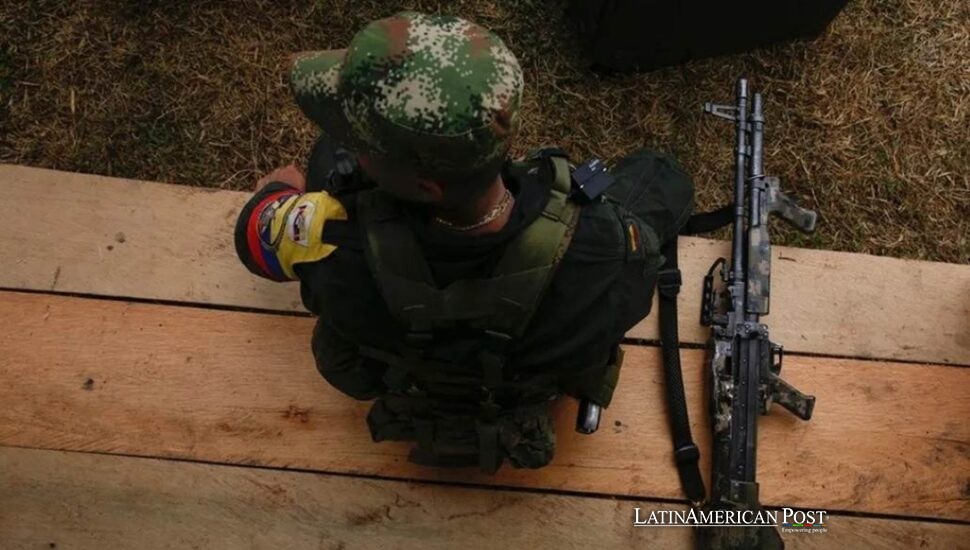
Inside Bogotá’s “Volver a florecer,” survivor Nayeli Gutiérrez turns paper flowers, childhood drawings, and hard testimony into a warning: Colombia’s child recruitment crisis belongs not only to memory, but to a violent present still hunting vulnerable children online and offline.
Before the Gun, There Was Abandonment
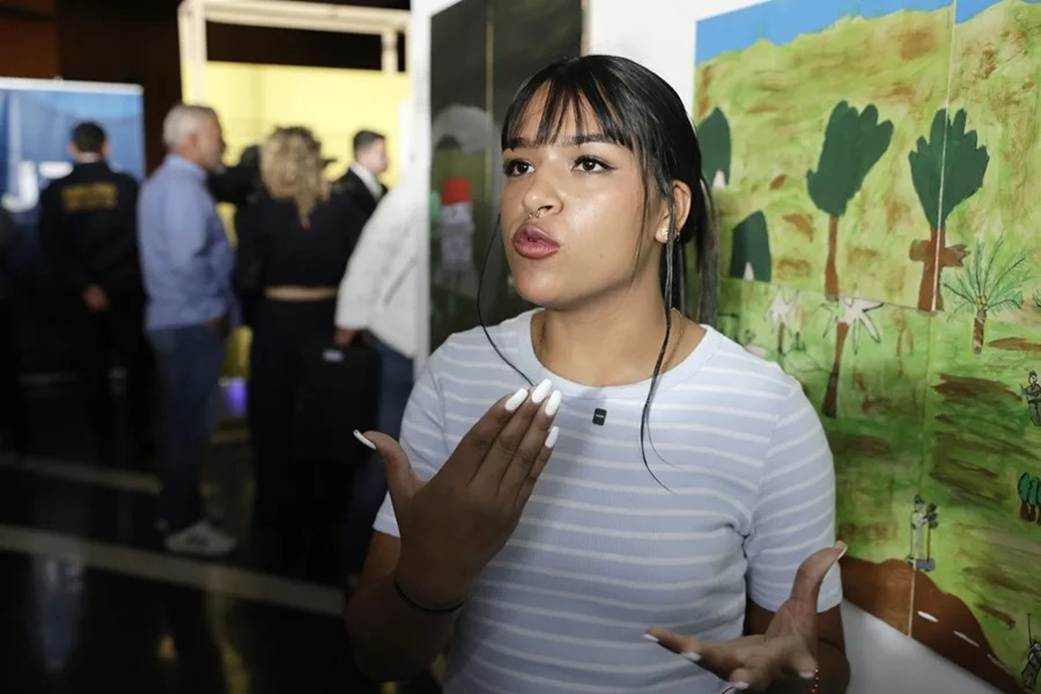
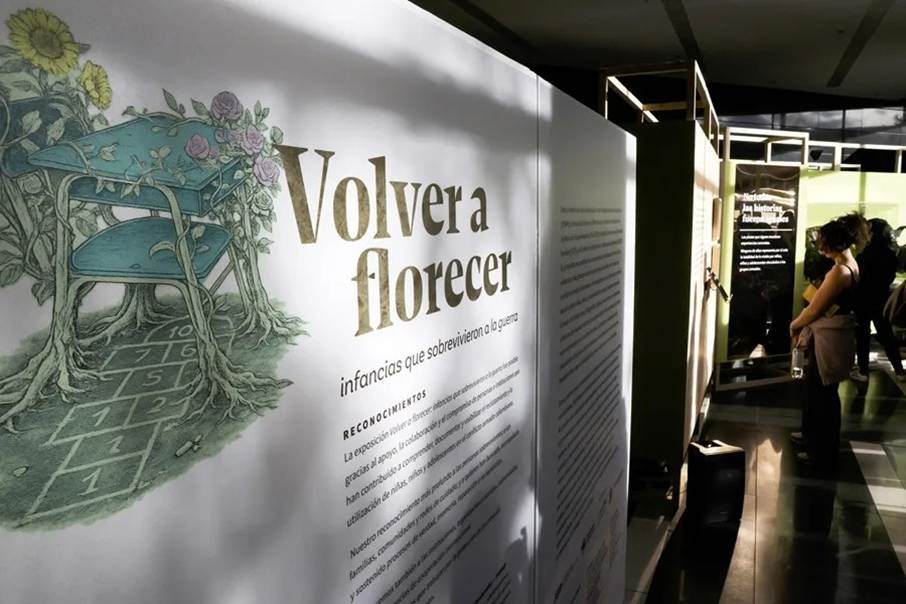
Nayeli Gutiérrez walks among paper flowers and butterflies inside Colombia’s Special Jurisdiction for Peace, the JEP, carrying a history the exhibition refuses to flatten into tragedy. She survived forced recruitment as a child. Now her voice guides visitors through “Volver a florecer,” or “Bloom Again,” in Bogotá through Aug. 17.
“We want to be recognized as victims, but not to be victimized again,” Gutiérrez told EFE. “We want people to see that we can also become something important, something beyond what we were.”
That distinction is the exhibition’s center. Recognition can open a door to justice, but it can trap survivors inside the worst thing that happened to them. Gutiérrez asks Colombia to hold the crime and the rebuilt life in the same frame.
Organized by the JEP, the National Museum of Memory and the National Center for Historical Memory, the show gathers drawings, photographs, objects and testimony. Its route begins before armed men appear, with poverty, family rupture and state absence that made children vulnerable across Colombia.
That choice matters. Forced recruitment is often narrated as a sudden abduction, a child seized from an intact world. The exhibition shows a longer chain. Where schools are fragile, services scarce and families strained by displacement or deprivation, armed groups encounter openings.
The exhibition then moves onto screens. Simulated conversations on social media, messaging apps and video games show how recruitment has migrated into digital life. The technology is new, but the political logic is familiar. Armed actors go where public institutions are weakest and where young people are searching for belonging, income, status or escape. A phone can become another unguarded road into war.
The Numbers Expose a Living Crime
The JEP’s Macrocase 07, which investigates the recruitment and use of children during the armed conflict, documents 18,677 victims. It is one of Colombia’s broadest judicial efforts to establish responsibility for a crime that was systematic, dispersed and often hidden by fear.
Current figures tell a parallel story. United Nations records cited by UNICEF show verified recruitment cases rising from 116 in 2020 to 453 in 2024. That is nearly four times as many cases in four years, an increase of about 291 percent. Spread across 2024, 453 cases equal roughly one verified recruitment every 19 hours.
That arithmetic gives chilling weight to JEP President Alejandro Ramelli’s warning. “Unfortunately, it is a tragedy that has not ended. Every 20 hours, a child is recruited in Colombia,” he told EFE.
The figures are not interchangeable. The JEP’s 18,677 victims belong to a historical judicial record, while the U.N. numbers count verified cases in recent years. Yet together they reveal continuity: a national crime archive still accumulating new entries.
Underreporting likely widens the gap between verified cases and reality. Families may stay silent because the armed group that took a child also controls the road, village, or local economy. There, reporting is not a civic act. It can threaten everyone left at home.
The 2016 peace accord with the FARC ended one war structure, but not equal peace across the map. Dissident factions and other illegal groups moved into territories, and illicit economies were left contested after demobilization. Violence fragmented, becoming less visible nationally and more intimate locally.
UNICEF links the surge to escalating regional violence, poverty, limited education and weak access to services and infrastructure. These are not background conditions. They are part of the recruitment machinery. An armed group’s promise, coercion or online message lands differently where the state is experienced as an absence.
A Country Learns to See Survivors Whole
Farther into the exhibition, children’s drawings fill the walls: red-roofed houses, trees, roads and smiling families. At first glance, they resemble classroom art. Then the titles interrupt the innocence, forcing visitors to understand that memory often preserves what violence removed.
At the end, a wall of paper flowers carries the sentence, “To bloom is to recover everyday life, and sometimes also to transform the lives of others.” It is a hopeful line, but not a soft one. Everyday life, in this context, means reclaiming routines, relationships and choices that armed groups once controlled.
Adriana González, director of the National Museum of Memory, told EFE the exhibition is meant to reach people who never experienced the conflict up close. “It not only recognizes what happened, but what we are still living today,” she said.
That is the wager behind placing art inside the JEP. Transitional justice can produce case files, findings and sanctions. Memory work asks another question: whether society can recognize the person inside the evidence.
Gutiérrez wants visitors to see survivors not as ruined childhoods frozen in public pity, but as citizens who rebuilt projects, ambitions and ordinary days. Her presence among the flowers turns the exhibition from commemoration into demand.
Colombia has become practiced at honoring pain after the fact. “Volver a florecer” asks whether it can become skilled at preventing it. The paper blossoms do not hide the violence. They mark the distance between surviving war and recovering a life, and the distance the country still has to travel.
Also Read: Chile Abortion Bill Puts Women’s Choice Through a Political Stethoscope