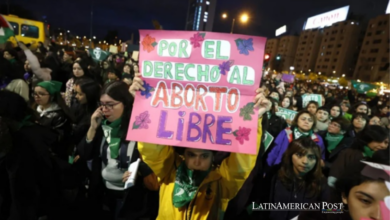
Chile Abortion Bill Puts Women’s Choice Through a Political Stethoscope

A far-right proposal in Chile would require doctors to offer fetal cardiac audio before legal abortions, then deny the procedure when patients decline. The contradiction has reopened a struggle over autonomy, trauma and President José Antonio Kast’s promised political restraint.
A Choice That Cancels Itself
The scene written into Chile’s latest abortion bill is intimate by design. A doctor tells a patient that embryonic or fetal cardiac activity is detectable, then offers to make it audible. She may say no. Under the bill’s own language, the physician must then refuse the abortion and record her decision. This is the controversy’s hinge: the proposal calls her refusal free, yet attaches the loss of care to it. Choice becomes ceremony, then consequence. The clinical room becomes a checkpoint, and consent becomes conditional, too.
The one-article motion entered Congress on June 25 and remains in its first constitutional stage. Six lawmakers signed it, including members of the National Libertarian Party, the Republican Party founded by Kast, and the traditional-right National Renewal party. It would amend the Health Code governing Chile’s 2017 abortion law, which permits termination only when the patient’s life is at risk, a fetal condition is lethal, or the pregnancy resulted from rape. It targets women and girls already confronting the law’s severest exceptions.
Sponsors call cardiac activity objective clinical information. They argue that little could be less ideological than allowing a baby’s heartbeat to be heard before death. Yet existing law already requires complete, objective information and says it must never be delivered to influence a woman’s will. The bill creates its own contradiction. When sound is paired with moral language and a penalty for refusing, information becomes staged persuasion. The question is not whether a machine produces audio. It is who controls its meaning when care can be withheld.

The Long Shadow of 1989
Chile’s history makes that examination room crowded. Therapeutic abortion was legal from 1931 until 1989, when the military regime prohibited every procedure intended to end a pregnancy. That blanket ban survived the democratic transition for nearly three decades. Only in 2017, during Michelle Bachelet’s second presidency, did Congress restore limited access through the three grounds now in force. The law was a narrow democratic repair, not a sweeping settlement. The new proposal shows how rights can be narrowed through procedure without formally repealing them.
Antonia Orellana, the former women’s minister under Gabriel Boric, asked in a public letter whether such a measure was necessary for someone who knows the pregnancy will not survive, EFE reported. Her question pulls the bill out of abstraction. A woman with a lethal fetal diagnosis may already be grieving. A rape survivor may be a child. A patient whose life is in danger may be in an emergency. The proposal inserts another moral encounter and makes care depend on participating in it.
Language does much of the political work. The text moves between “cardiac activity,” a clinical phrase, and “heartbeat,” a word laden with family, memory and personhood. Feminist organizations have called the measure cruel and described it as ideological deterrence dressed as health policy. Javiera Canales, director of Corporación Miles, told reporters in comments carried by EFE that Chile’s right has increasingly adopted strategies promoted by international ultraconservative movements.
The sponsors look abroad. Their bill cites ultrasound and heartbeat requirements in several U.S. states, while EFE noted comparable conservative initiatives in Hungary and Spain. The shared tactic goes beyond copying statutes. It redefines informed consent. Instead of ensuring a patient understands risks, alternatives, and prognosis, the state selects an emotionally charged cue and places it immediately before legal care. Chile already permits individual and institutional conscientious objection, so another refusal point can mean another provider, appointment, and delay.
Kast’s Quiet Culture War
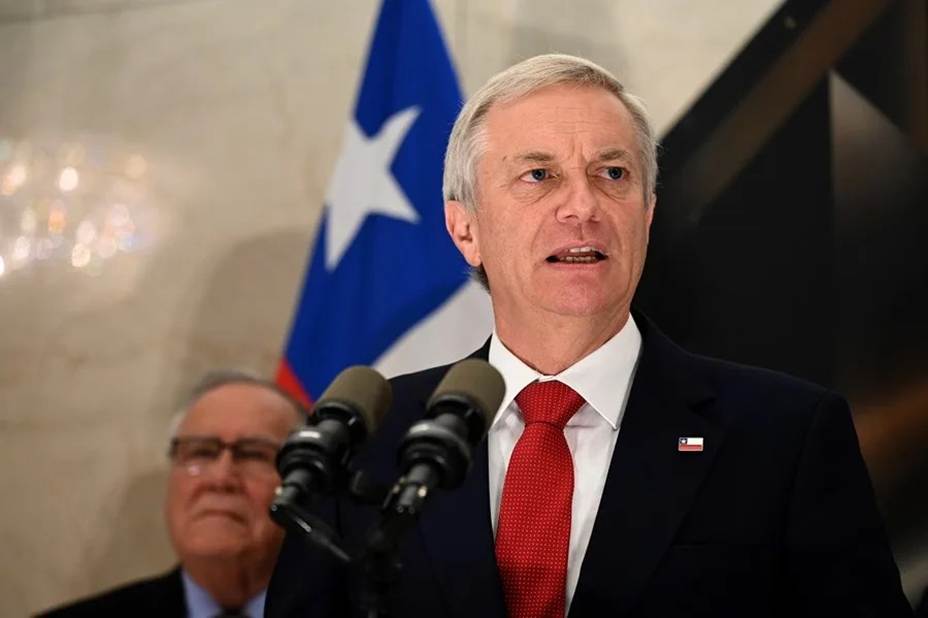
Kast campaigned on crime and the economy and promised not to lead with a “cultural battle.” He is also a longstanding abortion opponent and father of nine. His government says this is a parliamentary initiative, not an executive proposal. Women’s Minister Judith Marín, known for anti-abortion activism, had not publicly addressed it when EFE reported the controversy. The distinction is formally accurate. Politically, it is incomplete.
A culture war can travel through allied legislators while the executive keeps its distance. Three sponsors belong to the party Kast founded, two come from a libertarian force further right, and one represents the conventional right. That lineup attempts to turn a hard-line demand into a broader conservative test while allowing the government to insist its priorities remain security and growth.
Kast won after a campaign dominated by fears over violent crime, migration and economic malaise, not a detailed mandate to rewrite reproductive policy. His coalition also faces a divided Congress. The bill therefore poses a larger democratic question: can an election won on public order become permission to regulate private grief? Across Latin America, where social rights can advance under one government and face procedural rollback under the next, Chile’s answer will travel.
The proposal remains early in the legislative process, and its fate is uncertain. Yet it has exposed the stakes clearly. Supporters say the sound completes informed consent. Critics say it turns consultation into pressure. The decisive fact lies in the text: when a patient declines the offered ritual, the doctor must decline to provide her care. The loudest sound is not a heartbeat. It is a closing door.
Also Read: Cuba Moves a Dissident from Prison into a Darker Silence