Ecuador Lets Trans Teens Be Seen as Politics Looks Away
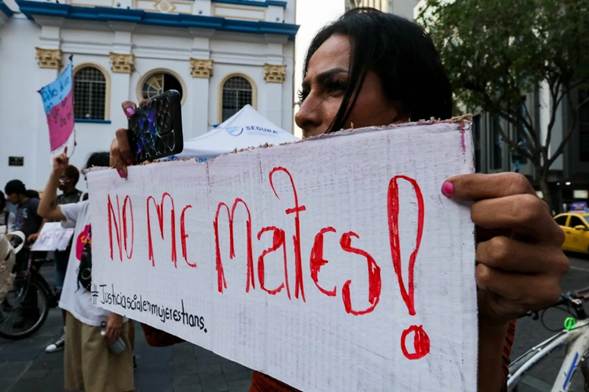
Ecuador’s court-backed opening for transgender adolescents seeking legal recognition marks a profound victory for dignity, family persistence, and civil rights. However, reality shows how fragile that gain remains in a country where institutions still lag behind lived reality.
A Right Won in Court, Not in Culture
In Ecuador, one of the most intimate acts a state can perform is also one of the most revealing. It can decide whether to call a person by the name that lets them breathe.
That is why the recent Constitutional Court rulings opening the door for Ecuadorian adolescents to modify their names and sex in official records matter so deeply. On the surface, they are legal decisions. In lived terms, they are something more basic. They are judgments about whether transgender young people will be recognized as full human beings by the institutions that shape school, health care, movement, and daily belonging. The Associated Press, in reporting by Maria Teresa Hernandez, frames that opening through the story of a girl called Amada, a name chosen because, as her mother Lorena Bonilla says, she came into their home to be cherished. That sentence alone carries more moral clarity than many political speeches.
Amada’s case, together with another decided in March, expands a right that adults in Ecuador only secured after years of advocacy culminating in a 2024 reform. Supporters of LGBTQ+ rights welcomed the rulings, especially in a region where conservative movements have recently gained ground. But even in victory, the notes do not present Ecuador as a settled story of progress. They present a country where rights still arrive through litigation because too many other doors remain closed.
That pattern matters. In Ecuador, as in other Andean countries noted in the report, LGBTQ+ rights have largely been shaped by courts rather than lawmakers or executive leaders. Christian Paula of the Pakta Foundation says turning to the courts reflects a lack of openness and sensitivity within institutions. He is naming something larger than a procedure. When a community must repeatedly seek recognition from judges rather than elected officials, it indicates democracy is functioning unevenly. Formal rights exist, but political courage does not. The law may advance, while the culture of governance stays hesitant, evasive, or hostile.
That helps explain why Amada’s family had to suffer so much before reaching this point. Their legal fight began after school authorities refused to admit her because her documents did not match her gender identity. Bonilla says they went through 14 schools, and none would take her in. That detail should stop any easy celebration. Before a court ruling became a rights milestone, a child was being told over and over that she could not enter the ordinary spaces where a society forms its future.
The Weight of Backlash
Ecuador’s gains in LGBTQ+ rights are real. The report points to three landmark advances achieved through the courts: the decriminalization of homosexuality, a ruling that allowed a transgender woman to change her name, and the legalization of same-sex marriage. But every one of those gains has also produced a reaction, and that reaction is not peripheral. It is part of the structure of the struggle.
The notes show that clearly. Conservative and religious sectors continue to portray gender recognition for adolescents as a threat. Cristian González Cabrera of Human Rights Watch warns that this climate can become institutional hostility, delays, and unjustified denials. That is one of the sharpest truths in the story. Rights are not defeated only by dramatic legal reversals. They are also worn down by small humiliations, administrative obstruction, suspicious officials, and public narratives that treat trans children as ideological symbols instead of children.
That backlash is visible across several layers of public life. One conservative leader accused the court of overstepping its authority. The Catholic Bishops’ Conference expressed concern that allowing adolescents to make such decisions poses serious risks to their development. President Daniel Noboa, while not as outspoken as some conservative leaders elsewhere in Latin America, has shown little support for LGBTQ+ rights. As a candidate, he pledged to defend the traditional family, and once in office, violence and economic instability crowded gender and diversity issues out of his political agenda.
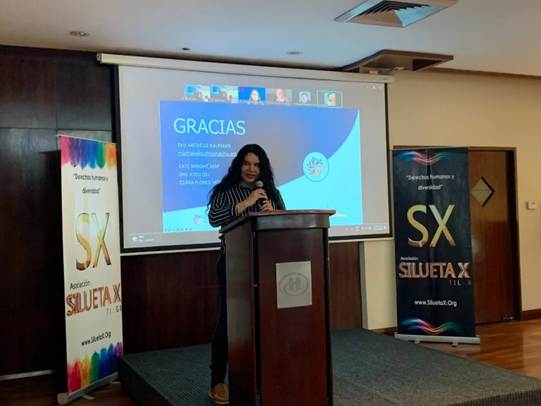
That combination is politically familiar across the region. Governments do not always need to lead a frontal attack on LGBTQ+ rights. Sometimes, indifference is enough. Sometimes a cool distance, paired with ministers hostile to what they call “gender ideology,” creates a climate where discrimination can continue under a respectable administrative tone. Diane Rodríguez, president of Silueta X, points directly to that atmosphere. She says it is reflected in her daily life, including difficulties enrolling her daughter in school because people assume that simply by being visible, she is somehow a danger to children.
There is a deeper Latin American pattern here, too. The panic around transgender recognition often presents itself as a defense of childhood, family, or national values. But in practice, it tends to produce the opposite. It makes children’s lives harder, burdens families willing to love them openly, and narrows the meaning of citizenship for those already on the margins. The supposed defense of order becomes a machinery of exclusion.
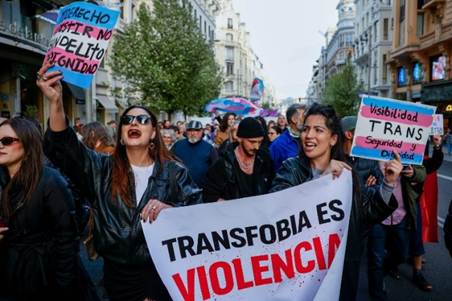
That exclusion is not abstract. Silueta X’s annual record of killings of LGBTQ+ people gives it a body count. Its first report documented two killings. The 2025 publication reported 30 deaths, 21 of them trans women. Those numbers sit in the background of this story like a warning bell. Legal recognition matters not only because of paperwork, but because invisibility has consequences.
Families Doing the Work the State Would Not
The emotional center of the AP story is not the court itself. It is the family that refused to abandon its daughter.
Amada told her parents she was a girl at age 3 and asked for a princess-themed birthday party. Bonilla and her husband, Mauricio Caviedes, both raised Catholic, initially assumed she was confused and dressed her as a prince instead. That admission gives the story its human depth. This is not a tale of instant enlightenment. It is a tale of learning, unlearning, and deciding that love must become action. Over time, they dismissed psychologists who said something was wrong with their daughter or with their parenting. They educated themselves. They became activists. They took their children to protests and conferences. They supported same-sex marriage and founded an organization for families of trans children.
Bonilla says that it became the only way they could fight the state. That line reveals the quiet heroism of many Latin American rights struggles. Families often begin by trying to solve a private wound and end up confronting entire systems. They become organizers because institutions force them to. They become public because privacy no longer protects their children.
Even after moving to Canada during the pandemic, Bonilla kept advocating for LGBTQ+ rights in Ecuador. Amada, now a strong student who dreams of becoming a nurse, has grown up watching her parents stand beside others struggling to access health care without discrimination. Bonilla says people think the destiny of transgender people is sex work or hiding, but she wants every parent to know their child can become whatever they want to be.
That is the real argument running through Ecuador’s court victory. Legal recognition is not merely about correcting documents. It is about breaking a script of social abandonment. It is about refusing the old regional habit of treating trans lives as tragic, marginal, or disposable. Ecuador’s court has opened a door. But the AP’s reporting makes clear that the harder labor lies beyond it, in schools, ministries, churches, family conversations, and the daily habits of a society still deciding whether to meet its children with fear or with love.
Also Read: Brazil Turns Pet Custody into a Measure of Modern Love