When Saints Walk Among the People: Caracas Seeks Healing in Faith and Memory
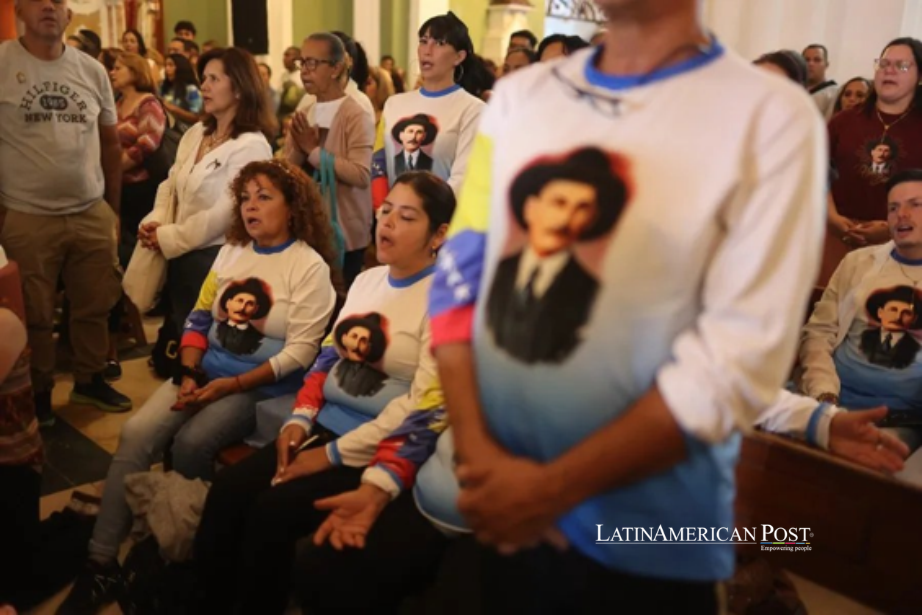
A year after José Gregorio Hernández and Carmen Rendiles became Venezuela’s first saints, pilgrims in Caracas carry grief, gratitude, and urgent needs through the capital, where devotion offers shared ground and political leaders have sought to harness its unifying power.
A Pilgrimage Through Unfinished Grief
A hospital was among the stops. That detail says much about the procession that brought hundreds of people into western Caracas on Sunday, October 18. Along a route connecting churches, a museum honoring Hernández and a place where people seek treatment, Venezuela’s first saints remained close to the concerns that defined their lives.
The pilgrims gathered on the eve of the first anniversary of their canonization. Their walk ended with Mass. For Belkis Rosales, of Venezuela’s Servants of Jesus congregation, the occasion also carried the suffering left by the June 24 earthquakes. Speaking to EFE, she emphasized the saints’ importance amid the country’s needs and pain.
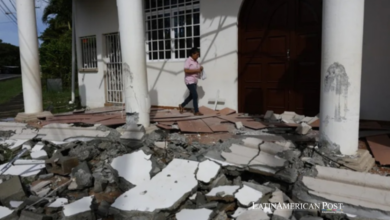
The official figures cited in EFE’s anniversary report were immense: at least 6,509 dead, nearly 18,000 people affected, 856 buildings damaged, and 190 collapsed. Almost four months after the disaster, those numbers describe overlapping demands on families and public services. Bereavement continues alongside the need for shelter, treatment, and an income.
These totals cannot establish how many households have recovered or whether the collapsed buildings are included in the damage count. They do establish the scale behind Rosales’ appeal. A religious anniversary becomes something more intimate when people bring needs that remain unresolved long after the emergency disappears from the daily headlines.
Rosales also asked the saints to intercede for Pope Leo XIV, discharged from the hospital Saturday after surgery for lung cancer. The pope who had proclaimed them saints was now himself recovering. Across that distance, the language of care linked a hospital in Rome with the concerns of worshipers in Caracas.
The Work Before the Miracles
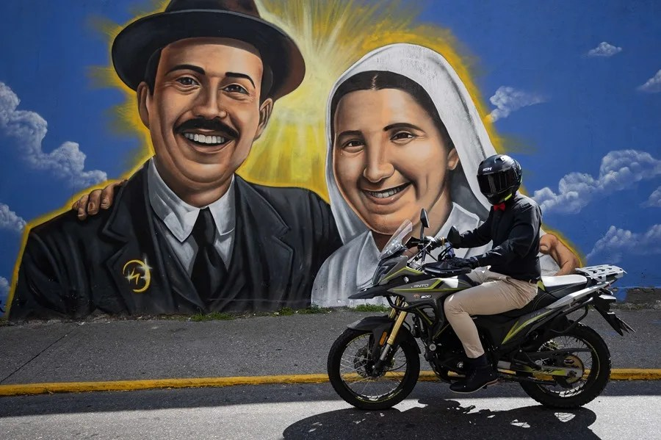
Hernández was born in Isnotú, Trujillo, on October 26, 1864, into a modest religious family. His reputation as the “doctor of the poor” grew as he treated people whose poverty might otherwise have kept medical care out of reach. He died after being struck by a car in Caracas on June 29, 1919.
His beatification came on April 30, 2021, following Church recognition of a miracle attributed to his intercession: the recovery of Yaxury Solórzano Ortega, a girl shot in the head. Canonization followed in 2025. The distinction matters. Popular devotion sustained his memory for generations before the Church formally recognized him.
Rendiles’ path began with exclusion. Born in Caracas on August 11, 1903, without most of her left arm, she was rejected by several religious communities because of her disability. In 1927, she entered the Servants of Jesus in the Blessed Sacrament and, in 1965, established an independent Venezuelan congregation.
That interval spans 38 years. Her achievement reflects decades of religious work and institution-building, including schools for girls from low-income families. The woman whom communities had considered unsuitable became a founder and superior general. Her biography challenges a narrow understanding of who can lead, teach, and organize collective life.
After a 1974 traffic accident fractured her leg, she continued working with crutches and a wheelchair until her death on May 9, 1977. Beatified in 2018, she moved toward canonization after approval of another healing miracle in March 2025.
By the ceremony on October 19, 2025, Hernández had been dead for 106 years and Rendiles for 48. These long intervals help explain why the event felt like recognition of an existing inheritance. Their authority rested on remembered service, preserved through families and religious communities, rather than on a title alone.
“Our grandmothers taught us to venerate him,” Hortensia, a pilgrim from Caracas, told EFE at last year’s ceremony in Rome.
Who Gets to Claim the Saints
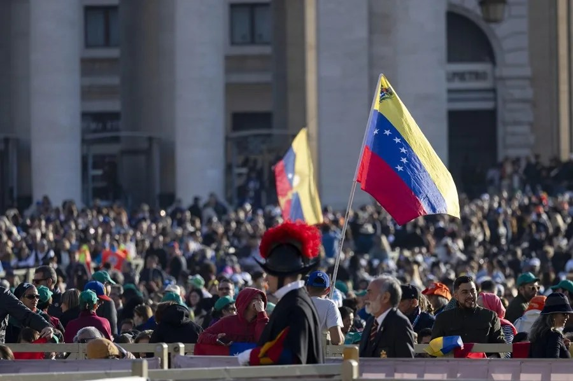
About 55,000 people attended the Vatican ceremony, according to local authorities cited by EFE. Seven people were canonized that day, so the total cannot be treated as a count of Venezuelan pilgrims. Still, Venezuelan flags and shirts bearing images of the new saints made the country’s presence unmistakable.
Political leaders recognized the opportunity. In October 2025, Nicolás Maduro, then Venezuela’s president, said Pope Francis had “done justice” by approving the canonizations, according to EFE. His government connected the celebration to tensions surrounding the U.S. naval deployment in the Caribbean.
Vladimir Padrino López, the defense minister at the time, went further. In a Telegram message reported by EFE, he described the canonizations as a “spiritual shield” against threats to national unity. Religious recognition was being folded into the vocabulary of sovereignty and military defense.
Yet Hernández’s appeal across chavista and opposition loyalties exposes the limits of that claim. Shared devotion does not establish agreement about who should govern. Its value may lie precisely in allowing Venezuelans to recognize something cherished in one another without first settling their political differences.
The saints’ biographies also set demanding terms for any official embrace. Honoring a physician devoted to poor patients invites scrutiny of access to treatment. Celebrating a woman who educated disadvantaged girls raises questions about who can enter a classroom and remain there.
Sunday’s route brought those obligations back to street level. Between the church and the hospital lay the same human need. The procession ended with Mass; the work that made these two Venezuelans beloved still awaits anyone willing to do it.