Chile’s Kelp Forest Ban: Protecting Fishermen and Underwater Ecosystems
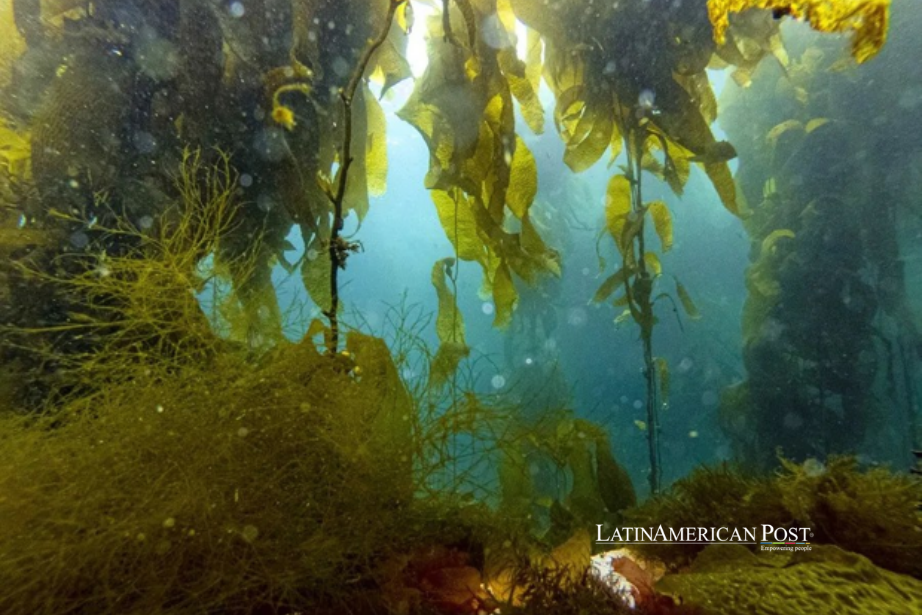
Chile’s Patagonian fishermen helped secure a kelp harvesting ban through 2034, protecting underwater forests that shelter valuable marine life. A review of 102 studies now reveals their extraordinary diversity while exposing knowledge gaps and tensions within conservation efforts.
A Nursery Worth Leaving Standing
A young king crab finds shelter at the base of a kelp plant. Patagonian squid attach their eggs to its fronds. Sea urchins feed on the material it sheds. Beneath the waters of southern Chile, the connections between an underwater forest and a fishing household begin long before anything reaches a boat.
“They are like underwater nurseries,” researcher Jaime Ojeda told EFE.
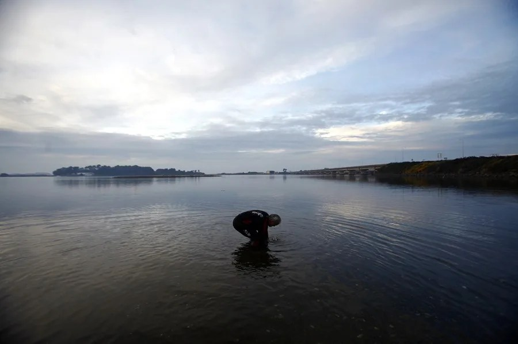
In Magallanes, fishermen helped secure protection for giant kelp, locally called huiro, because their catches depend on the habitat it creates. Through fisheries management committees, they pushed for an extraction ban first introduced in 2022 and renewed in 2024 for ten years, through October 2034.
Their intervention challenges the familiar assumption that conservation must be imposed on people who work at sea. These fishermen were defending the conditions that make their work possible. Protecting the forest meant protecting animals before they became a marketable catch.
Andrés Mansilla, a coauthor of the research and director of the University of Magallanes’ Antarctic and Subantarctic Marine Ecosystems Laboratory, told EFE that local communities understand these connections through experience.
“They know better than we do the effects these forests have on species we eat or sell,” he said.
He described pressure from private companies interested in extracting kelp. For fishing families, however, the calculation extends beyond what the algae could fetch. Removing habitat can shift costs onto people whose earnings depend on the animals that live there. The sale and the consequences appear in different accounts.
That makes the ban an economic decision as well as an ecological one. It protects a shared source of production that cannot be valued solely by weighing the kelp available for harvest.
What the Numbers Cannot See
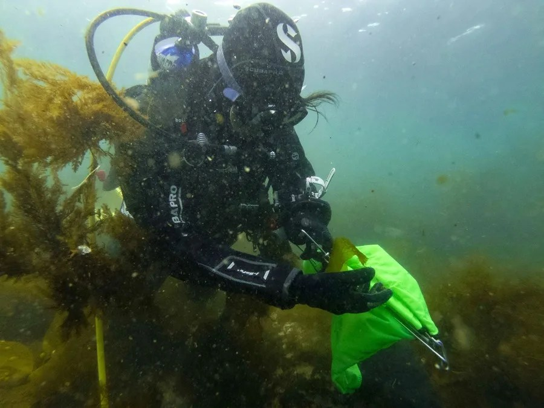
The scientific review, published in Current Opinion in Environmental Sustainability, assembled 102 studies through a collaboration involving the Cape Horn International Center, the Millennium Institute BASE and the universities of Chile and Magallanes. It documented at least 535 associated groups of organisms, known as taxa.
Those records included 105 crustacean species and 43 fish species. Together, they account for roughly 28 percent of the documented groups. That is a share of recorded diversity, not a measure of how numerous those animals are. Most of the inventory belongs to other organisms.
The distinction matters because the forest’s value extends beyond recognizable seafood. Its structure and food supply support a much wider community. Protecting only a commercially valuable animal while removing the surrounding habitat would leave part of its life cycle exposed.
The total of 535 also reflects where scientists have looked. The review found research concentrated around accessible hubs, with thinner coverage elsewhere. A large bibliography can therefore coexist with large gaps: repeatedly studying convenient locations does not produce an equally detailed picture of remote channels and fjords.
The human gaps were striking, too. The literature covered eight of eighteen categories used to assess nature’s contributions to people, but none of the three categories concerning nonmaterial relationships. That research framework’s documented coverage omitted cultural meaning, despite communities’ longstanding ties to these waters.
Indigenous connections cannot be dismissed because published studies have overlooked them. That absence makes consultation more necessary. A conservation policy built only around what scientists have measured risks missing relationships that residents have maintained across generations.
Mansilla invites people to imagine looking from an underwater window onto forests stretching through southern Chile. He describes kelp reaching lengths of up to 80 meters, about 260 feet. The image conveys scale; the research explains why so many lives fit inside it.
Protection Before the Damage
Magallanes has an opportunity that places struggling to restore depleted forests no longer enjoy: preserving extensive habitat before extraction transforms it. But a harvesting ban addresses only part of the risk. Tasmania’s giant kelp losses, for example, have been linked to warming waters and expanding sea urchin pressure.
Protection also needs to address onshore consequences. The Magallanes decree prohibits collecting stranded kelp and removing living plants. The review identified an unintended effect on small farmers who use washed-up algae to fertilize their soils.
Those farmers complicate any easy division between people who protect nature and people who take from it. Rules designed to restrain industrial extraction can also interrupt modest local practices. Addressing that problem requires clear distinctions, ecological safeguards, and the participation of those affected.
The researchers want to strengthen protection by moving it from a temporary decree into law, with fishermen, local communities, and Indigenous peoples involved. The October 2034 deadline gives time to build that agreement, but it also marks when the current guarantee expires.
Kelp’s role in moving carbon through marine food webs adds another reason to protect it. Its organic matter feeds other organisms and travels beyond the standing forest, connecting coastal habitat with life on the seabed. Conservation therefore reaches beyond the plants themselves.
“These kelp forests do not serve only the people of Magallanes; they serve the whole planet,” Mansilla told EFE. For the fishing households that sought the ban, the connection is also close to home: shelter for a young crab today can help sustain tomorrow’s work.