Colombia Earthquake Cracks Open the Nation’s Deepest Inequality Fault Lines
From Chocó’s isolated communities to Pereira’s shattered neighborhoods and Cali’s damaged economic corridors, Colombia’s strongest earthquake this century has revealed that seismic danger may begin underground. Still, survival, rescue, and recovery are divided sharply by wealth, geography, race, and access.
The Epicenter Was Never Just Geological
The ground broke beneath San José del Palmar at 7:34 on Monday morning, where Chocó’s rainforest meets Colombia’s coffee interior. The magnitude 7.4 earthquake began 103 kilometers below the surface, according to the Colombian Geological Service, but its consequences were felt across a country divided by distance, investment, and political attention.
Nearly 260 people had been reported dead as searches continued. Valle del Cauca accounted for 150 deaths, including 95 in Cali. Pereira, 55 kilometers from the epicenter, reported around 90. Quibdó counted 14. Damaged roads and communications kept the totals fluid.
That delay matters. In a river community without reliable power or cellular service, the missing may remain absent from official counts long after relatives begin searching.
Chocó is one of Colombia’s poorest and most neglected departments, predominantly Afro-Colombian and Indigenous, with weak transport links across rivers and forest. The reporting placed extreme monetary poverty there at 44.9 percent in 2024 and unemployment at 12.8 percent in 2025.
The seismic wave did not ask who had savings, insurance, a reinforced roof, or a road to the nearest hospital. Recovery will.
President Abelardo de la Espriella visited Quibdó first and promised subsidies. The gesture mattered in a region accustomed to entering national politics through tragedy or abandonment. Yet payments cannot replace missing clinics, schools, roads, or communications.
The quake came from the Nazca Plate moving beneath the South American Plate. Its origin differed from that of the shallower June earthquakes in Venezuela, which were produced by lateral movement between the Caribbean and South American plates. Geology explains how the earth moved, not why some families had stronger walls or faster ambulances.
One Disaster, Unequal Chances
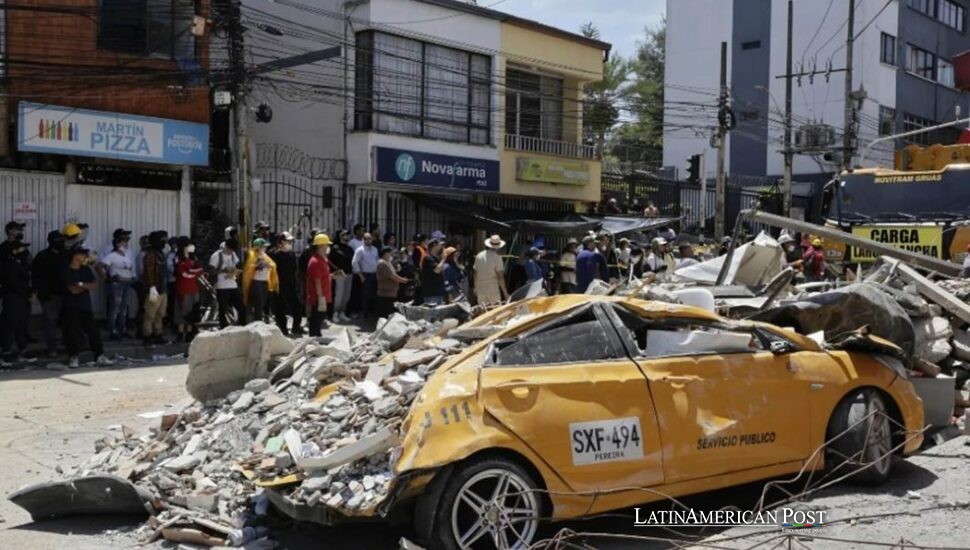
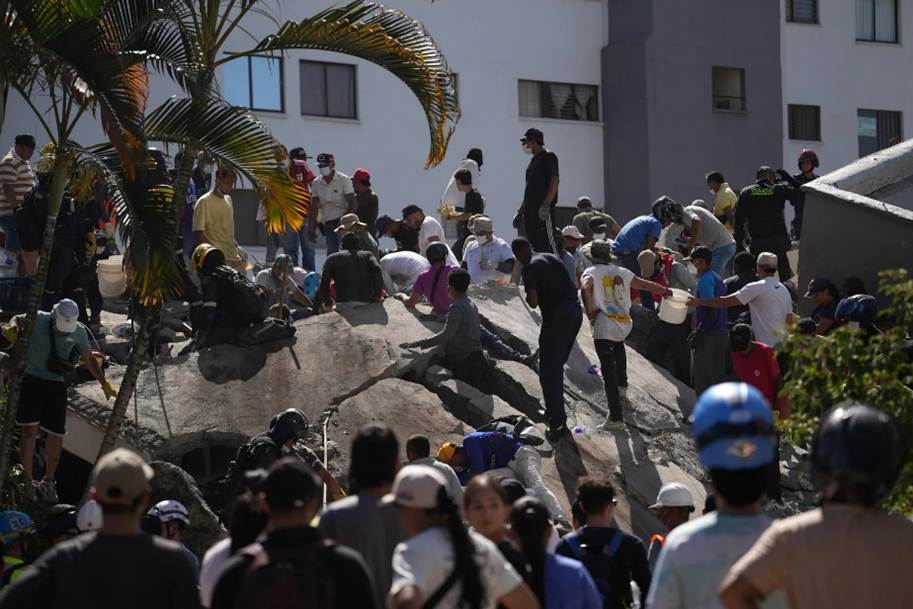
In Pereira’s La Lorena neighborhood, inequality became intimate. Volunteers passed buckets of debris over a taxi crushed beneath concrete. Then rescuers raised their fists. Silence spread as everyone listened below.
Wílder Alvear, a young disaster support physician, told EFE that teams believed one person might still be alive. Search dogs were working, and medics were prepared to stabilize whoever emerged. “We are waiting to see if there is a patient alive, which is what we want,” he said.
Nearby, soldiers carried out a woman who had died while her son cried, “My mother.” Work stopped. Then it resumed.
Maribel Verano Ramírez moved through Pereira carrying photographs of her mother, Luz Marina Ramírez Verano, and her younger sister, Sandra Liliana. She had heard they might have escaped their collapsed hotel, but she could not find them. Her mother uses a cane. Her sister uses a wheelchair after meningitis.
“I don’t know if they are alive or not. I don’t know if they are well,” she told EFE.
Her search exposed a quieter hierarchy of survival. Emergency systems often assume people can run, climb stairs, hear instructions, navigate shelters, and move independently between hospitals. Older adults and people with disabilities face the same earthquake, but not the same escape.
Even in anguish, Verano asked authorities not to forget Esperanza Galicia, where families also reported their homes were damaged. Her plea captured a familiar Latin American geography of attention. Cameras gather around spectacular collapses. Peripheral neighborhoods wait. Damage becomes invisible because it lies farther from the avenue, airport, or television signal.
Pereira’s losses reach through the Coffee Axis economy. Matecaña International Airport remained closed due to severe structural damage, with no reopening date announced. Tourism, cargo, business travel, and family movement now carry uncertainty.
Cali represents another scale of exposure. Colombia’s third-largest city recorded 95 deaths days after hosting De la Espriella’s inauguration. Valle del Cauca is an economic corridor tied to manufacturing, trade, health care, education, and Pacific commerce. Failures there travel through payrolls and supply chains.
Regional wealth can conceal household fragility. A city may produce billions while a vendor, pharmacist, or bakery worker has no cushion for a week without sales. Pereira businesses reopened amid broken glass because staying closed could be more economically dangerous than returning to a damaged building and calling that resilience risks romanticizing necessity.
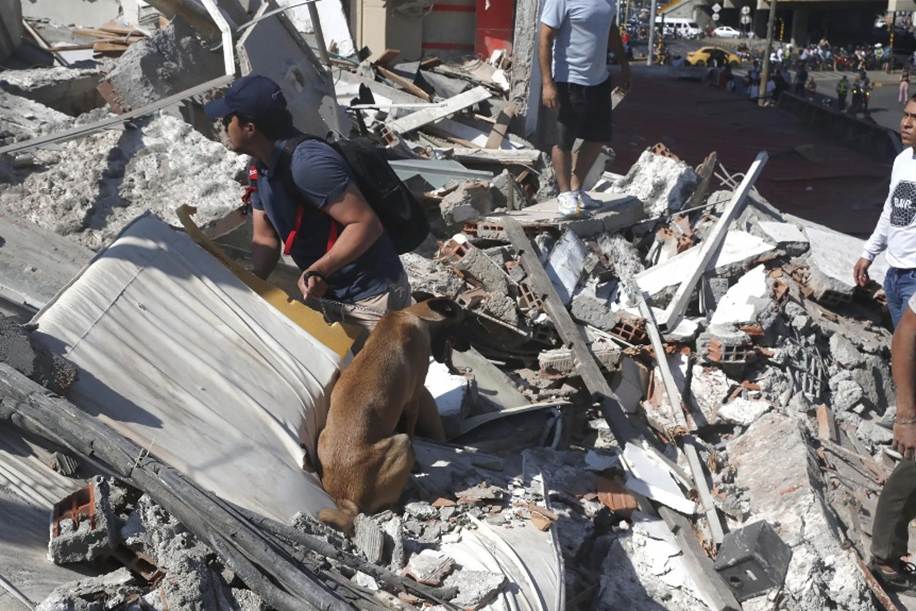
Rebuilding Risks Repeating the Map
The 1999 Armenia earthquake killed 1,185 people, injured more than 8,536, destroyed or made uninhabitable 35,972 homes, and affected 6,408 coffee farms. It showed how an earthquake can erase shelter and income in the same instant.
A Coffee Axis home may also contain a shop, rental room, stored harvest, or family savings. Rebuilding only walls can leave the household economy buried.
Aid based mainly on formal property titles can exclude renters, informal settlers, cash-paid workers, and families occupying inherited homes without updated documents. Insurance accelerates recovery for those who have it. Others wait on public aid, relatives, or debt.
The earthquake arrived days after De la Espriella took office promising austerity and a smaller state. His first crisis now demands engineers, hospitals, geological monitoring, shelters, transport, credit, and transparent contracting. Cutting waste and cutting capacity are not the same act, especially while 103 aftershocks keep exhausted families outside.
Colombia strengthened seismic rules after earlier disasters, but regulations protect only when design, materials, inspections, maintenance, and enforcement align. The damaged airport, homes, schools, and clinics require forensic investigation, not ceremonial assurances.
The greater danger is that reconstruction restores the country exactly as it was. Cali may recover faster because it concentrates institutions and capital. Pereira may draw investment because the Coffee Axis is economically central. Chocó may receive emergency promises, only to return to the margins when the cameras leave.
In Pereira, the raised fist still asks everyone to listen for life beneath rubble. Soon, listening must extend to the neighborhood without a television crew, the Indigenous community beyond the damaged road, the tenant without a deed, and the shopkeeper whose home and livelihood occupied the same room.
An earthquake cannot choose its victims. A recovery plan can. Colombia’s measure of justice will be whether reconstruction closes the inequalities the ground exposed, or pours new concrete over old fault lines and waits for them to split again.
Also Read: Latin America Battles Illegal Gold as Rivers Become Crime Scenes