Brazilian Star Kerolin Makes Barcelona Bet Big on Football’s Future
Barcelona’s record €1.5 million investment in Brazilian forward Kerolin Nicoli is more than a transfer. It is a wager on speed, reinvention and women’s football economics, linking São Paulo, Madrid, North Carolina, Manchester and Catalonia in one ambitious career arc.
A Record Fee and a Familiar Dream
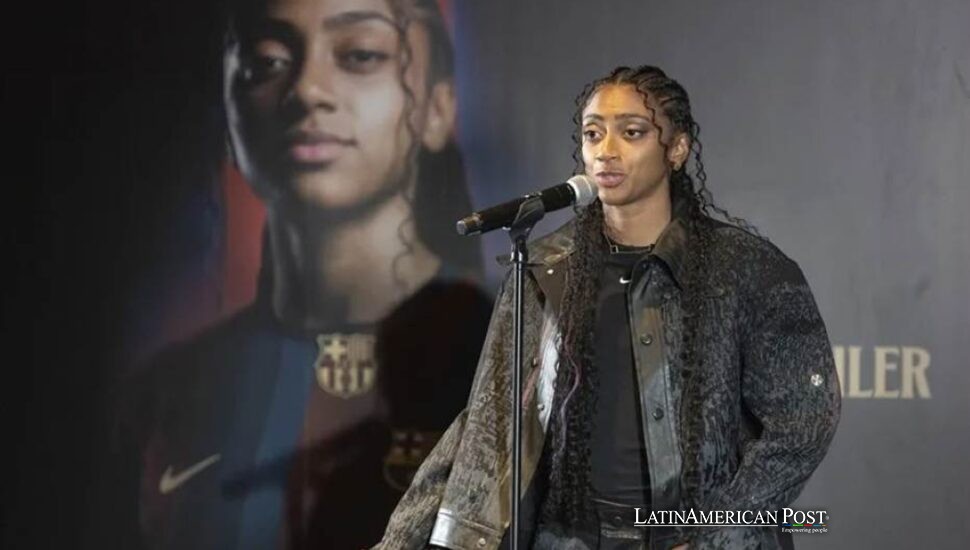
Kerolin Nicoli stood inside the commercial offices of the Spotify Camp Nou with the smile of someone who understood both the glamour and weight of arrival.
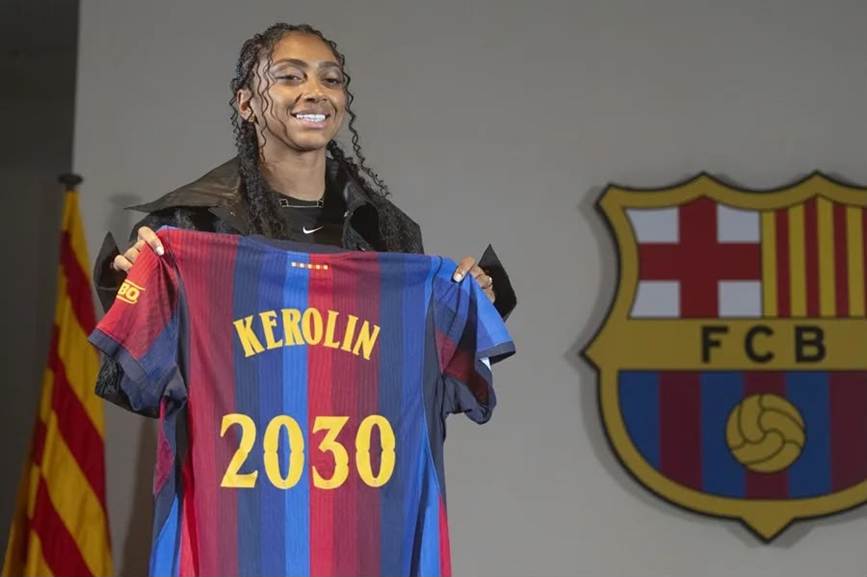
At 26, the Brazilian forward had signed with Barcelona through 2030. The reported price, €1.5 million in fixed payments and variables, made her the most expensive signing in the history of the club’s women’s team.
“I am very grateful for the effort Barça made to bring me here,” Kerolin said in comments reported by EFE. “I had a good season at City, and I suppose it makes sense that they made this effort.”
Record fees become expectations attached to every run, missed chance and quiet match. Kerolin said she hoped to live up to them, while asking, gently, for some of the burden to be shared by the stars around her.
She will not lack company. Aitana Bonmatí, Alexia Putellas, Patri Guijarro, Kika Nazareth and Vicky López inhabit a squad built to win everything. Kerolin knows López from their 2021-22 season together at Madrid CFF.
The emotional pull arrived before the tactical work.
“I am very excited to play for the club where Ronaldinho and Neymar played, two of my idols,” Kerolin told EFE. “I am coming to the best team in the world.”
Ronaldinho and Neymar represented a route through which Brazilian imagination could command Europe’s grandest stage. Kerolin now enters it as women’s football finally begins attaching serious transfer value to its best talent.
The Long Road Back to Europe
Kerolin’s career has never followed a clean line.
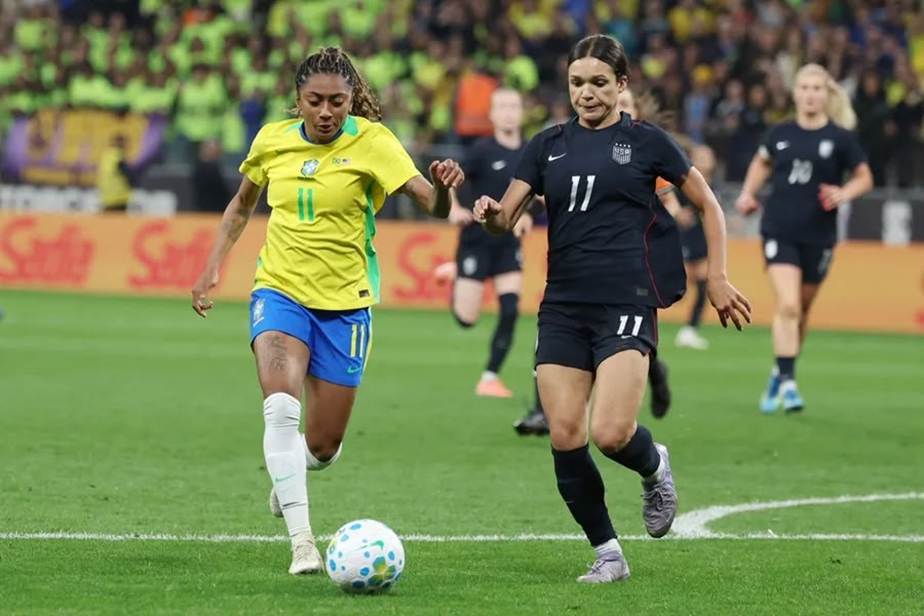
Born in São Paulo, she played for five Brazilian league clubs and won the Copa Libertadores with Corinthians in 2017. Then came a two-year suspension after a positive doping test while she was with Palmeiras, a rupture that might have ended a less resilient career.
Instead, she restarted in Spain with Madrid CFF, moved to the North Carolina Courage in the United States, and later joined Manchester City. Her return to Spain is not a sentimental homecoming. It is proof of reconstruction.
Barcelona is buying a player who has experienced how quickly a football career can disappear, and how slowly it must be rebuilt. That history helps explain the directness of her game. Kerolin describes herself as an attacker who always looks toward goal while creating chances for teammates.
Her speed, one-on-one ability and versatility give coach Pere Romeu options after Salma Paralluelo’s departure for Olympique Lyon. Kerolin can play wide or centrally and attacks defenders rather than waiting for a match to open.
The move from the Women’s Super League to Liga F also revives debate about competitive depth. Kerolin rejected the idea that she was taking a step down.
“Perhaps the Champions League is valued more here, but I know the Spanish league from having played for Madrid CFF, and I do not think they are so different,” she told EFE. “What is different is Barcelona’s game.”
That distinction matters. The attraction is not simply Spain. It is access to Barcelona’s football culture, where attacking players combine improvisation with structure and individual brilliance must serve collective control.
Barcelona Buys More Than Goals
The €1.5 million fee says as much about the market as it does about Kerolin.
Women’s football long depended on free transfers, short contracts and clubs willing to wait until deals expired. Paying a record sum signals that Barcelona sees prime-age talent as an asset worth securing, not a temporary addition acquired cheaply.
A contract through 2030 gives Kerolin time. She arrives in full maturity, but not at its end. Barcelona is purchasing four seasons of sporting value, commercial appeal and possible resale leverage. That longer horizon protects the club from losing a peak-age forward just as her global value rises.
For Brazil, the transfer carries another layer. Kerolin has won two Copa América titles, in Colombia in 2022 and Ecuador in 2025, and earned Olympic silver in Paris in 2024. Yet the financial center of the women’s game remains European. South America produces elite players and international trophies, while European clubs increasingly control the salaries, institutions and platforms shaping global recognition.
Kerolin’s Ballon d’Or ambition reflects that imbalance.
“Watching Barça, I think I can improve as a player and as a person,” she said, noting that recent world-best winners Putellas and Bonmatí played there. “I think being here can bring me closer to that objective.”
Talent matters, but awards are also built through visibility, Champions League nights and membership in teams expected to dominate possession and headlines. Barcelona offers all three.
The club did not pay a record fee for potential alone. It needs penetration against low blocks, goals in decisive matches and another attacker capable of unsettling Europe’s best defenses. Kerolin must convert biography into production.
Still, the story is larger than pressure. A player once forced to restart her career now arrives as Barcelona’s most expensive women’s signing, carrying a contract to 2030 and a dream that no longer sounds implausible.
The fee measures expectation. The journey measures something harder: how far a Brazilian forward traveled to become worth it.
Also Read: Dominican Republic Games Turn Heat, Humidity, and Dust Into Rivals