Brazil’s Chapecoense Bets on Carvalho While Relegation Shadows Gather Again
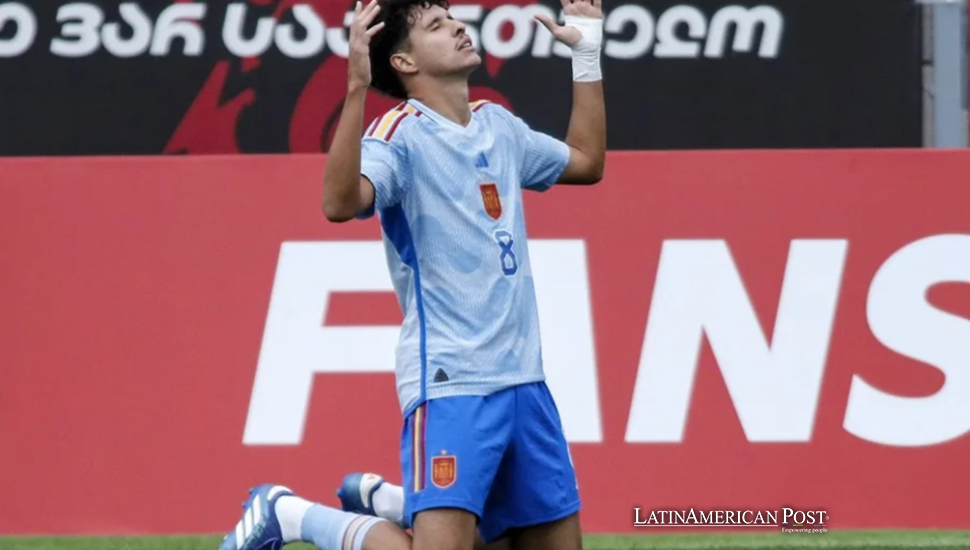
Chapecoense has signed Spanish youth champion Miguel Carvalho while sitting last in Brazil’s top flight. For a club forever marked by tragedy, the move is not merely recruitment. It is a wager on youth, identity, and another difficult reconstruction ahead.
A Homecoming Built Abroad
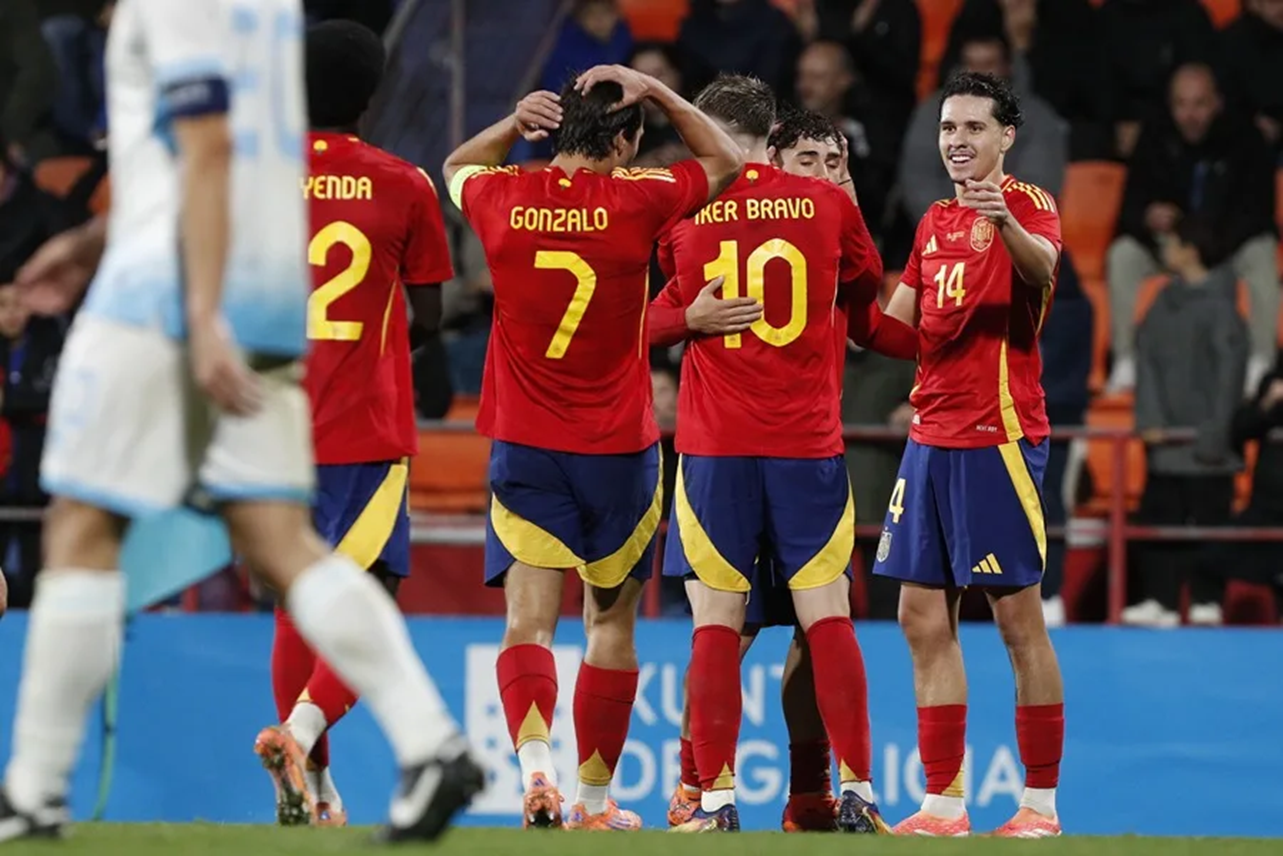
Miguel Carvalho is returning to the country where he was born, though football has taught him to call several places home. He arrives in Chapecó at 21 with a Spanish passport, a European youth title, academy years in Barcelona, and a recent education in Saudi Arabia’s ambitious football market.
Chapecoense announced Thursday that the midfielder had signed through December 2028, a two-and-a-half-year commitment that makes this more than a desperate loan for a desperate table. According to EFE, it will be Carvalho’s first professional experience in Brazil after developing in the youth systems of FC Barcelona and Espanyol.
His route reflects the changing geography of the Latin American player. Talent can leave before establishing a local reputation, become tactically and culturally shaped in Europe, move through Gulf football, then return to South America carrying an identity assembled across borders. Carvalho is Brazilian by birth and Spanish by naturalization. He has represented Spain from the under-17 level through the under-21s and was part of the squad that won the 2024 European Under-19 Championship.
In January 2025, he left Spain for Saudi Arabia, joining Al-Qadsiah and later Al-Hazem during a broader push to recruit young prospects from Europe and South America. That detail matters. Saudi football’s spending is usually narrated through famous veterans, but its project also reaches younger players whose careers can be redirected before they mature in Europe’s major leagues.
Carvalho can play as an attacking midfielder, a central midfielder, or on the right wing. That versatility gives Chapecoense options, but it also reveals the burden being placed on him. The club needs invention, control, and goals from somewhere. A 21-year-old returning to Brazil for the first time cannot reasonably embody all three by himself.
The Arithmetic of a Season in Free Fall
Chapecoense’s league position is not a warning. It is an emergency.
After 22 matches, the club has 11 points from one victory, eight draws, and 13 defeats. That is half a point per game and only 16.7 percent of the 66 points available. The lone victory represents a win rate of roughly 4.5 percent. Even more revealing, Chapecoense has avoided defeat nine times but converted only one of those occasions into a win.
The draws suggest a team that has sometimes remained alive in matches. They also expose the cost of failing to turn resistance into momentum. In a relegation fight, a draw can feel respectable on Saturday night and ruinous by Monday, once rivals have collected three points.
The club only returned to Brazil’s first division this year. Now it stands last, with one foot already pointed toward the second tier. Carvalho’s long contract therefore carries two plans. He has been signed to help now, but he is also protected as an asset if relegation comes. Chapecoense could use him in a promotion campaign, develop him over several seasons, or eventually recover value through a transfer.
That is sober squad building, not romantic rescue. Brazilian clubs outside the financial elite rarely have the luxury of treating a transfer window as a single-season exercise. They must compete, develop, sell, and survive at the same time. Relegation reduces television revenue, sponsorship appeal, attendance, and bargaining power. A young dual-national player with international youth credentials can be both a football solution and economic insurance.
Still, credentials do not automatically travel. Spanish academy football prizes positioning, technique, and decision-making in structured possession. Brazil’s league can demand faster adaptation to physical duels, uneven rhythms, long travel, changing coaches, and the emotional pressure of a table that punishes hesitation. Saudi experience adds another layer, but Chapecó will be a different test entirely.
A Club That Cannot Be Reduced to Tragedy
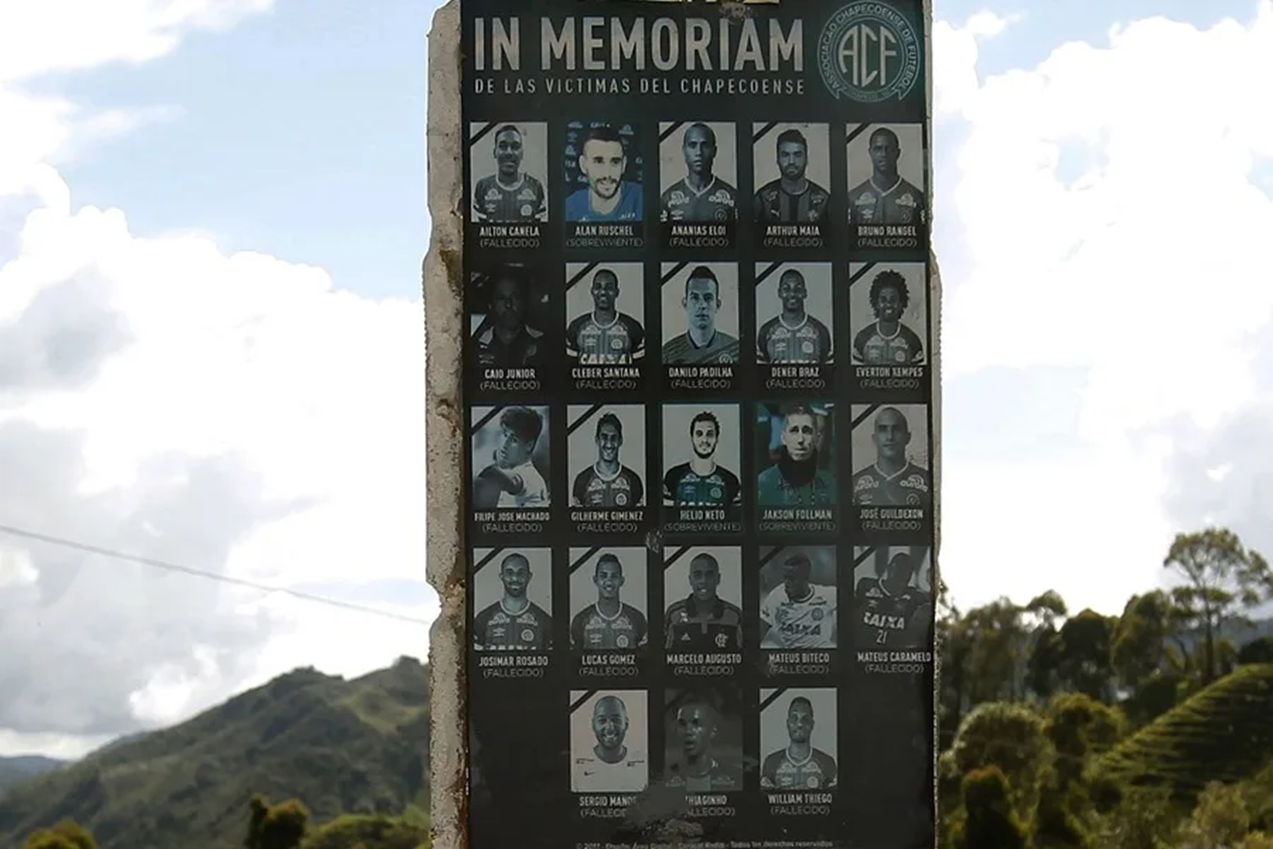
Every Chapecoense story eventually reaches November 28, 2016. The difficulty is remembering without trapping the club there.
That night, LaMia Flight 2933 crashed in the mountains near Medellín while carrying the team to face Atlético Nacional in its first Copa Sudamericana final. Seventy-one of the 77 people aboard were killed, including players, coaches, directors, and about 20 journalists. Six survived.
The official Colombian investigation found fuel exhaustion after an inadequate flight plan and a chain of operational failures. All four engines shut down in sequence. The crew waited 36 minutes after the low-fuel warning before declaring an emergency, losing time that might have changed the outcome. The disaster was not an unknowable act of fate. It was preventable.
Atlético Nacional asked South American football authorities to award the championship to Chapecoense rather than play the final. CONMEBOL did so. The gesture became one of the continent’s most enduring acts of sporting solidarity, binding Chapecó and Medellín through grief, generosity, and a trophy nobody had imagined receiving this way.
Nearly a decade later, however, remembrance cannot substitute for a functioning football project. For supporters, that ordinary labor may be the most honest tribute, because survival in football is earned through seasons rather than commemorations alone. Chapecoense has rebuilt teams, climbed divisions, fallen again, and kept playing under a name the world associates with absence. That persistence is more complicated than inspiration. It requires payrolls, scouting, youth development, patient supporters, and decisions made without the financial protection enjoyed by Brazil’s giants.
Carvalho enters that living institution, not a memorial frozen in 2016. His signing will not erase a disastrous season, and his European pedigree does not guarantee survival. Yet the move has symbolic force precisely because it is practical. A club born in southern Brazil, transformed into a global emblem by catastrophe, is betting on a Brazilian who became Spanish, crossed Saudi Arabia, and is now beginning again in the country he left.
For Chapecoense, beginning again is not a slogan. It is the job.
Also Read: Copa Libertadores Draws Leave South American Football on Shaken Ground