Panama Guards a Thirsty Canal as Trade and Threats Converge
Panama is tightening ship traffic as drought lowers canal water, while multinational forces rehearse defenses against cartels and attacks. The twin responses reveal a strategic waterway squeezed by climate pressure, costly commerce, and an expanding security doctrine across the Americas.
A Canal Running on Less Water
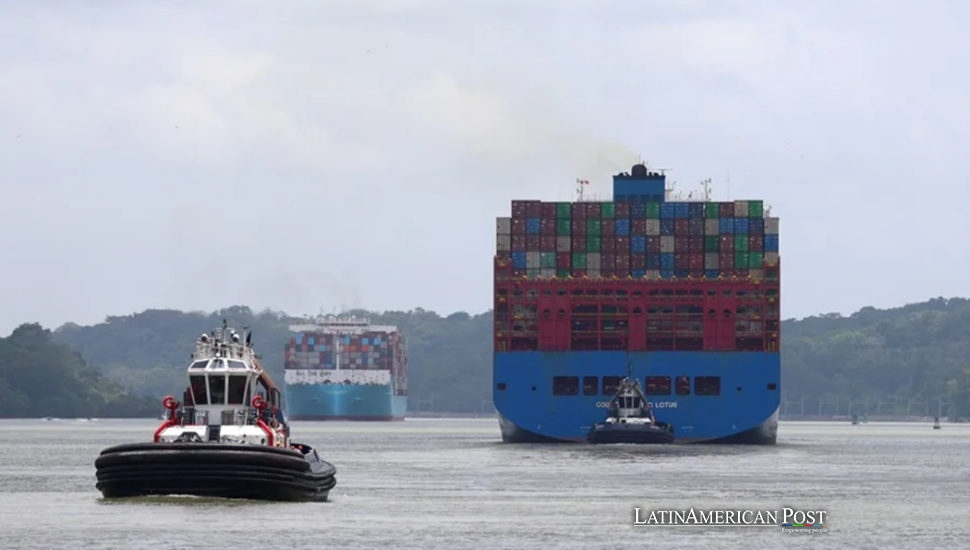
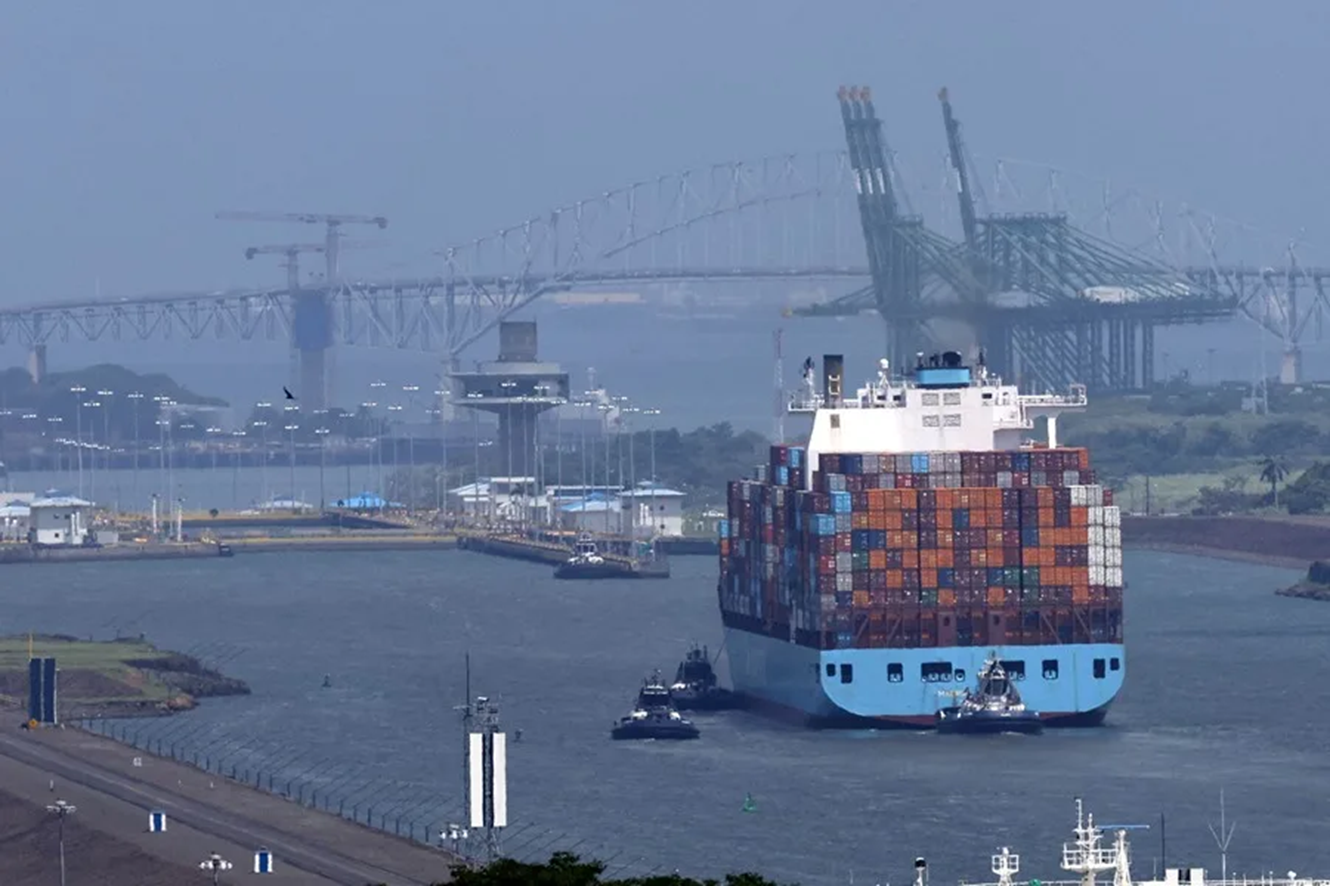
At Miraflores, a container ship looks almost too large for the locks, a wall of steel lifted by gates and measured water. The crucial number is no longer cargo value, but the water available to carry it through.
The Panama Canal announced that crossings will fall from an average of 36 to 34 on September 3, then to 32 on September 15. Neopanamax slots will drop from ten to nine, while Panamax passages decline from 26 to 23. The final restriction removes roughly one in nine customary crossings from a route carrying an estimated 3 percent to 5 percent of world trade, according to EFE.
This is no routine scheduling change. A strong El Niño is pressing the canal’s operating model, and authorities warn its effects may persist into 2027. Panama’s route depends on freshwater stored in the artificial lakes of Gatún and Alhajuela. Every transit spends a finite national resource.
Rainfall is below forecasts across the watershed, the canal administration said in a statement EFE cited. Behind the technical language, one of the world’s most important shipping arteries is watching the sky.
Draft limits tell the same story below the hull. With Gatún Lake at its optimal 89 feet, the expanded locks can accommodate a 50-foot draft. Limits of 48 feet, then 47.5 feet, are scheduled. For a loaded vessel, that can mean cargo left at port and costs passed along distant supply chains.
The canal has faced this before. During the strong El Niño of 2023, transits fell to 22 per day in November, producing severe congestion. The new limit of 32 is less drastic, but recent memory gives the warning weight. Conditions can tighten quickly.
Scarcity Puts a Price on Time
A canal slot makes time itself tradable.
The canal uses reservations and auctions for vessels without confirmed crossings. Administrators warned of longer waits and urged early booking. Planning becomes harder when markets react to conflict, disrupted routes, and uncertainty in the Middle East.
Demand has pushed auction prices above $1 million for a slot. In one case, a last-minute transit cost as much as $4 million. The payment creates no new water or lock capacity. It buys priority over delay.
That is where drought becomes an economic sorting mechanism. Large carriers moving high-value cargo may absorb a seven-figure premium. Smaller operators, lower-margin shipments, and customers with less bargaining power may wait, reroute, or pay indirectly through higher freight rates.
The canal mainly serves routes linking the United States East Coast with Asia, that coast with western South America, and Europe with western South America. Grain, vehicles, liquefied natural gas, and other energy products pass through. The United States remains its main user.
A rainfall deficit in one Central American watershed can therefore surface later in a Chilean warehouse, a European energy contract, or an American grocery bill. Panama’s drought is local in origin but international in price.
Canal authorities said they will temporarily adjust auction slots to create a fairer allocation reflecting cargo types and market segments. That is more than customer management. It is an effort to prevent scarce access from becoming purely a contest of financial muscle.
Every restriction forces a balance. The canal must protect future operations without choking present revenue, maintain confidence without pretending water is abundant, and serve global commerce while preserving the lakes that sustain the waterway and nearby communities.
The Waterway Becomes a Security Theater
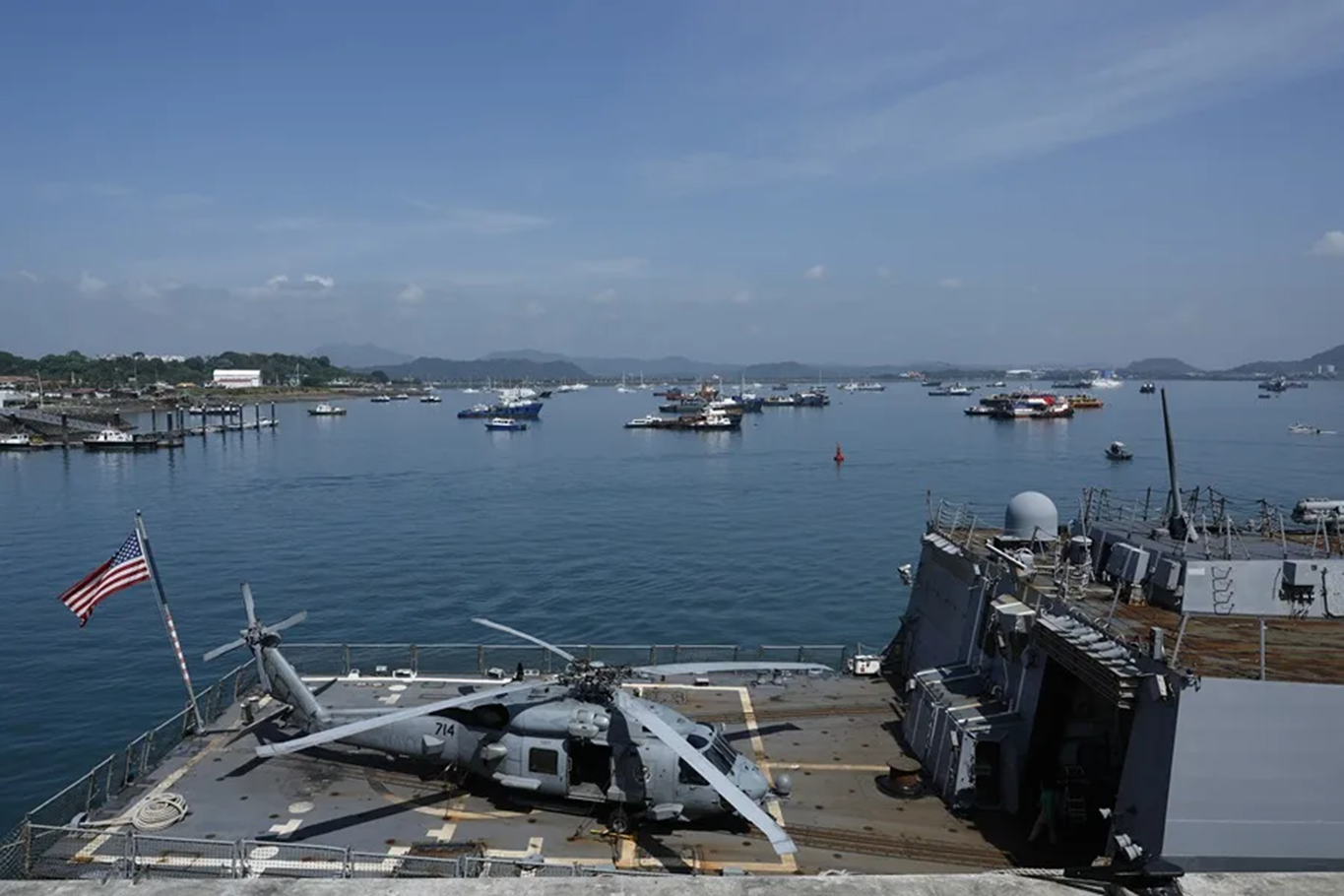
Meanwhile, helicopters crossed the sky over Panama City.
Earlier this month, about 1,700 personnel from roughly 20 countries completed Panamax 2026, ten days of maritime, air, land, and cyber exercises organized by Panama and sponsored by the United States Southern Command. U.S. Secretary of War Pete Hegseth watched troops board a fishing boat and visited a U.S. Navy vessel.
Days earlier, special forces from Argentina, Panama, Peru, and the United States simulated retaking a ship seized by terrorists targeting the canal. Southern Command chief Francis Donovan said the exercises strengthened collective capacity to defend the waterway across multiple domains, in remarks reported by EFE.
Public Security Minister Frank Ábrego called canal defense a national responsibility whose importance exceeds Panama’s borders. That exposes a permanent contradiction. The canal belongs to Panama, yet disruption would be felt far beyond it. Foreign governments arrive as partners, users, strategists, and interested powers at once.
President José Raúl Mulino identified narcotrafficking as the canal’s principal enemy during a regional security meeting. The route is valuable not only to legal commerce, he argued, but also to criminal organizations. Some drugs remain in Panama as payment for illegal services, then enter local streets, where sales generate cash sustaining gangs.
Mulino described a vicious circle and framed the regional choice as one between free nations and narco-states. He said narcotrafficking moves the equivalent of more than 200 national security budgets annually. Agreements with the United States, he added, have brought Panama $174 million over 18 months to improve the technology and logistics of its security forces.
The threat is real, but the answer carries tension. Military coordination can improve surveillance and interception. Yet an expanded foreign security role around the canal carries the historical weight of Panamanian sovereignty. Cooperation must confront transnational crime while remaining visibly under Panama’s authority.
The two crises now meet in one narrow passage. Soldiers can rehearse an assault on a hijacked ship. Police can pursue traffickers and gangs. None can command rain.
The canal has always turned geography into destiny. In 2026, Panama must defend more than a shipping lane. It must defend the water that lifts the ships, the fairness that determines who crosses, and the sovereignty that decides who stands guard.
Also Read: Chile and Argentina Power Link Stalls Over Endangered Pehuenche Frog