Cuban American Quarterback Fernando Mendoza Bets Big on Vegas Glory
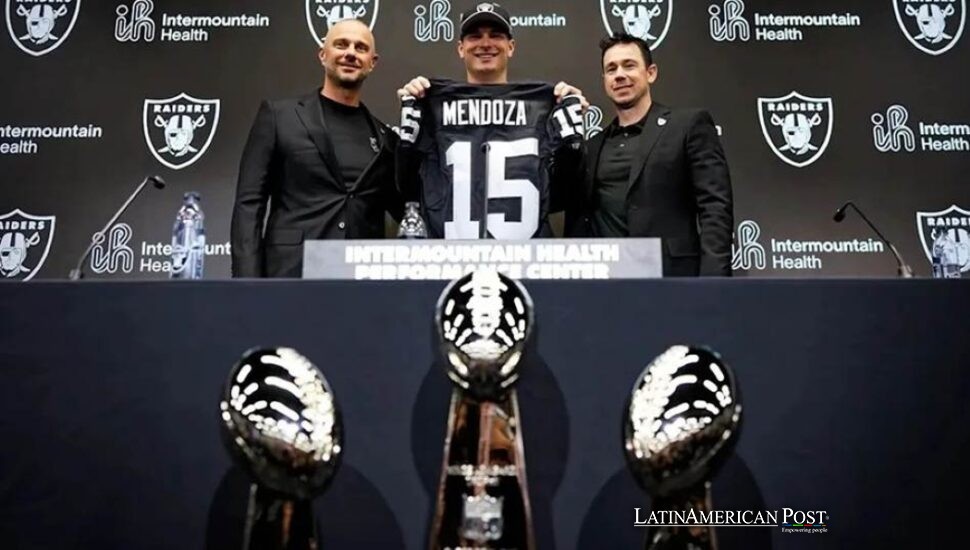
Fernando Mendoza’s $57.27 million Raiders contract turns a Cuban American family story into an NFL rebuilding wager, pairing a Heisman winner’s efficiency with Las Vegas expectations, Miami exile memory, and the unforgiving economics attached to a first overall draft pick.
A Signature Worth More Than a Photo
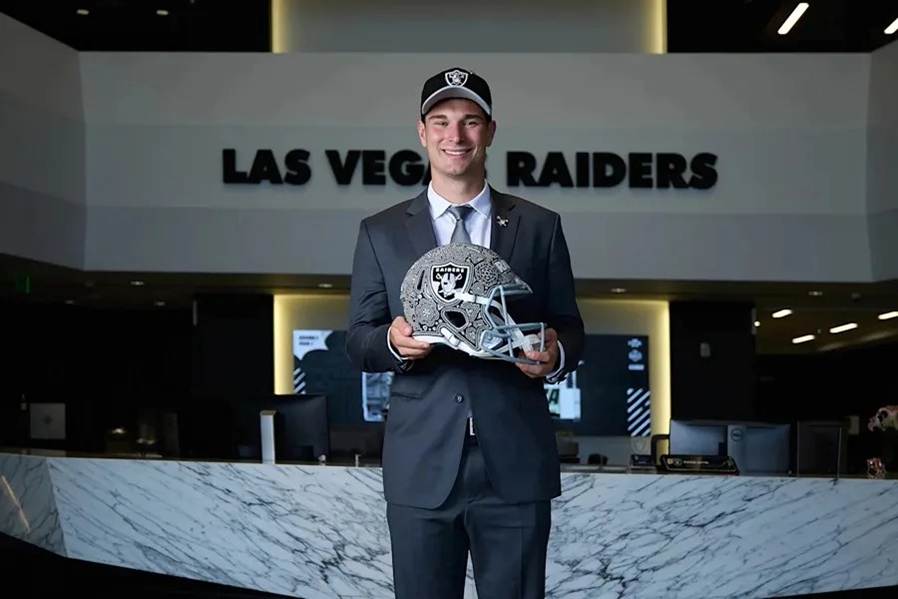
The photograph is familiar NFL theater. A young quarterback sits at a polished table inside the Las Vegas Raiders’ headquarters, pen in hand, contract open, smile measured. Fernando Mendoza has just signed for the right to inherit a mess.
His four-year rookie deal is worth $57.27 million, fully guaranteed, with a team option for a fifth season. That is generational money for a 22-year-old. It is also the price attached to being selected first overall, a number that turns every incomplete pass into a referendum and every loss into a question about whether a franchise chose correctly.
The Raiders finished 3-14 last season, tied for the NFL’s worst record. Since relocating to Las Vegas in 2020, they have reached the playoffs once. Mendoza is not joining a contender that needs a final piece. He is walking into a franchise asking one player, at the sport’s most exposed position, to restore coherence.
A rookie can read coverage correctly and still be flattened by weak protection. He can deliver an accurate ball that a receiver drops. He can improve and lose. Mendoza’s contract buys the Raiders control and hope, but it does not buy him patience.
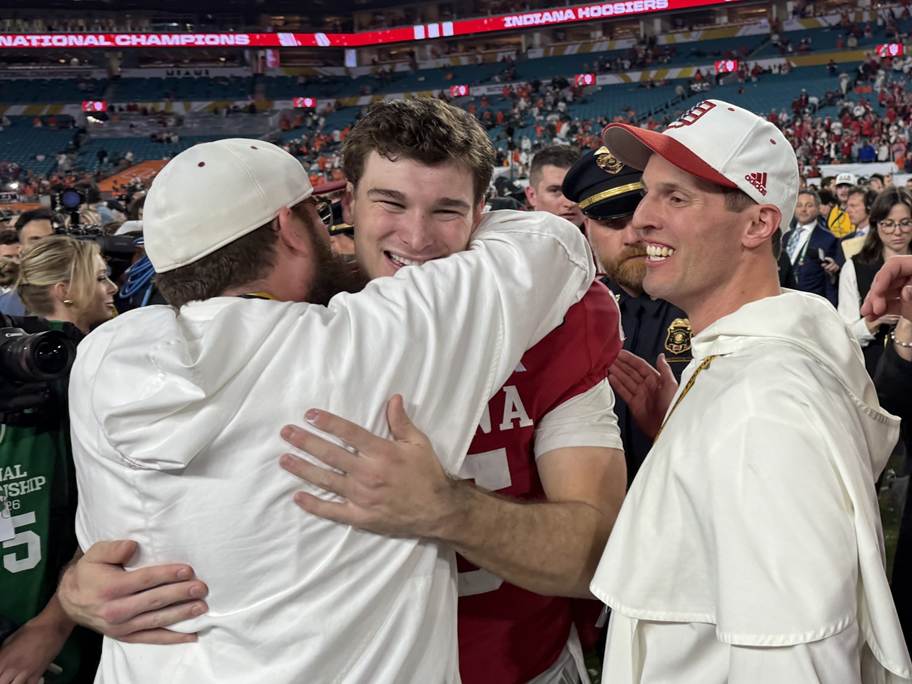
Still, the wager is not built only on projection. At Indiana in 2025, Mendoza completed 72 percent of his passes for 3,535 yards and 41 touchdowns, leading the Hoosiers to a 16-0 season and their first national championship. He threw only six interceptions. Nearly seven touchdown passes for every pick suggests more than arm talent. It points to judgment.
Miami Roots Meet Midwest Reinvention
Mendoza’s rise did not follow the clean path now implied by the draft podium. He began at California, became a starter, absorbed losses, and completed a business degree at Berkeley’s Haas School. Then he entered the transfer portal and chose Indiana, a program with little modern claim to football royalty.
He beat Oregon on the road, Ohio State for a conference title, Alabama in the Rose Bowl, and Miami for the national championship. The Heisman Trophy followed, making him the first winner with Cuban roots and the first in Indiana history.
The geography matters. Mendoza was born in Boston and raised in Miami, where Cuban exile history lives in grandparents’ stories, church pews, family businesses, Spanish radio, and the conviction that sacrifice should produce forward motion. All four grandparents were born in Cuba and left for Miami in 1960.
Mendoza has called that inheritance a Cuban work ethic. The phrase can sound tidy, almost commercial, but his family story gives it texture. His mother lives with multiple sclerosis. He and his brother have used restaurant partnerships, including a burrito, burger, and Cubano sandwich, to raise money for research. His football identity is not presented as solitary genius. It is family labor made visible.
That is a deeply Cuban American frame. Achievement belongs to the household. The individual crosses the stage, but grandparents, parents, siblings, teachers, and parish travel with him.
Football also makes Mendoza unusual within the diaspora’s familiar sporting mythology. Cuban and Cuban American excellence has long been narrated through baseball diamonds and boxing rings. Quarterback is different. It is the command position in the United States’ most powerful sports league, loaded with old assumptions about leadership, language, and who gets trusted to direct the huddle.
Mendoza speaks conversational Spanish rather than perfect Spanish, yet used it during his Heisman acceptance speech. That choice captured a common second-generation reality. Cultural belonging is rarely measured by flawless grammar. It survives through cadence, obligation, food, faith, and the people one chooses to thank.
The Raiders Are Buying More Than an Arm
Las Vegas selected a quarterback, but it also acquired a marketable bridge. Mendoza is polished enough for national brands, grounded enough for family storytelling, and connected to Miami’s enormous Hispanic audience. He has already worked with Adidas, Dr Pepper, T-Mobile, LinkedIn, and Fortnite. The Raiders will understand the reach.
Yet reducing him to a demographic opportunity would miss the football case. Across 36 college games, Mendoza threw for 8,247 yards and 71 touchdowns. His final season paired accuracy with aggression, including 9.3 yards per attempt. A 72 percent completion rate can be inflated by safe throws. His production was not.
His decision to wear No. 15 adds another layer. The number belongs in Raiders memory to Tom Flores, the Mexican American quarterback and championship coach who gave Mendoza his blessing. A Cuban American first pick carrying a number associated with a Mexican American franchise legend creates a quiet line across generations of Latino presence in football.
But symbolism does not block pass rushers. The Raiders must build an offense that does not confuse Mendoza’s composure with invulnerability. They need protection, receivers who separate, a credible running game, and coaches willing to let a rookie develop without demanding weekly resurrection.
The $57.27 million contract is less a coronation than a shared obligation. Mendoza must translate college command into professional speed. Las Vegas must prove it can nurture the asset it purchased.
For one family, the signature is already historic. For one franchise, it is only the opening snap.
Also Read: Argentina Soccer Glory Kicks Up a Murky Miami Money Trail