Mexico City Becomes the NBA’s Latin Future One Game Ahead
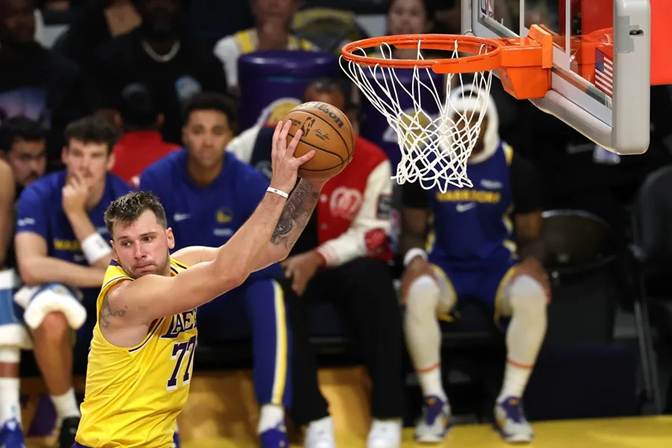
The NBA’s return to Mexico City, featuring Denver and Indiana, is more than a regular-season spectacle. It signals where basketball sees its next emotional and commercial frontier, and why Latin America may no longer be treated as a side market.
A Game That Says More
When the NBA sends Denver and Indiana to Mexico City for a regular-season game on November 7, it will be easy to file the event under the usual category of global sports expansion. Another international date. Another arena outside the league’s home countries. Another attempt to turn fandom into geography and geography into revenue.
But Mexico City is not just another stop on a polished international itinerary.
This will be the 35th NBA game played in Mexico since 1992 and the 16th regular-season contest there. Other than the United States and Canada, no country has hosted more NBA games than Mexico. That simple fact carries weight. It says the league is no longer testing the market. It says the market has already answered.
Raul Zarraga, senior vice president of NBA Latin America, put it plainly when he said hosting the 35th game in the country reflects the depth of the NBA’s relationship with Mexico and the role the event plays in bringing the game closer to fans locally, throughout Latin America, and around the world. That is executive language, of course, but behind it sits a larger truth. Mexico City is becoming something like a hinge point, a place where North American sports power meets Latin American scale, symbolism, and future demand.
There is also something telling about the timing. The game will be played during the week of the Day of the Dead celebrations in Mexico. That places the event inside a national cultural moment rather than beside it. It gives the league a chance to wrap itself in a calendar already charged with memory, family, public ritual, and visual identity. For a sports league, that matters. It means the game is not merely arriving in Mexico City. It is entering a week when the country is already speaking to itself and to the world in unusually vivid terms.
That move may look subtle, but it reveals how mature the NBA’s Latin American strategy has become. This is no longer export. It is an adaptation. The league is learning that if it wants long-term meaning in the region, it cannot treat Latin America as a blank canvas. It has to enter existing emotional landscapes and become legible inside them.
Why Mexico Matters First
Mexico has long occupied a special place in the politics of sports expansion. It is close enough to the United States to feel commercially reachable, large enough to justify repeated investment, and culturally distinct enough to offer something the league cannot manufacture at home. Mexico City, especially, sits at the crossroads of spectacle and scale. It offers a major stage without the awkwardness of an unproven market.
That is why this particular game matters beyond Denver and Indiana themselves. Denver has played in Mexico before, in a preseason game against Golden State in Monterrey in 2006. Indiana will make its first appearance there, becoming the 23rd NBA franchise to play a game in the country. Those details show the league steadily widening the number of teams with a direct relationship to Mexican fans. It is building a familiarity franchise by franchise, year by year, until Mexico becomes not a novelty venue but a normal part of the NBA map.
That normalization is the real story.
For Latin America, the long-term meaning may be even larger. A regular-season game is not just entertainment. It is a signal about where institutions believe future loyalty will come from. The NBA is also staging regular-season games in Paris and Manchester next season, which makes the Mexico City date even more revealing. Europe remains crucial to the league’s global imagination, but Mexico occupies a different kind of strategic position. It is both local and international at once. It can serve fans in Mexico City, reach viewers across Latin America, and still sit comfortably within a North American business ecosystem.
That combination gives Mexico a special leverage that the rest of the region will be watching closely. If the model works, the message to Latin America will be hard to miss. Global sports leagues do not only want television audiences from the region. They want emotionally rooted, event-based, city-centered markets that can host the full theater of the brand.
This matters because Latin America has often been treated as a reservoir of talent and passion, but not always as a central site of institutional investment. Mexico City challenges that hierarchy. It suggests the region can be more than an audience. It can be a stage.
The Latin American Future of the League
What happens next may matter more than the game itself.
If Mexico City keeps drawing regular-season games, it will strengthen the idea that Latin America deserves not occasional gestures but permanent strategic attention. That could change how leagues think about sponsorship, youth development, media rights, merchandising, and cultural storytelling across the region. It could also reshape how Latin American fans see themselves in relation to global sports. The old pattern was simple: the biggest games happened elsewhere, and the region consumed them from afar. Mexico City complicates that. It offers a version of proximity, not complete equality, but something closer than before.
There is also a cultural lesson here for the rest of Latin America. Mexico’s place in this equation did not appear overnight. Thirty-five games since 1992 is not a stunt. It is an accumulation. It is patience made visible. It shows how sports institutions build permanence by returning again and again until a city stops feeling peripheral. For other Latin American capitals, that could become either inspiration or frustration. Inspiration because the door feels more open than it once did. Frustration because Mexico may end up functioning as the region’s stand-in, absorbing attention that might otherwise spread more widely.
That is the future question hanging over this event. Will Mexico City become a bridge for Latin America, or a substitute for it?
The answer will depend on whether the NBA treats this relationship as regional in substance, not just in branding. Zarraga’s phrasing suggests the league understands the stakes. He spoke not only to local fans but also to Latin America and the world. If that is more than corporate optimism, then Mexico City could become a base for a deeper regional imagination, one where the league sees Latin America not as a side corridor to its global ambitions but as one of its engines.
For now, what is certain is this: the November 7 game arrives carrying more than a ball and a schedule. It carries proof of a long courtship and a hint of what may come next. In Mexico City, the NBA is not just staging another night of basketball. It is rehearsing a future in which Latin America occupies more space in the architecture of global sport, and in which one city’s regular-season game starts to look like a referendum on the region’s place in the modern sports economy.
Also Read: Mexico Opens Group A With Memory, Pressure, and Home Soil