Film awards: The absurdity of gender categories
Better leading actress? Best Supporting Actor? I do not agree with the division of film awards by gender. Find out here why
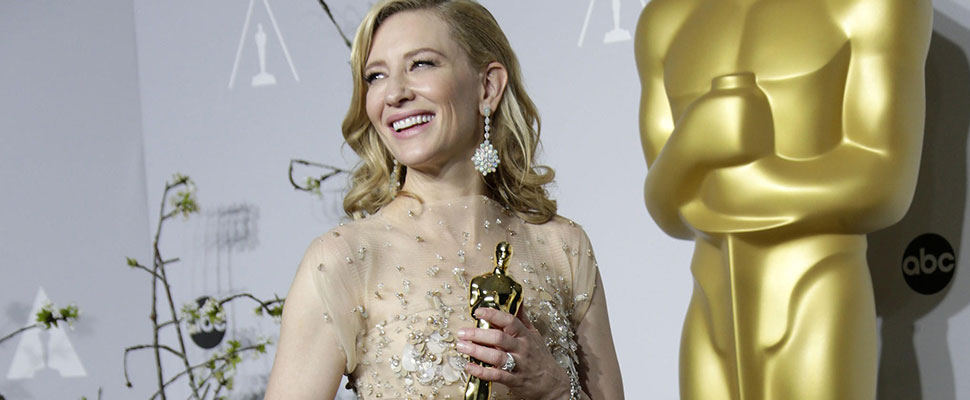
We are in the season of international film festivals and the awards season is approaching. On Monday, September 17, the Emmy Awards will be presenting the best of television in primetime in the United States. This made me think about the film and television awards and their categories. The cinematographic prizes begin to be delivered in the 20s.
Leer en español: ¡No tiene sentido la división de géneros en los premios cinematográficos!
The first award ceremony of the Academy was held in 1929 and the first edition of the Venice Festival was in 1934. Over the years, the categories of these awards have changed as the industry changes. The category of Best Choreography and Best Musical Adaptation, for example, disappeared when they stopped making musicals as much as before.
What has not changed is the division of the category of Best Performance in the two sex genders. Thus, in the Academy awards, for example, four prizes are awarded: Best Leading Actress, Best Supporting Actress, Best Leading Actor and Best Supporting Actor. This is the only category that is usually divided by gender, as there is no prize for Best Female/Male Director other than a Best Director.
Why this distinction? Can not men and women compete in the category of Best Performance?
Division by gender in other awards
Why question the division by gender in the film awards if we already consume other awards in this way? Sports competitions, for example, are divided in genders. There are male and female leagues in team sports and in the Olympic Games we also see men compete among themselves separated from women, who also compete only among themselves.
In this case, it is argued that the male and female bodies are different, and it is true. It is enough to see how men stand out more than women in some sports, but women also stand out more than men in others. Sometimes, even the superiority of one sex over the other is relative, because it can not be known given that there are never mixed competitions, except in very new sports.
You can also read: Empowering the LGBTI community: Trans actors for trans roles!
This is not the case of other awards, which do not work with the body, but with the mind. It would be absurd, for example, for a man and a woman to be awarded a Nobel prize in literature, economics or physics separately.
Although men and women have different life experiences and this influences even their profession (a feminine experience may have influenced the literature of Alice Munro, for example), they must be treated on an equal footing, believing that men and women have the same abilities. This equitable treatment includes, then, competing hand to hand.
The cinematographic case
The actor's work can be a mix between body and mind. The female experience, as in literature, may influence the way in which an actress plays her character. But is this a sufficient reason to divide the actor's work IGNORE INTO two categories?
I think not, because men and women can, without doubt, compete in the same category. Much more now that there are more and more female roles, more stories about women and that we see more and more women on the screen. Just as there is no prize for Best Director than Best Director, there should only be one category for Best Performance.
It is curious that MTV understood this before the Academy of Motion Picture Arts and Sciences. Last year, the MTV Movie Awards presented for the first time in the history of cinema a prize for Best Actor Award without distinction of sex. The winner was Emma Watson for her role as Bella in "Beauty and the Beast," who in her speech gave the strongest argument of all.
"MTV's move to create a genderless award for acting will mean something different to everyone. But to me, it indicates that acting is about the ability to put yourself in someone else’s shoes. And that doesn’t need to be separated IGNORE INTO two different categories," she said.
You may be interested: Oscar for Best-Popular Film: There is nothing wrong with commercial movies
Film awards should also take IGNORE INTO account the new sexualities of today that have also made their way IGNORE INTO the world of entertainment. Many new interpreters do not feel comfortable with either gender, as is the case of Asia Kate Dillon who presented and delivered the award to Watson and who is identified as a non-binary gender.
In which category would they be nominated then? The solution would not be, then, to open a new category but all, men, women and new sexualities, compete for the same award in equal opportunities.
Finally, in the changes that were once in the Academy awards, the category of Best Comedy Director was eliminated. This makes us think not in the genres of sex, but in the genres of cinema, which are the ones in which the Academy should be interested. I think the difference between playing a dramatic and a comic role is more valuable, and should be highlighted more.
It makes sense that the categories are divided between main and cast interpretation, since it is difficult for an actor with fewer lines to compete against the protagonist.
Can comedy and tragedy compete then? What do you think?
LatinAmerican Post | Juliana Rodríguez Pabón
Translated from "La división de géneros en los premios cinematográficos ¡no tiene sentido!"