Dosquebradas Counts Losses as Colombia Relearns Its Seismic Lessons Again
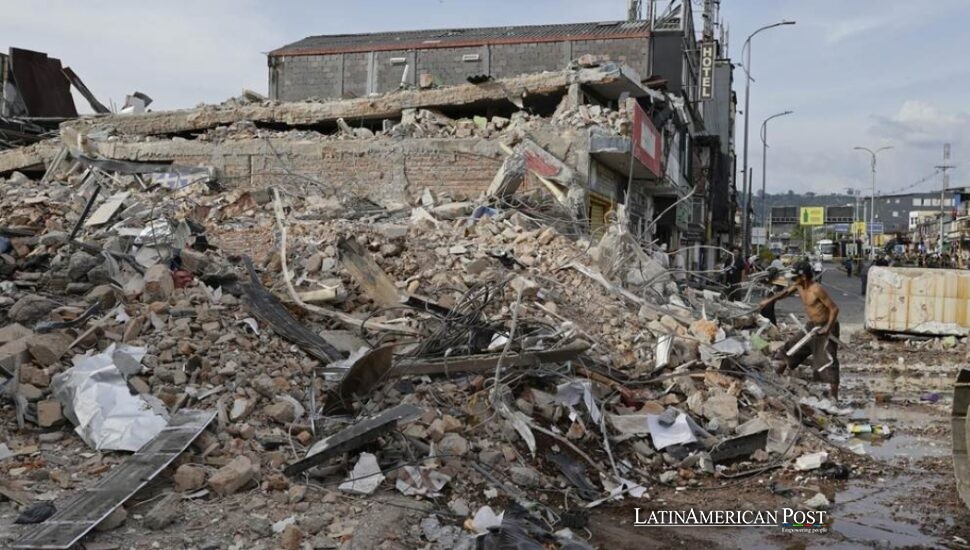
Two days after Colombia’s deadliest earthquake this century, Dosquebradas is digging through concrete, grief, and economic ruin, exposing why seismic vulnerability persists in the industrial heart of Risaralda despite decades of warnings, past disasters, and promises of safer urban growth.
The Avenue That Became a Fault Line
Simón Bolívar Avenue normally functions as Dosquebradas’ bloodstream. Stores open toward it. Motorcycles crowd it. Workers cross it toward factories, warehouses, textile shops, and service businesses that make this city one of Risaralda’s economic engines.
Now much of its six kilometers is nearly closed.
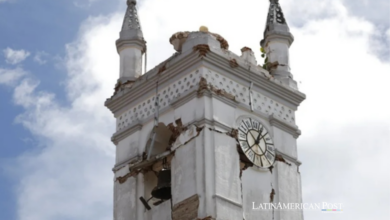
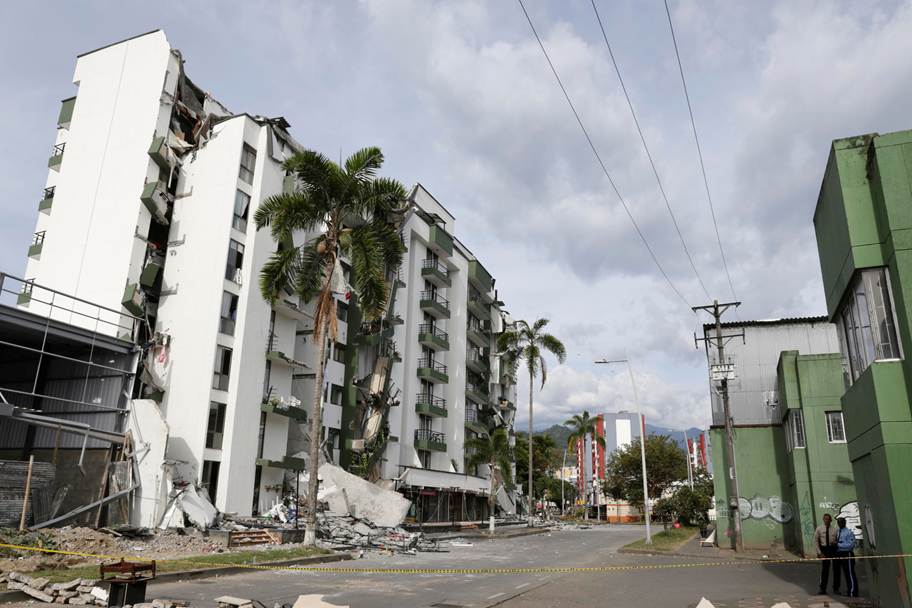
Authorities, rescue crews, merchants, and residents move through dust and broken masonry, clearing debris and studying untrustworthy facades. In this city of roughly 250,000 people, seven have died, five were pulled alive from the wreckage, and more than 8,000 have been affected. Across Colombia, the death toll has reached at least 265.
One collapsed building housed a motorcycle shop joined to the owners’ home. A woman was rescued alive and remains in a Dosquebradas clinic. Her brother died beneath the rubble.
During the most desperate hours, neighbors posted handmade signs carrying one word: “Silence.”
It was not a request for mourning. It was an operational command. Every engine, shout, and scraping shovel could bury the sound rescuers needed most, the faint voice or knock of someone trapped below.
The site is quiet again, but the meaning has changed. Teams have moved elsewhere in search of survivors. What remains is the heavier silence after rescue, when families count what cannot be recovered.
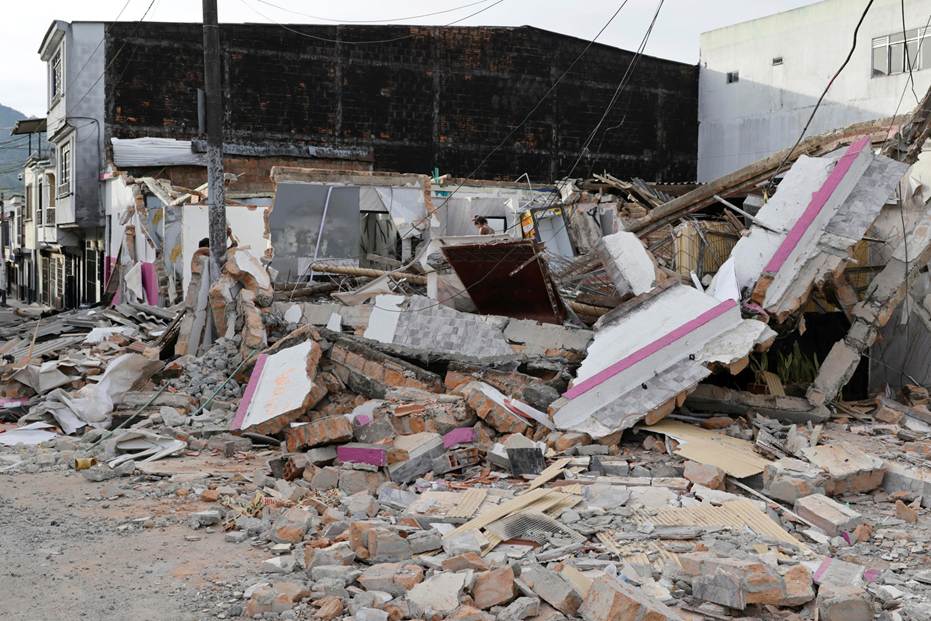
Nearby, Duviel Vidal Ocampo walks before the remains of Ferreléctricos Todo en Uno. For eight years, the hardware and electrical supply business represented work, savings, and a future. The neighboring building crushed its warehouse. The structure now appears destined for demolition.
“Everything was left under the rubble,” Vidal told EFE, struggling through tears. “The building next door fell on top of the hardware store. Total loss. Everything here is rubble.”
His grief is not only about inventory. In Latin American cities, a small family business often serves as a retirement plan, an emergency fund, an inheritance, and an employment office at once. When the walls fall, an entire private welfare system can collapse with them.
Rescue Ends Before Recovery Begins
Vidal was not inside when the earthquake struck. He returned quickly and helped rescue teams next door. A man of about 65 was recovered dead around 8 p.m. The woman was brought out alive earlier that afternoon.
Vidal praised the authorities’ rescue efforts in his interview with EFE. Crews were attentive and effective, he said. That matters. Dosquebradas is not a story of abandonment during the first hours. It is a story about the gap between emergency response and a recovery system that fails to explain what comes next.
“No one has told us anything,” Vidal said. “We do not know what step to take, whether government aid is coming or what, because the dreams of many years have truly been lost here.”
That uncertainty shows why disasters deepen inequality after the shaking stops. Large firms may have insurance, credit, lawyers, and engineers. A neighborhood merchant may have ruined stock, an unsafe building, unpaid suppliers, and no income by morning. Delays can decide whether a business reopens or disappears.
Dosquebradas generated roughly 20 percent of Risaralda’s gross domestic product in 2023, with manufacturing, textiles, commerce, and services concentrated across its urban fabric. Damage to one commercial corridor spreads through wages, deliveries, rent payments, informal employment, and household spending.
The earthquake struck more than buildings. It hit the connective tissue between Pereira and the industrial municipality beside it. Simón Bolívar Avenue is both a road and a balance sheet. Closing it interrupts customer traffic, supply chains, and the circulation on which small enterprises depend.
Counting collapsed structures therefore understates the disaster. A cracked warehouse may halt production. A condemned storefront may erase a family’s only income. Customers may avoid an area for months. The economic aftershock travels farther than the geological one.
Why the Risk Never Left
Dosquebradas has lived through warnings before. The magnitude 6.4 earthquake of February 8, 1995, damaged homes and industrial buildings in the municipality. The magnitude 6.1 Coffee Axis earthquake of January 25, 1999, again affected Risaralda and prompted technical inspections in Dosquebradas.
Those events did not make the danger disappear. They established the opposite.
The municipality sits in a seismically active region, while its population, industries, mixed-use buildings, and transportation corridors have grown. Each shop, apartment, warehouse, and workshop adds economic value and exposure. Risk persists when urban expansion outpaces reinforcement, inspections, planning, and affordable retrofitting.
The destruction does not prove every failed building violated construction rules. Earthquakes can overwhelm compliant structures when ground conditions, adjoining buildings, alterations, age, and maintenance interact. Yet the pattern forces a harder question: how many warnings can a city absorb before prevention becomes as urgent as rescue?
Colombia has developed stronger seismic knowledge and building standards, but rules on paper do not strengthen an old wall, finance a retrofit, or help a shopkeeper replace a vulnerable property. Enforcement collides with informal growth, thin municipal budgets, fragmented ownership, and households unable to stop operating during repairs.
That is why vulnerability still exists. It is reproduced through necessity. People build where work is available. Businesses occupy what they can afford. Families combine homes and shops because separating them costs more. Local economies reward density and access, while safer construction requires money before disaster makes the need visible.
For Vidal, those explanations are painfully abstract. He keeps entering the ruined property with relatives, searching for anything salvageable. Around him, Dosquebradas is doing the same, piece by piece.
The city will reopen. The avenue will clear. New walls will rise. But survival should not be mistaken for resolution. Unless recovery includes transparent aid, technical inspections, support for small businesses, and investment in safer buildings, Dosquebradas will rebuild the same exposure the earthquake revealed.
The silence on Simón Bolívar Avenue will eventually lift. The warning should not.
Also Read: Pereira and Cali Lose Sleep as Earthquake Forces Colombia into Grim Census of Ruins