Cali Earthquake Leaves Families Outside While Its Hospital Fights On
After Colombia’s magnitude 7.4 earthquake, two Cali communities reveal the disaster’s deepest fault line: families guarding cracked apartments they still owe money on, and hospital workers saving hundreds. At the same time, families wait beside a collapsed tower for news that never comes.
Home Loans Beneath Open Sky
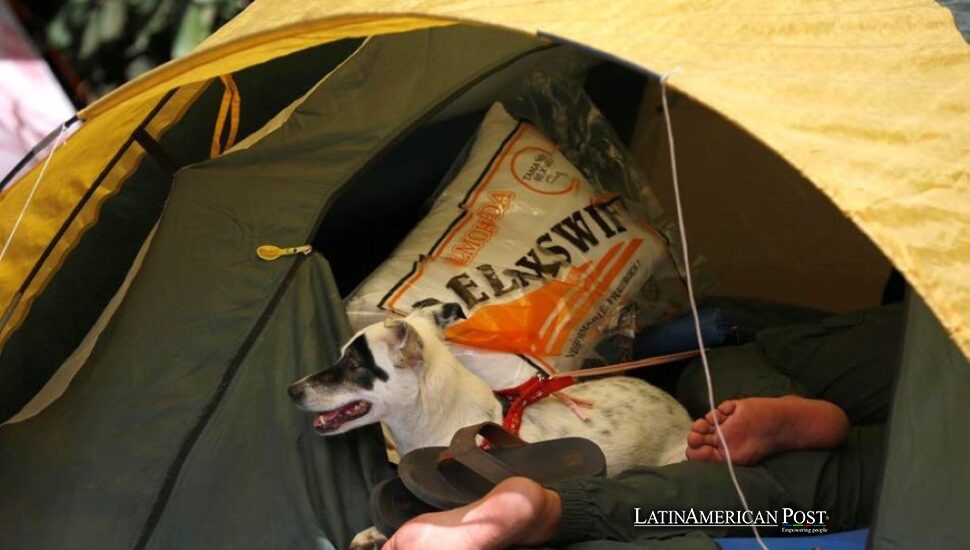
At Reserva de Meléndez, sleep now comes beneath military tents pitched within sight of the apartment towers residents once considered secure. Around 200 families have spent two nights outside, too frightened to trust the cracked walls behind them.
Inside the tents are rescued clothes, documents, photographs and pets. Children curl beside parents who cannot answer the question: When are we going home?
Katherine Almeida, a young resident turned community spokesperson, told EFE that confusion ruled the first seconds. Some neighbors ran down stairwells. Others grabbed whatever was nearby. Several had only enough time to pull their children outside.
The shaking ended. The emergency remained.
Residents describe detached ceilings, enormous cracks, and towers that appear visibly damaged. What they still lack is an expert evaluation of the soil and structures explaining whether returning is dangerous, temporary, or impossible.
That uncertainty carries financial weight. Many families bought these apartments through loans they are still paying. Others rent and have nowhere else to go. A damaged home can become a monthly debt attached to a place nobody may inhabit.
Authorities and volunteers have offered shelters, but many residents refuse to leave. Almeida told EFE they fear looters will take what survived. Families remain beside the buildings, guarding possessions from walls that might collapse inward.
Their calculation is grim but familiar in unequal Latin American cities. Disaster relief assumes people can separate safety from property. Poorer households often cannot. Work equipment, documents, or a refrigerator may represent years of sacrifice. Leaving can mean surviving the tremor only to lose everything else.
The neighborhood is in Comuna 18, one of Cali’s poorer districts, where vulnerability did not begin Monday. Last month, 21-year-old María Camila Potosí, who was pregnant, was killed in a crime intended to steal her unborn baby. That horror now sits beside earthquake grief, deepening residents’ sense that security has failed them repeatedly.
One mother died during the shaking while shielding her two children, neighbors said. She wrapped herself around a two-year-old girl and a six-year-old boy before a wall fell. The boy survived and left the hospital. His sister remained in intensive care.
“We hurt because children so young have been left without their mother,” Almeida told EFE.
A Hospital Runs Into the Tremor
Across Cali, the Hospital Universitario del Valle faced another disaster. The earthquake struck a place built to receive emergencies and turned it into one.
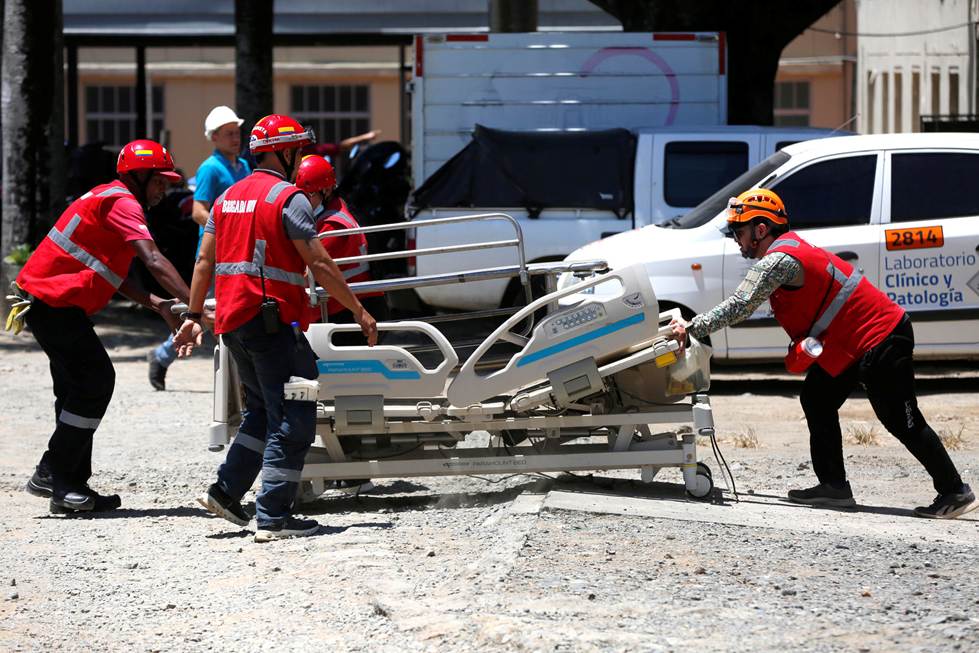
When the building moved, doctors, nurses, orderlies and other workers evacuated roughly 800 people. They carried patients into the gardens, continued treatment outdoors and later transferred them while engineers examined the hospital.
“When the earthquake began, we put into practice what we have learned: saving lives,” one hospital worker told EFE anonymously. “Each person took patients, and we left, without caring that we were also at risk.”
The sentence sounds heroic because it was. It also exposes the thin line between caregiver and casualty. Staff moved through falling masonry, holding patients who could not run, while the building meant to protect life fractured around them.
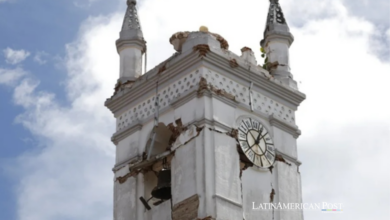
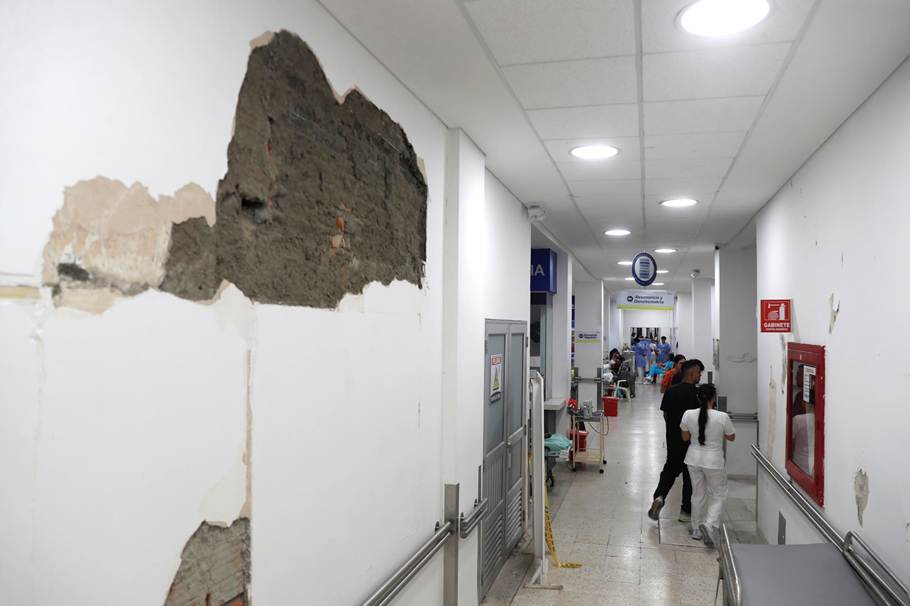
A six-story tower containing hospital wards, including pediatric care and space for pregnant women, partially collapsed—damage concentrated between the third and sixth floors. The first two levels held enough weight to prevent a larger catastrophe, but five people remained trapped.
Among them were a 14-year-old patient and his mother. Elsewhere in the ruined wing, a hospitalized woman was with her husband. A man who had recently undergone surgery and had a tracheostomy was receiving care when the tower failed.
Their relatives returned daily, waiting beside rescue operations despite the silence beneath the debris. Another employee told EFE that time was running out and the building was severely compressed. Hope remained because abandoning it would mean accepting an ending no family had yet been shown.
Two other people were injured, including a woman who required hip surgery and a 20-year-old man struck by falling masonry while escaping. He became a patient in the hospital he had tried to flee.
Cali’s Disaster After the Sirens
City figures reveal the scale. Cali officials reported 46 buildings with total collapse, another 46 with partial collapse and 1,142 with structural damage. Eighteen buildings received evacuation orders. Crews had removed 8,236 tons of rubble, while 1,800 rescuers remained active.
Yet statistics flatten consequence. One damaged building may represent dozens of mortgages. One evacuation order can separate families from medicine, school uniforms, identification papers and work tools. One collapsed hospital wing reduces medical capacity precisely when injuries surge.
At midday in Reserva de Meléndez, temperatures rise above 86 degrees Fahrenheit, and the tents become stifling. Neighbors bring food and water. The Army supplies shelter. Volunteer doctors and psychologists circulate. Residents organize watches. Clowns distract children who cannot understand why their bedrooms are suddenly forbidden.
This solidarity is real, but it should not disguise the institutional question beneath it. Communities are improvising because technical evaluations, secure temporary housing, and financial answers take longer than fear allows. The earthquake exposed not only weak structures but the distance between rescue and recovery.
Three days after the quake, national authorities reported at least 273 deaths and 377 people missing across Colombia. In Cali, the hospital continued operating, and families continued sleeping outside. Both acts can be called resilience. Neither should excuse abandonment.
For Reserva de Meléndez, recovery depends on whether towers can be repaired, lenders offer relief, and authorities treat housing debt as part of the disaster. For families outside the hospital ruins, recovery begins with an answer.
The ground moved for minutes. Afterward, Cali was left negotiating with time: the hours beneath rubble, the nights beneath canvas, and the years of payments still attached to cracked concrete.
Also Read: Dosquebradas Counts Losses as Colombia Relearns Its Seismic Lessons Again