Bogotá Reclaims Casa de Nariño as Presidential Power Moves Elsewhere
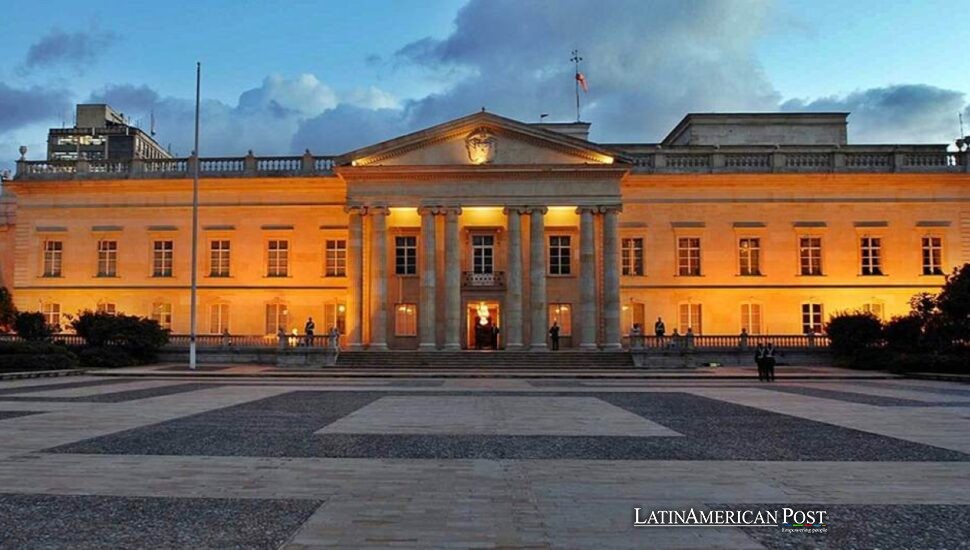
Bogotá’s Casa de Nariño is losing its president but not its power. As Colombia’s new government disperses across cities, the old palace may become a museum, exposing how architecture, memory, and centralism still govern the national imagination in public life.
A Palace Empties but the Symbol Remains
On a weekday in central Bogotá, the absence was visible before it was explained. The Carrera Octava line had thinned. Security checks moved faster. Fewer officials crossed the grounds. Tourists lingered in Plaza Núñez, photographing the columns and Colombian flags of a building that, for almost half a century, had been the country’s most recognizable executive address.
Carolina Ibarra, visiting from Mexico, passed through the reduced controls and found the atmosphere unexpectedly calm. “It’s very quiet,” she told EFE. Unaware of President Abelardo de la Espriella’s museum plan, she said opening the palace would be “great” because more people could know it.
That quiet is politically deceptive. The palace has not become irrelevant because the president no longer works there. Its emptiness shows how much authority Colombians have attached to one façade. The presidency has moved, but the argument over where national power belongs has grown louder.
De la Espriella has chosen the Palacio de San Carlos, now occupied by the Foreign Ministry, as the presidency’s base in Bogotá. He also proposes alternate operations in Barranquilla, Medellín, and Cali, where he was inaugurated on August 7. Barranquilla could become a constitutionally recognized alternate capital, though not replace Bogotá. The goal is to weaken a centralism that has concentrated decisions and prestige in the Andean capital.
The experiment began with a harsh test. De la Espriella was expected at San Carlos, but a magnitude 7.4 earthquake, with at least 132 people reported dead, sent him to Quibdó near the disaster’s epicenter. The government could not remain a ceremony inside a palace. It had to travel toward the people most exposed.
Still, moving a presidential desk is easier than moving the Colombian state. Ministries, courts, senior bureaucracies, and political careers remain tied to Bogotá. A traveling presidency may symbolize proximity, but decentralization becomes real only when authority and investment follow. Otherwise, new addresses become regional scenery for the same machinery.
Colombia’s Presidency Has Moved Before
Casa de Nariño has always looked more permanent than it is. Its history is one of reconstruction, abandonment, and return.
Vicente Nariño bought the Bogotá house in 1754, and Antonio Nariño was born there in 1765. He lived on the property for roughly two decades before his mother sold it in 1784. Nariño later became a defining independence figure after translating and clandestinely publishing the Declaration of the Rights of Man and of the Citizen in Spanish, an act colonial authorities treated as dangerous.
That biography changed the land’s meaning. In 1885, the government acquired the property, and President Rafael Núñez favored it partly because it connected the republic to an older language of rights, persecution, and liberation. Its location near the National Capitol placed the executive inside Bogotá’s dense geography of power.
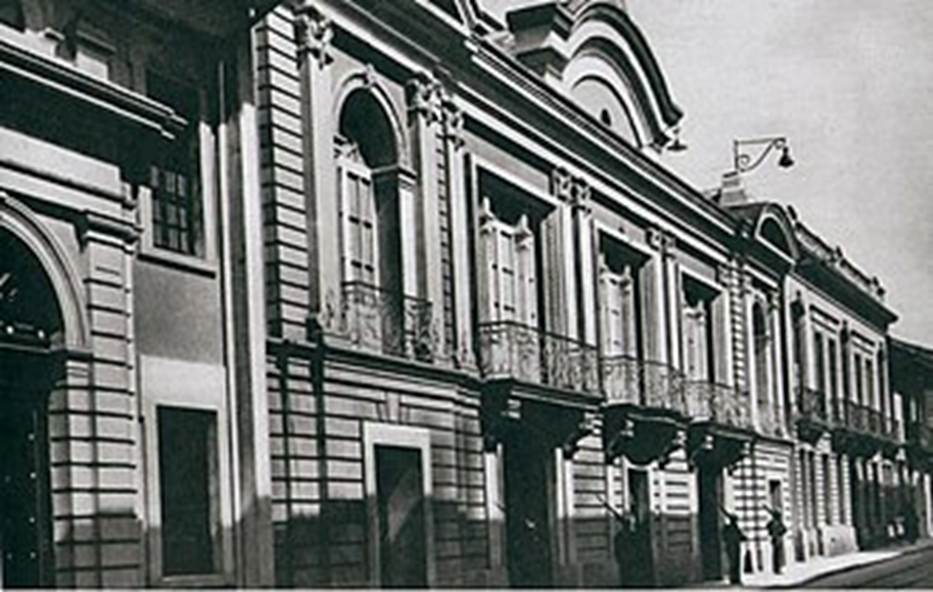
Under Rafael Reyes, French architect Gastón Lelarge and Colombian architect Julián Lombana rebuilt the residence on a grander scale. Inaugurated in 1908 as the Palacio de la Carrera, it replaced a family house with formal stonework and ceremonial rooms. Colombia was using architecture to project order after civil wars, regional fractures, and the loss of Panama.
Order never fully settled around it. Student Gonzalo Bravo Pérez was killed near the palace during protests in 1929. After the assassination of Jorge Eliécer Gaitán and the Bogotazo of April 9, 1948, presidential functions shifted toward the Palacio de San Carlos. Executive power had changed buildings before when crisis demanded it.
The modern Casa de Nariño emerged during Alfonso López Michelsen’s presidency from 1974 to 1978. Parts of the earlier structure remained, but the complex expanded to include the Plaza de Armas, gardens, offices, and security areas. By 1979, it was prepared to resume its central role, and in 1980 the presidency returned. Ten presidents later, Gustavo Petro was the last to occupy it before this transition.
Much of what visitors recognize today belongs to the twentieth century. The Patio de los Novios and its fountain are identified as the last surviving vestige of the original Nariño family house. The palace is not an untouched colonial relic. It is a layered state object, repeatedly redesigned to assure Colombians that government endures when governments change.
A Museum Cannot Escape Politics.
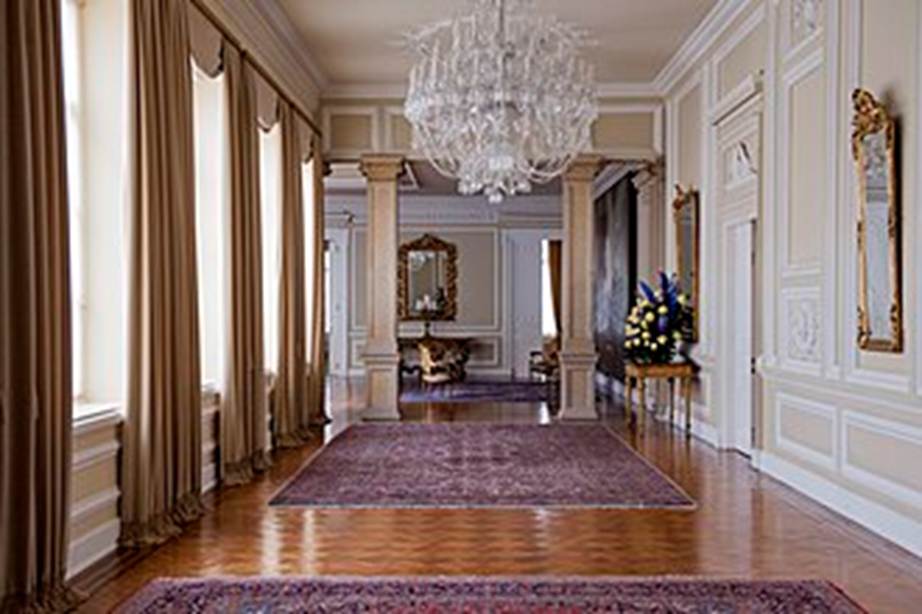
Turning the palace into a museum reverses its old logic. A guarded executive compound would become a civic space. Corridors once reserved for presidents, ministers, officers, and foreign dignitaries could open to students, tourists, and residents who have known the building mostly from television or behind barricades.
That possibility explains Raúl Rodríguez’s enthusiasm. He told EFE the important thing was to create “a very beautiful museum” that everyone could enjoy, regardless of politics. His response captures the democratic promise: a national symbol could become public property in practice, not only in constitutional language.
Erick Juliano, another visitor, called the plan a “serious mistake.” The president, he argued, should work from Casa de Nariño because it is the nation’s political center. His objection is not nostalgia alone. A presidential palace makes authority visible, giving citizens, protesters, foreign governments, and journalists a known place where responsibility sits.
A museum will not depoliticize the building. It will change the politics. Curators must decide which presidents receive emphasis, how violence and protest are narrated, whether Antonio Nariño appears as a harmless icon or a persecuted radical, and how the palace’s security architecture is explained. Even the visitors’ route will organize national memory.
The project requires conservation, staffing, accessibility, security, curatorial independence, and a serious budget. Done well, it could strengthen tourism in Bogotá’s historic center and connect the palace to the Capitol, the 1803 Astronomical Observatory, San Agustín Church, and the surrounding civic landscape. Done poorly, it could leave a potent symbol underused while the presidency multiplies addresses elsewhere.
Casa de Nariño is not disappearing. Neither is the presidency. One is being recast as public memory, the other as a mobile institution trying to prove that Colombia can be governed beyond Bogotá. The deeper question is whether power is being redistributed or merely relocated. The old palace, suddenly quiet, will remain where Colombians test the difference.
Also Read: Manizales Earthquake Marks Buildings for Death as Neighbors Salvage Lives