Manizales Earthquake Marks Buildings for Death as Neighbors Salvage Lives
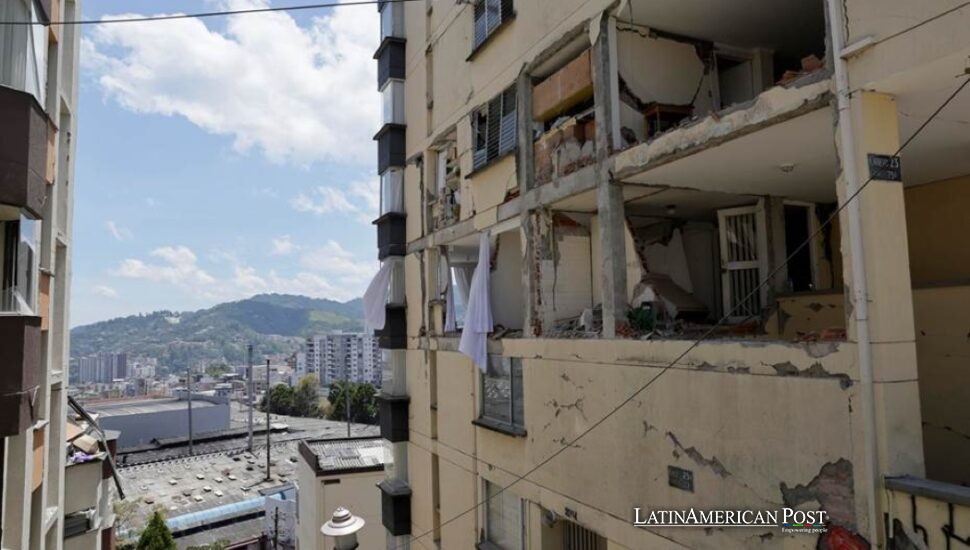
Across Manizales, painted demolition letters now condemn apartment blocks while survivors haul mattresses, refrigerators, and frightened pets into borrowed trucks. Colombia’s earthquake has ended its search phase here, but for hundreds of families, the slower disaster of displacement is beginning.
A Letter That Erases an Address
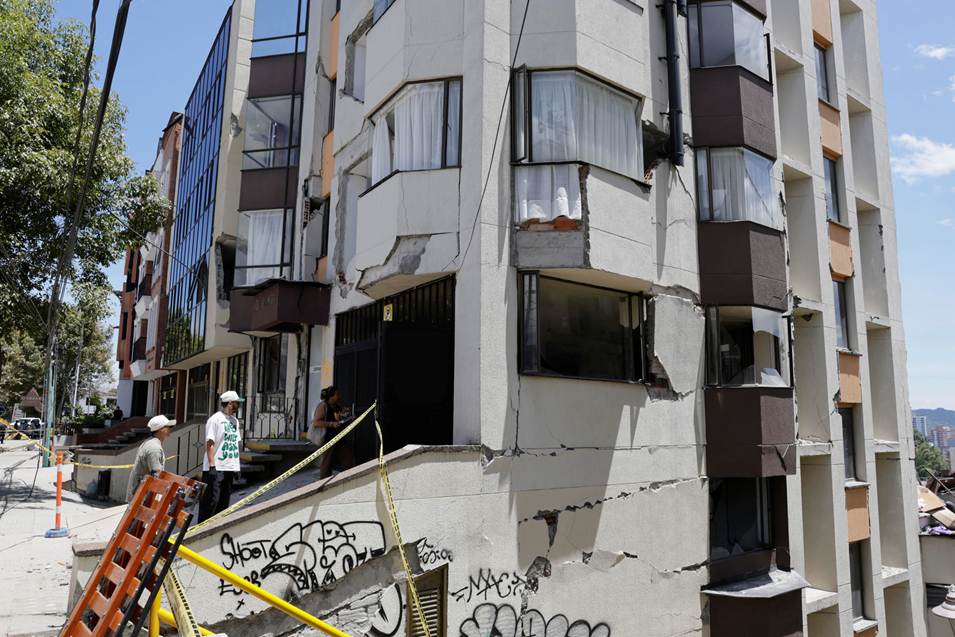
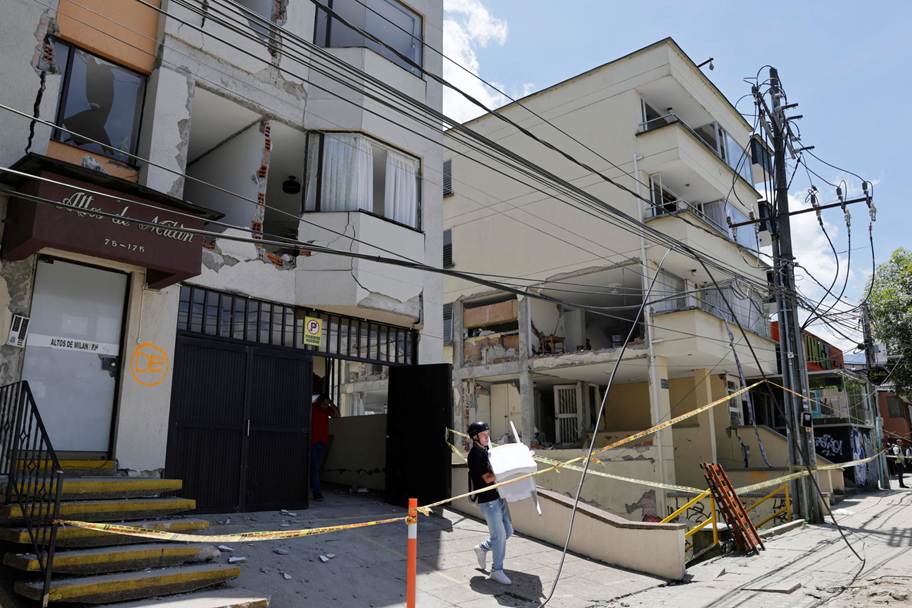
The letter is only a “D,” painted on damaged buildings across the Milán neighborhood. Yet everyone understands its full sentence: this place must come down.
Along the main street, trucks and pickup beds fill with refrigerators, mattresses, washing machines, televisions, blankets, and whatever else residents can carry from homes that stopped being safe on Monday. The work looks almost ordinary from a distance, like moving day multiplied across a neighborhood. Up close, it is an evacuation without a destination.
Some residents are allowed brief access. Others stand outside buildings so unstable that officials will not let them enter. Ceilings could fall. Heavy objects could shift. A family may see its belongings through a broken opening and still be unable to reach them.
That is what a disaster figure rarely captures. A building marked for demolition is not merely a damaged structure. It is savings, privacy, routine, and neighborhood memory suddenly transferred into rubble. In cities where household wealth is often stored in the home itself, losing an apartment can erase the main asset a family spent years assembling.
Felipe Varela lived on the second floor of an eight-story building now in ruins. He showed EFE a video of himself moving through debris while carrying the few possessions he managed to recover.
“All the walls fell,” he told EFE. The stairwell walls above him were destroyed. Had he left his room while the earth was moving, he believes he would have been killed. He escaped afterward, slowly and with difficulty.
He also rescued his two cats. They are staying with him at a relative’s house, one of the private lifelines that often appears before formal assistance does.
Survival Has an Aftertaste
Varela said he finally slept one night after several nights without rest. The earthquake still seemed present in his body. He could smell the debris even when he was no longer standing inside it.
“I still feel the smell of rubble in my nose,” he told EFE, his voice breaking. He hoped never to experience anything like it again and said he would not wish it on anyone.
His words describe more than shock. They reveal how catastrophe continues after the shaking ends. The senses keep replaying it. Sleep becomes an argument with the memory of movement.
Then comes bureaucracy.
Authorities have registered Varela, but he has not been told what assistance he will receive or when it will arrive. He has heard that both City Hall and the national government plan to provide support. For now, he waits.
That gap between census and payment is one of the most politically consequential stages of recovery. Registration proves that the state has counted a victim. It does not restore rent, furniture, income or an address. For displaced families, every day of administrative silence shifts more responsibility toward relatives, savings and charity.
The scale facing Manizales is formidable. City officials report 1,970 homes with partial damage and another 1,449 declared uninhabitable. Some 1,270 businesses were also damaged. Six people died in the city, and 182 were injured. Search operations have ended, but the economic emergency is widening.
At the Coliseo Mayor shelter, 287 people and 31 pets are receiving care. The animals matter because emergency systems that exclude them can force residents to choose between personal safety and abandoning part of the household.
Mayor Jorge Eduardo Rojas said Manizales now needs money for humanitarian aid and home-improvement subsidies so residents can repair walls, partitions and ceilings. His request exposes the next fault line. Municipal governments are expected to manage the intimate consequences of a national catastrophe, but reconstruction depends on resources local budgets may not carry alone.
A City Gives What It Still Has
Outside Palogrande stadium, hundreds of people formed a line not to claim aid, but to donate blood.
The blood will serve victims in Manizales and also patients in Pereira and Cali, where hospital banks are overwhelmed, and the earthquake’s toll is more severe. The national balance reported by disaster authorities stands at 273 dead, 3,824 injured and 377 missing.
Marcela Vásquez came because the earthquake spared her and those close to her. “This is an opportunity to give something,” she told EFE. She called herself privileged and said the suffering demanded more from those who remained unharmed.
Her gesture reveals another economy operating after disaster. It does not use money. It moves through spare rooms, pickup trucks, donated blood, rescued cats, and strangers lifting appliances together. Such solidarity is powerful because it is immediate. It also becomes dangerous when governments treat it as a substitute for policy.
Manizales has reached the phase when rescue headlines fade, but decisions become harder. Which buildings can be repaired? Who pays for demolition? What happens to tenants, owners and shopkeepers while assistance is processed? A painted “D” answers only the engineering question.
For Felipe Varela and hundreds like him, the city is now divided between what can be carried and what must be left behind. The earthquake lasted minutes. Recovery will be measured in applications, subsidies, rebuilt walls, and nights when the smell of rubble finally disappears.
Also Read: Peru Still Walks Beneath Shining Path’s Long and Violent Shadow