Haiti’s Gang Crackdown: Can More Boots and Force Restore What the State Cannot?
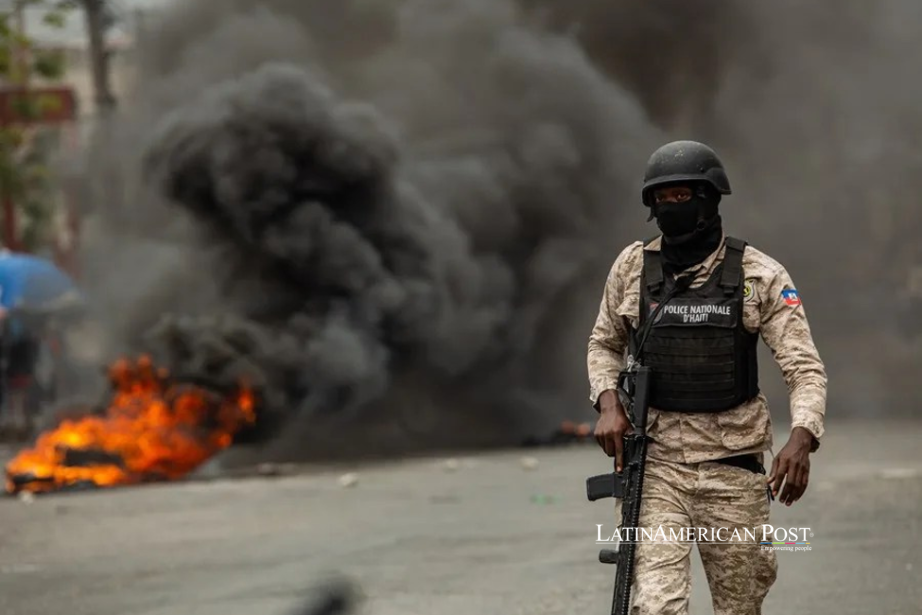
Four missing Salvadoran soldiers have exposed the distance between Haiti’s security promises and its realities. Allegations of political protection for gangs demand investigation, but proving a specific secret pact requires evidence, while defeating armed networks requires far more than reinforcements.
An Allegation Is Not a Finding
For the families of four Salvadoran servicemen missing after an ambush outside Port-au-Prince, a statement of military resolve cannot answer the immediate question: where are they? The Gang Suppression Force says it will continue its mission. Eight days after the attack, certainty about the men’s fate remains absent.
The force acknowledged receiving unidentified human remains that might belong to them. President Nayib Bukele disputed that possibility. Neither the recovery nor a political declaration substitutes for forensic identification. Reporting the soldiers as dead, or confidently assuming they remain alive, would outrun the facts.
Another claim requires equally careful handling. The Haitian anticorruption journalists’ network RHAJAC alleges that Prime Minister Alix Didier Fils-Aimé maintains a secret arrangement with gang leaders to preserve his power. As publicly reported, the allegation provides no independently verified evidence of that specific pact.
The broader concern is well grounded. A United Nations expert report published this month described political, economic and security figures sustaining gangs, including allegations that corrupt officers supplied weapons and intelligence. Such findings make official protection a serious investigative concern. They do not establish the prime minister’s guilt by association.
The responsible assessment is therefore uneven: evidence supports investigating protection networks, while the specific accusation against Fils-Aimé remains unverified. Authenticated communications, financial records or independently corroborated testimony could change that judgment. Repeated assertions cannot. Nor does an ambush, by itself, demonstrate that someone inside government arranged it.
The Arithmetic Behind the Armor
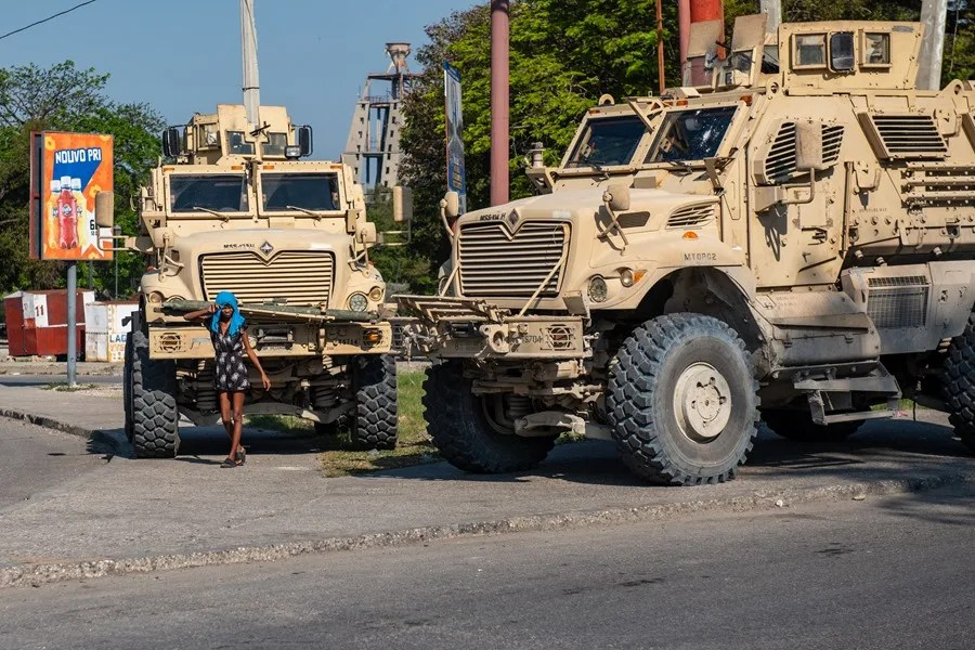
The GSF’s message arrived with photographs, including a convoy of eleven armored vehicles. The display conveys determination. It cannot establish how long the force can sustain operations, how reliably it can protect civilians, or whether institutions will remain after soldiers move elsewhere.
The force has roughly 2,000 personnel against an authorized ceiling of 5,500, according to conflict monitor ACLED. That represents approximately 36% of its intended strength. The gap does not measure its probability of success, but it limits how convincing promises of comprehensive security can be.
Haiti’s separate army recruitment effort illustrates the difference between an announcement and deployable capacity. Around 2,000 applicants took examinations for 700 places, a 35% selection rate. Passing an entrance examination does not establish operational readiness, integrity, or the ability to work effectively with civilian police.
The government wants 15,000 recruits over three years, requiring an average of 5,000 annually. The proposed 700 represent less than 5% of that target. Recruitment must be followed by training, supervision, equipment, and dependable salaries. Attrition would further separate the number entering training from the increase in usable personnel.
These recruits belong to Haiti’s armed forces, not automatically to the multinational GSF or the national police. Combining their numbers would exaggerate immediate capacity. Building an army cannot replace investigators who build cases, prosecutors who pursue financiers, or courts capable of protecting witnesses.
Trust is part of that capacity. A resident who fears both gang retaliation and official complicity has little reason to report threats. Recruiting more officers without credible safeguards can enlarge an institution without making people safer or improving its information.
Reports of several gang members killed during a Bel-Air operation, attributed by local radio to police sources, likewise offer an incomplete measure. A successful raid does not establish that residents can reopen businesses safely or that kidnappers have lost the networks enabling their return.
A Safer Block Is Not Peace
Evidence suggests pressure works locally. ACLED recorded a 75% decline in attacks against civilians in the central Port-au-Prince commune during January through September 2026 compared with the same months of 2025. That is a meaningful improvement in recorded events, not a nationwide decline or proof of one force’s effectiveness.
The same assessment reported recorded kidnappings in 2026 already 21% above the total for all of 2025. These figures measure different harms over different periods. Together, they suggest adaptation: armed groups can lose ground in one place while finding other territories and revenue sources.
That flexibility makes Haiti’s crisis harder than a contest between two armies. Disrupting gunmen without cutting off their financing and access to imported weapons lets criminal capacity regenerate. Where political protection exists, investigations must reach those benefiting from violence without treating every unproven allegation as a conviction.
Civilian protection also determines whether security gains endure. The U.N. human rights office documented at least 5,700 people killed or injured between January 1 and September 11, including casualties during operations against gangs. That combined figure must not be misrepresented as deaths alone or as exclusively gang-inflicted harm.
A strategy centered on mass arrests would encounter another constraint: the U.N. says Haitian prisons already operate at more than three times their official capacity. Detention without functioning courts cannot deliver sustainable justice. Meanwhile, children coerced or recruited into gangs need credible routes back into civilian life.
A quick, comprehensive victory looks unlikely on this evidence; lasting success remains possible but conditional. Local gains already exist. They will endure only if security operations are matched by accountable institutions and pressure on criminal finances. For Haitians, the test is whether they can cross town without negotiating with someone else’s power.