Argentina Banks on U.S. Security Ties, but Sovereignty Will Test the Alliance
Argentina’s new U.S. security funding and Stryker deal promise stronger defenses and regional influence. But becoming Washington’s preferred partner raises a harder question for Latin America: how much strategic independence survives when equipment, expertise and diplomatic expectations travel together south?
Small Check, Larger Footprint
For a soldier climbing into an armored vehicle, protection is personal. For a family living with organized crime, better intelligence should mean a safer trip home. President Javier Milei’s agreements with Washington carry those promises but also something less immediate: turning security cooperation into geopolitical weight.
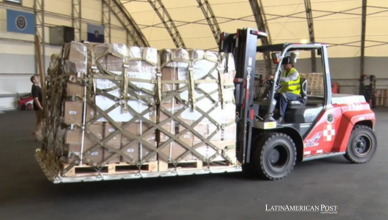
On October 5, Argentina announced $13.35 million in U.S. funding for a regional unit of the State Department’s Bureau of International Narcotics and Law Enforcement Affairs, known as INL. Of that, $7.5 million targets Argentine projects and $5.85 million supports regional initiatives in which Argentina can also participate.
That is a 56.2 percent national allocation and a 43.8 percent regional allocation. Almost half the package therefore finances a wider mission, not exclusively Argentine needs. The distinction matters: Washington is not simply equipping an ally. It is establishing a platform from which cooperation can reach other Latin American countries.
Security Minister Alejandra Monteoliva calls Argentina a reliable partner and describes the investment as a tenfold increase. Yet the announcement provides no comparison period. The multiplier signals political enthusiasm more clearly than it establishes a sustained funding trajectory. The more durable prize may be hosting the people who help shape regional priorities.
For Buenos Aires, that could mean earlier access to expertise and greater influence over which criminal networks receive attention. For neighboring governments, the question is whether this becomes a useful meeting point or a Washington-centered filter. Argentina earns regional legitimacy by solving shared problems, not by presenting American confidence as permission to speak for everyone.
Brazil and Paraguay need not share Milei’s politics to share a criminal investigation. If access to information depends on ideological closeness, the hub could divide the very regional cooperation it is supposed to strengthen.
INL cooperation and military procurement are separate instruments. Neither announcement describes transferring operational command over Argentine forces to Washington or granting unrestricted jurisdiction in neighboring countries. Conflating them exaggerates the agreement. Ignoring their shared political direction misses it.
The Alliance Under the Hood
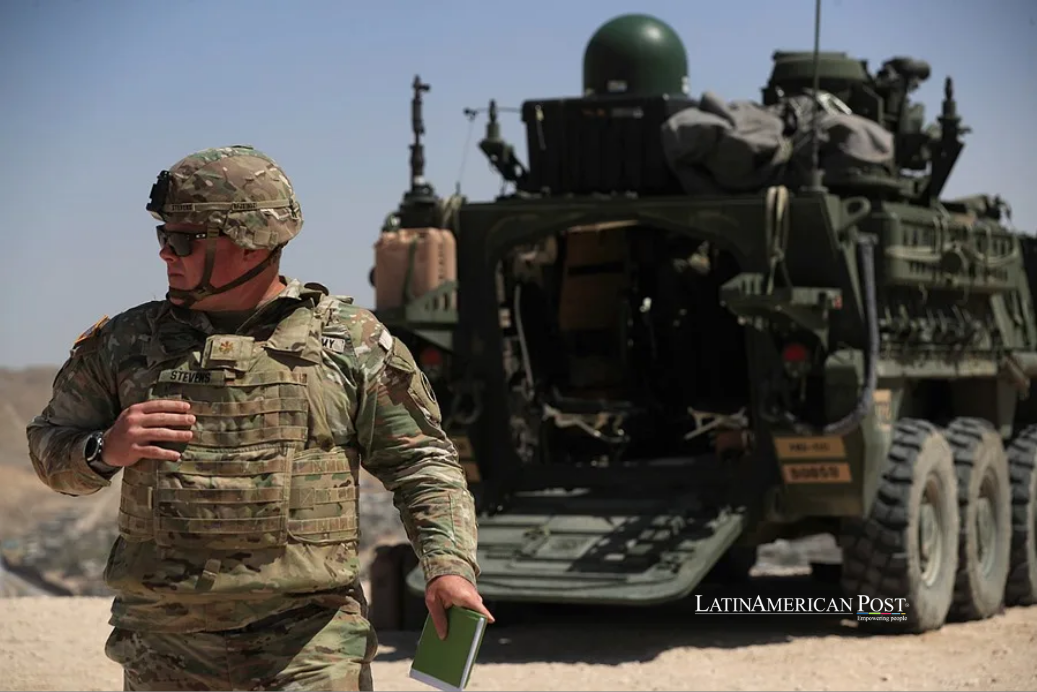
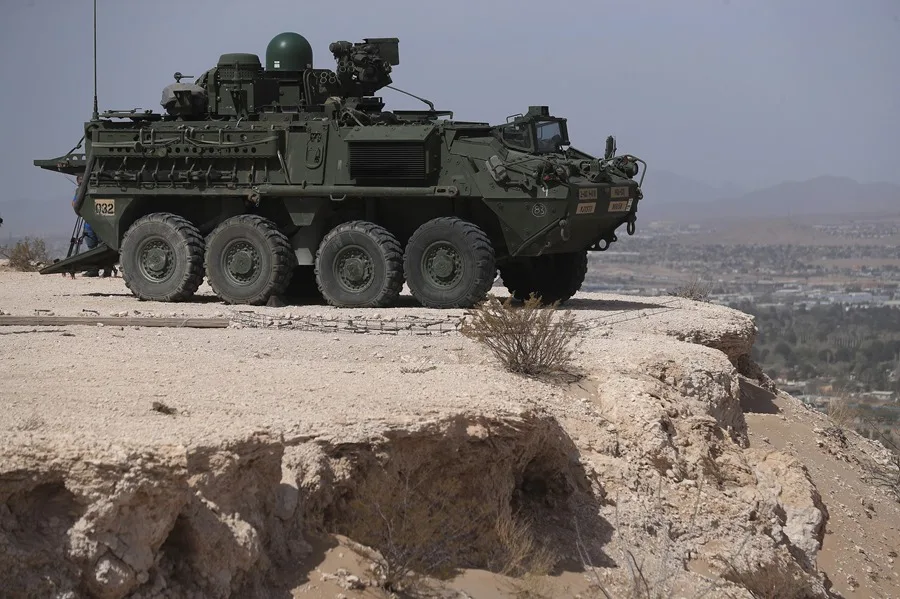
The military commitment goes beyond a ceremonial delivery. On August 21, Argentina accepted an offer through the U.S. Foreign Military Sales program to acquire up to 235 additional Stryker vehicles. Added to the eight already incorporated, full delivery would produce 243: roughly thirty times the existing Stryker fleet, not thirty times the army’s strength.
The proposed variants cover troop transport, medical evacuation, command and fire support. That combination could create an integrated capability rather than an isolated collection of vehicles. For soldiers, the difference is practical: moving under protection means more when wounded comrades can be evacuated and commanders can coordinate the same formation.
But a signature is not a delivery. The Defense Ministry disclosed neither the transaction’s price nor its timetable while describing the terms as particularly favorable. Without those figures, taxpayers cannot calculate a purchase price per vehicle, much less the cost of keeping the fleet operational.
That is where geopolitics reaches the workshop. Standardized equipment can simplify training and maintenance, while a larger fleet creates continuing demand for parts and technical support. The mechanic’s next replacement component helps determine how durable the relationship becomes. Shared equipment can outlast the presidents who celebrate it.
Argentina should therefore judge the bargain by the capabilities it can sustain independently, not merely the hardware it receives. Cooperation can strengthen sovereignty when it produces trained personnel and reliable logistics. It can narrow sovereignty when switching partners becomes prohibitively expensive. Neither outcome is settled by a photograph at the signing table.
The Islands Still Set the Terms
Far south, the relationship touches a different map. Successive U.S. Southern Command chiefs have visited the integrated naval base project at Ushuaia, near the approaches to Antarctica and the Drake Passage. Construction began in 2022, before Milei took office. Argentina’s strategic geography did not arrive with its latest political alignment.
The implication is bargaining power. Argentina offers Washington more than enthusiasm: it offers a consequential location. But visits alone do not establish American ownership or permanent basing rights. Buenos Aires should negotiate each commitment on its merits, rather than treat access to the southern frontier as an automatic accompaniment to assistance elsewhere.
The Malvinas dispute exposes the limits of assumed reciprocity. On August 31, Donald Trump said he was reviewing the American position on the British-administered islands, but announced no change. A willingness to reconsider is a diplomatic opening. It is not recognition of Argentine sovereignty, and cannot be booked as payment for loyalty.
History makes that distinction unusually sharp. In 1982, Washington supported Britain during the war despite Argentina’s place in its anticommunist calculations. Today’s elected government is not that dictatorship. The enduring lesson concerns alliances: cooperation in one theater does not guarantee support when another, more valuable relationship is at stake.
For Latin America, Argentina’s experiment could demonstrate that partnership with Washington brings useful capabilities without surrendering independent judgment. Or it could encourage governments to compete for American favor instead of building cooperation among themselves. The test is not whether Argentina can say yes to an ally. It is whether, after the equipment arrives, it can still say no.