Colombia Begins Hippo Euthanasia Operation as Escobar’s Zoo Bill Finally Comes Due
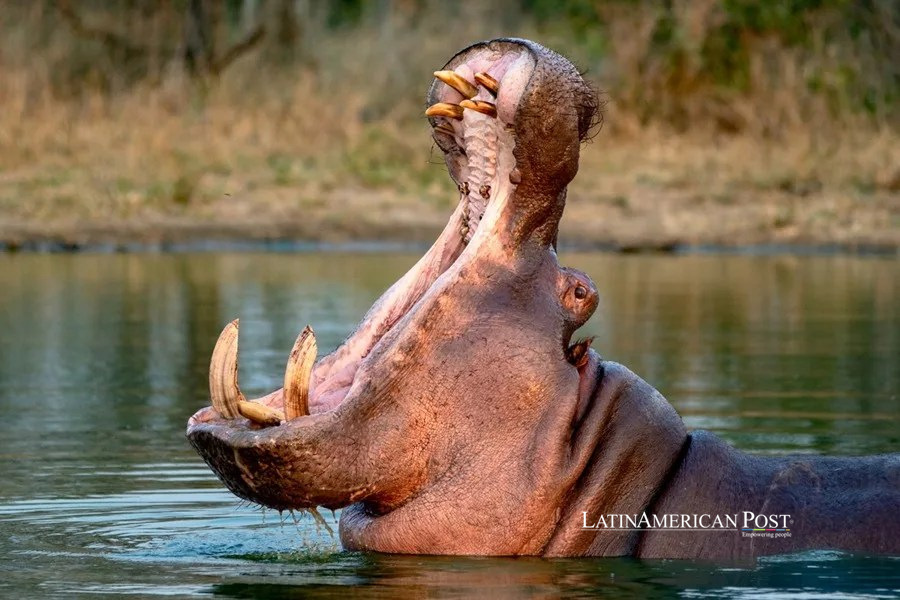
Colombia has begun an operation to euthanize ten hippos in Antioquia, EFE reports, confronting Pablo Escobar’s ecological legacy. The first phase targets animals that threaten communities, including schoolchildren, while reviving disputes over animal welfare, public spending, and years of delayed intervention.
A School Beside the Water
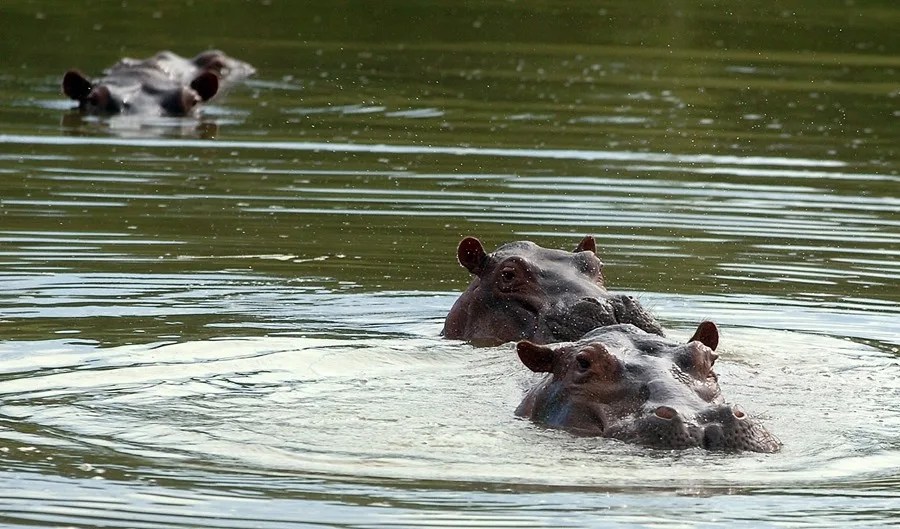
In Puerto Nare, a hippo has become a danger on the journey to school. The animal is among ten selected for euthanasia in Antioquia, according to Javier Valencia, director of the regional environmental authority Cornare. They are “putting the population at risk,” he said in comments reported by EFE.
EFE reported the start of the euthanasia operation on November 18. Cornare’s first phase runs for five months and includes sterilization, relocation, confinement and environmental education. The authority said it was arranging imports of immobilization medication and expected to carry out the ten interventions over the next four months.
The operation follows years of shifting commitments. Colombia designated hippos an invasive species in 2022. In April 2026, Gustavo Petro’s administration announced plans to euthanize at least 80 during the second half of the year. Fabio Arjona, who became environment minister under President Abelardo de la Espriella, ruled out lethal control in a July interview with El Espectador. September brought an agreement to implement the management plan. November brought the first phase into operation.
That sequence leaves the government explaining how its present actions fit its earlier promises. Regional officials must carry out procedures, answer frightened residents, and find somewhere for surviving animals to go. Their work continues across changes of ministers and presidential administrations.
The animals descend from four hippos Escobar imported for his private zoo more than four decades ago. The wealth that brought them to Colombia belonged to a trafficker. The responsibility for managing their descendants now falls on public institutions and river communities.
The Cost of Waiting
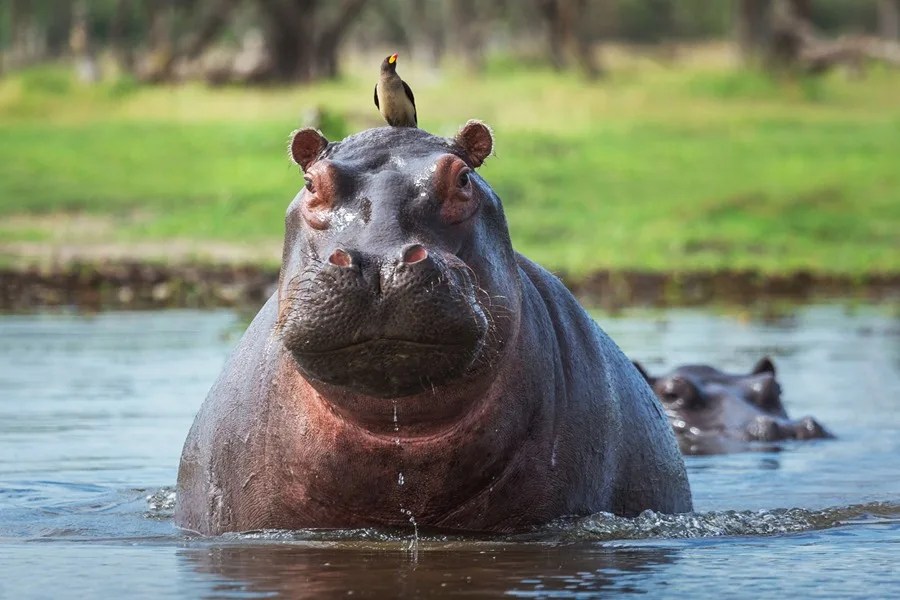
Valencia now estimates Colombia’s population at about 260 hippos. The opening batch represents roughly 4 percent of that estimate and one-eighth of April’s target of 80. Removing animals closest to people can address immediate dangers. Reducing the wider population requires continuing intervention at a pace that exceeds reproduction.
April reporting put the population near 200. The two estimates cannot establish an exact growth rate, because counting methods and coverage matter. Humboldt Institute projections cited at the time suggested more than 500 by 2030 and roughly 1,000 by 2035 without control. Those are conditional population forecasts. Successful, sustained intervention would change the outcome.
The Environment Ministry announced 7.2 billion pesos in April for implementing the broader management plan. That sum covers a program with several tasks, making division by 80 a misleading estimate of the price of an individual euthanasia. Capture, transport, personnel, and monitoring all require funding.
Germán Jiménez, who coordinates Javeriana University’s ecological restoration master’s program, told EFE in April that euthanasia requires teams of five to eight people, comparable to sterilization. Finding and handling a territorial animal weighing several thousand pounds can dominate the work before either procedure begins.
Sterilization prevents future births while leaving the animal alive and potentially dangerous for decades. Confinement adds continuing expenses for secure facilities and care. Overseas relocation depends on willing institutions, permits, and transport. Cornare has already performed 35 surgical sterilizations, according to Valencia. Earlier interventions have brought practical experience, while the expanding population demands greater reach.
Every breeding season increases the number of animals that must eventually be sterilized, confined, moved, or killed. A policy dependent on donations and receiving institutions can lose ground while those arrangements are negotiated. Reliable public funding therefore matters to animal welfare as directly as the veterinary method ultimately chosen for each animal.
Whose River, Whose Risk?
The ecological consequences extend underwater. Hippo waste adds organic matter to aquatic systems, which can lower available oxygen and affect fish and other native species. Jiménez told EFE that the animals substantially alter ecosystems and the benefits people receive from them. For communities living beside the Magdalena basin, damaged waterways can affect livelihoods along with biodiversity.
Animal welfare advocates place another obligation alongside those concerns. “The hippos are not responsible for being in Colombia,” Sen. Esmeralda Hernández told EFE in April, arguing that human decisions created a problem the state must manage ethically. Her objection carries particular force after repeated announcements and prolonged delays. Animals have continued breeding while officials debated what to do.
Scientific arguments for population control still leave consequential decisions about how each animal is treated. Authorities must establish why particular individuals require lethal intervention, evaluate feasible alternatives, and account for suffering. Residents deserve clear information about what will happen near their homes and how the remaining risks will be managed.
They also have livelihoods at stake. Jiménez described communities in EFE that have lived alongside hippos for 30 years, with some earning money from tourism and others living in fear. Around Doradal and Puerto Triunfo, sightings and souvenirs help support businesses. Any durable program needs those residents involved in decisions, including people whose income might fall as animals disappear.
For a shopkeeper, a hippo can bring customers. For a family near the Puerto Nare school, its presence can complicate an ordinary morning. Both live with an inheritance they never requested. When this phase ends, residents should be able to see exactly where the public money went, which animals remain nearby, and how their children can reach school safely.