In Panama, Six Frog Species Sang Under One Borrowed Name
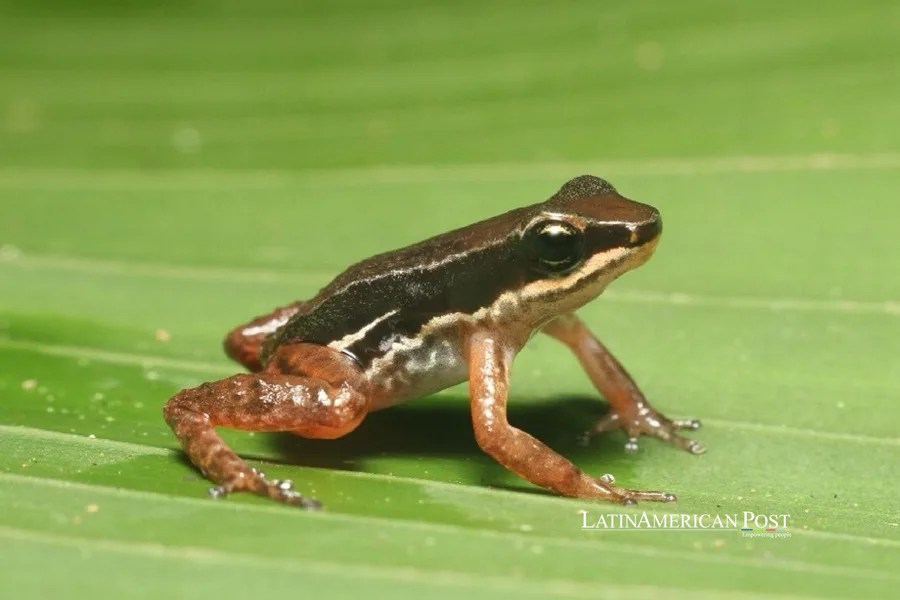
Along Panama’s forest streams, biologists kept finding little brown frogs that looked alike and sounded different. Nearly two decades of fieldwork revealed six rocket frog species behind one scientific name. Now researchers say four may already qualify for endangered status.
The Frog by Yolmar’s Restaurant
For anyone retracing the discovery of the Bocas del Toro rocket frog, the researchers left a handy landmark. They collected the specimen that carries the name Colostethus bocatoro by the Francés River in western Panama, near Yolmar’s Restaurant. There is a way to recognize this frog before you see it. The males call in chorus, each running through about 11 notes at a clip, nearly ten notes a second.
Across the country, in the eastern mountains of Majé, a frog with much the same brown back and dark stripe takes things a little slower. Three or four notes often do it. For years, a biologist standing by either stream could have written the same scientific name in a field notebook. Panamanian biologist Abel Batista had seen these frogs in Bocas del Toro, Colón and Darién. “But their calls told us something else,” he said in a statement from Panama’s science secretariat reported by EFE.
The name they shared, Colostethus pratti, came from frogs collected in the Colombian department of Antioquia and described in 1899. By the 1920s, scientists were using it for similar frogs in Panama. Doubts surfaced in 1968. More than half a century passed before researchers settled a question that required someone to go looking for a very particular frog on the other side of the border.
With help from the University of Antioquia, the team compared DNA from the Panamanian frogs with a sample collected roughly six miles from the spot in Colombia where collectors found the original frogs. In the resulting family tree, six Panamanian branches clustered together. Their closest relative was a frog called Colostethus latinasus. After a century of mistaken identity, the name pratti went back to the Colombian frogs.
How a Land Bridge Kept Frogs Apart
Panama’s geological history is usually told from the perspective of an animal on the move. Land rose between two oceans and opened a route between the Americas. The ancestors of these frogs appear to have come from South America about 4.4 million years ago, while the isthmus was forming. Then came a less familiar consequence. As the mountains rose, stretches of low ground separated populations living along forest streams. The same upheaval that brought animals together also left some of their descendants a ridge apart for generations.
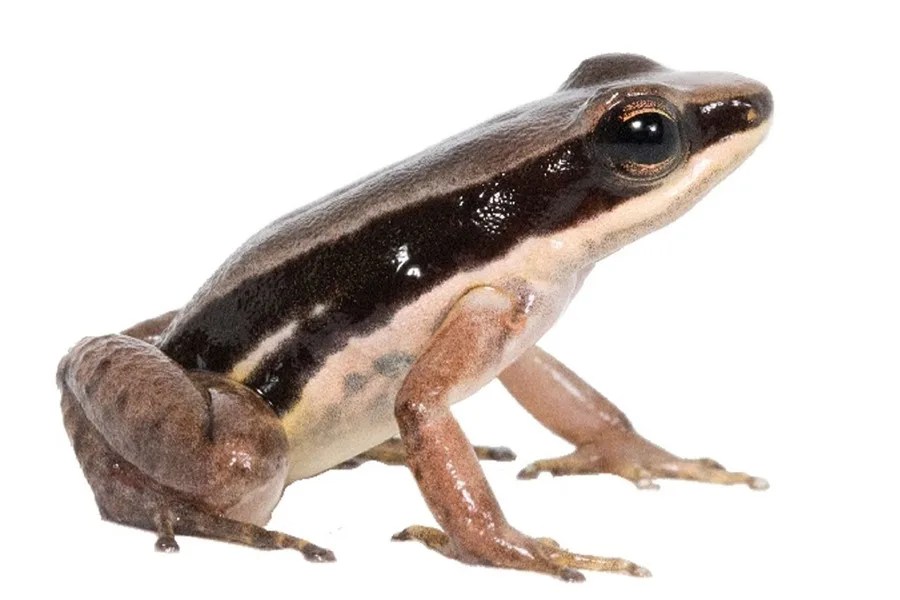
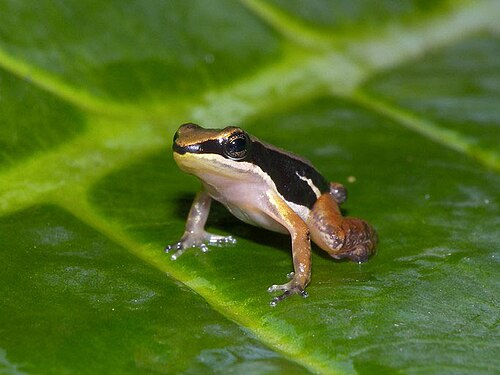
In isolation, the frogs developed distinctive calls, the signals they use to recognize potential mates. The San Blas rocket frog can string together as many as 49 notes. The researchers even heard Portobelo frogs answer a manakin, a bird. At about two centimeters long, less than an inch, these frogs look much alike to anyone on the streambank. Some have a patch of yellow or reddish skin tucked where a hind leg meets the body. Even the amount of webbing between their toes helped distinguish them.
Batista and his colleagues drew on fieldwork stretching from 2006 to 2025, comparing recordings with body measurements and DNA from 62 specimens. Their study in Vertebrate Zoology grew out of doctoral research by its first author, Tadeáš Venkrbec, at Palacký University in the Czech Republic. The specimens that anchor all six names are housed in Panama, at the Herpetological Museum of Chiriquí. A researcher puzzling over a frog years from now can go back to the animal on which its description rests.
Five names point to places. The sixth, Colostethus kuara, owes its name to the gold on its belly. Kuara means yellow in Northern Emberá, a language spoken by people who share its home in eastern Panama. The frog lives in and around Darién National Park. Whether its range extends into neighboring Colombia is a question for researchers on both sides of the border.
What a Quiet Stream Can Tell Us
Counting all those streamside sightings as one species had made the frog look reassuringly widespread. Consider what a record from Bocas del Toro can tell a biologist worried about the frog in Majé. However loud the chorus on the Francés River, it offers no evidence that a single Chucantí rocket frog survives farther east. A local disappearance once easy to overlook could mean losing a substantial share of that species.
Using criteria from the International Union for Conservation of Nature, the authors propose classifying four of the six species as endangered, one as vulnerable and one as near threatened. Five would thus qualify as threatened with extinction. An official assessment still requires better population data, and the trouble the researchers have documented differs considerably from one place to the next.
A fungal disease called chytridiomycosis has driven declines in populations of the Donoso and Portobelo rocket frogs. In Majé, the starkest figure concerns the land itself. Between 1992 and 2016, the range lost 48 percent of its forest cover outside protected areas, chiefly to cattle ranching. Researchers have found the Chucantí frog only in primary forest. The figure leaves a question for anyone working in Majé today. How many streams where those frogs once called now run through cattle pasture?
Knowing when to look matters, too. On Cerro Chucantí, researchers heard males calling year round in the cloud forest near the summit. Lower down, where the slopes are drier, the frogs called most actively during the rainy season. Imagine returning to one of those lower streams on a dry afternoon and hearing nothing. Once, a biologist might have moved on, reasonably sure the same little brown frog lived halfway across Panama. Now there is good reason to mark the spot and come back in the rain.