Colombia’s Peace Deal Rejected: Who Should Bear the Cost?
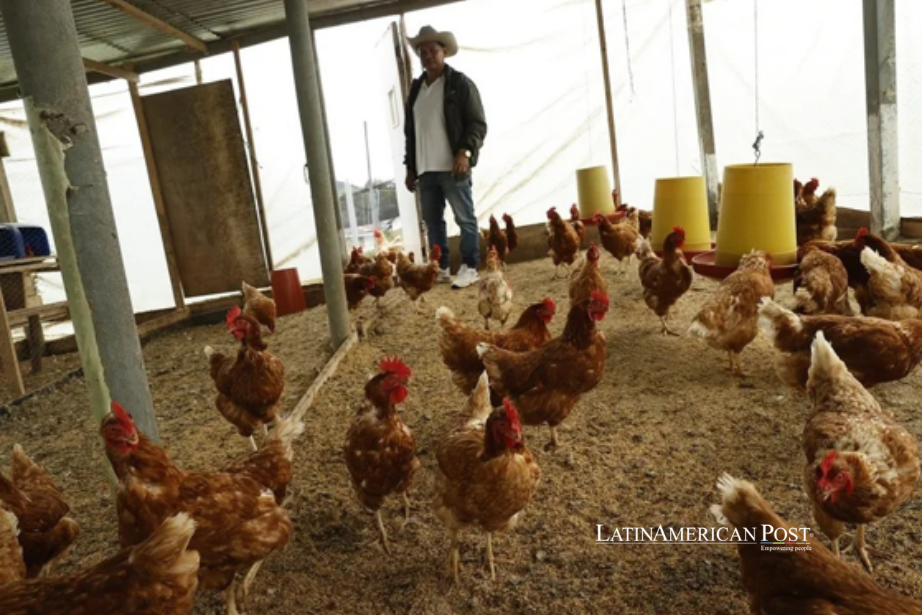
At a farm outside Bogotá, former guerrillas and survivors fear losing the support keeping them together, while Colombia’s rejected 2016 peace deal still raises an uncomfortable question about justice, democratic consent and the cost of making disarmament endure beyond politics.
Forgiveness Has No Budget Guarantee
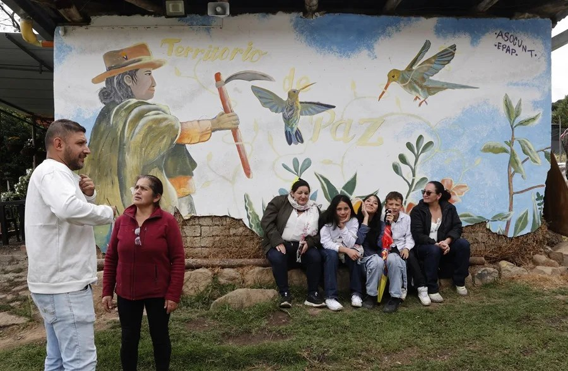
Angélica Bayén Muñoz reached Bogotá after being forced from her home twice, first in Cesar and then in Vichada. A survivor of wartime sexual violence, she eventually found herself listening to former guerrillas at Tíbares farm, about 90 minutes from the capital. She forgave them. Now they share another experience: fear.
“We have felt, both victims and signatories, threatened and intimidated,” she told EFE. President Abelardo de la Espriella’s government has criticized the peace accord, raising fears that funding could disappear. The concern is real; the reporting does not establish that the feared cuts have already taken effect.
Founded in 2020, Tíbares brings former fighters, victims, and residents together through farming and livestock projects. Its leader, Rolando Albeiro Acevedo, known as Octavio, embodies the agreement’s uncomfortable bargain. Convicted for participating in a 2004 car bombing, he was left in prison in 2017 under the accord and remains before the Special Jurisdiction for Peace.
His work today cannot erase that past. Bayén’s forgiveness cannot stand in for every victim’s judgment. Those tensions explain why a project celebrated as reconciliation can also reopen the question that divided Colombia a decade ago: what should people responsible for violence surrender before receiving a civilian future?
The Vote Santos Did Not Repeat
On October 2, 2016, voters rejected President Juan Manuel Santos’s original agreement with the FARC—the No camp won by about 54,000 votes, with approximately 50.21 percent to 49.78 percent. Turnout was just 37.43 percent. Participants were narrowly divided, while nearly two-thirds of eligible voters stayed away.
Low turnout did not cancel the result. Nor did voting No necessarily mean a desire for war. Opponents, led by former President Álvaro Uribe, objected especially to the link between punishment and political power. The agreement offered former insurgents a route into government without requiring ordinary prison sentences for every serious crime.
Under the transitional justice system, those who acknowledged grave crimes early and provided full truth could receive five to eight years of restorative sanctions, with restrictions on movement and residence. Those who denied responsibility and were later convicted could face up to 20 years in prison. Serious atrocities were excluded from amnesty.
The distinction was legally substantial and politically explosive. Supporters argued that conditional leniency could secure disarmament, testimony, and reparations. Critics saw perpetrators avoiding the punishment their victims deserved. The FARC’s successor party was also guaranteed five Senate seats and five House seats for two congressional terms, regardless of its electoral strength.
That guarantee made the argument particularly bitter: Colombians who had never taken up arms had to win representation through votes. Former guerrillas received a minimum allocation through negotiation. For Santos, political participation was central to replacing armed struggle; for opponents, guaranteed seats looked like a reward for having waged it.
After the defeat, Santos consulted opponents and renegotiated. The revised agreement clarified restrictions on liberty and required an inventory of FARC assets for victim reparations. But it retained the central compromises on political participation and alternative punishment. The government signed that version on November 24, 2016.
Congress endorsed it on November 29 and 30. There was no second plebiscite. The Constitutional Court accepted a ratification process that could conclude through Congress after revisions addressing the popular verdict. Saying Santos implemented the identical rejected text misses those changes. Saying voters approved the replacement is equally wrong.
The enduring grievance is democratic as much as judicial. Santos asked citizens to decide, lost, then secured approval through lawmakers without asking citizens again. Legal authorization allowed implementation; it could not demonstrate that the revised bargain had won public consent.
The Price of Staying Civilian
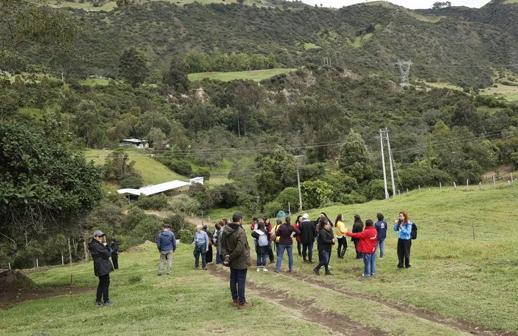
At Tíbares, that unresolved argument now reaches the household budget. More than 8,000 former fighters receive a monthly allowance worth 90 percent of the minimum wage, administered by the reintegration agency ARN. Originally intended for 24 months, the support has repeatedly been extended.
Against the roughly 13,000 people who initially entered the peace process, that recipient count shows the scale of continuing dependence, although it is not a precise employment measure. Nearly a decade later, thousands still rely on temporary assistance. That demands scrutiny of job creation and security, alongside spending.
The agreement also promised rural reform and alternatives to coca cultivation. Without viable local economies, a monthly transfer can prevent destitution but cannot create civilian livelihoods.
Luis González explains why. He told EFE that soldiers executed relatives when he was eight. He joined the guerrillas as a teenager, then fled twice after disarming because dissidents wanted him back. Displacement and unemployment interrupted his reintegration.
“I do not know peace. Not yet, because I am fleeing,” he told EFE.
Tito Cuevas, who spent 30 years in the FARC, warns that removing the allowance could push people back toward weapons. That is a warning, not a measured forecast. Still, withdrawing support while armed groups recruit could undermine the security that critics also demand.
González says he does not regret disarming. He can be with his family. Colombia can challenge Santos’s choices while still asking what it owes people who kept their side of the bargain.