Argentina Reopens Its Malvinas Fault Line Over British Ship Docking
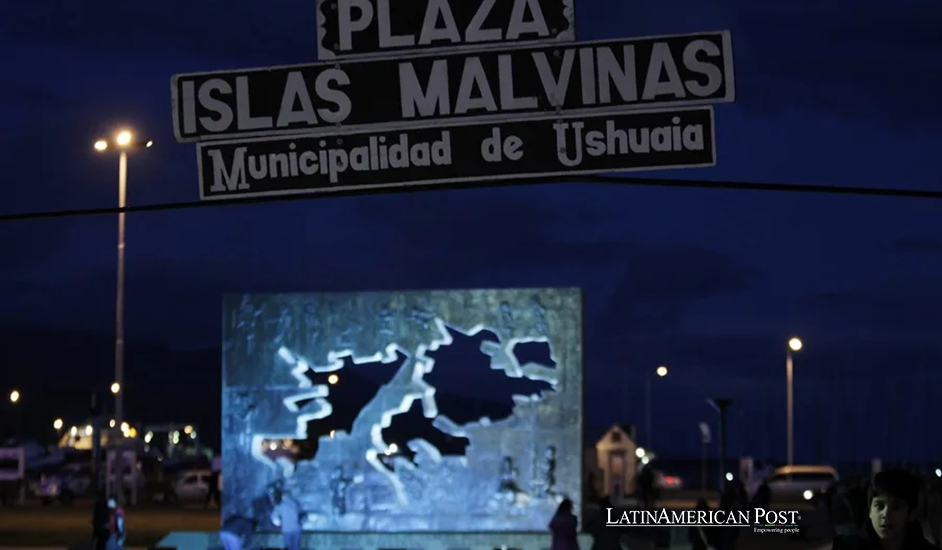
A British vessel’s stop in Ushuaia has reopened Argentina’s territorial wound, pitting Javier Milei’s government against Tierra del Fuego while exposing a contradiction between commercial pragmatism, federal authority and the country’s enduring claim over the Malvinas in the South Atlantic.
A Ship at the End of the Map
The VS Promise spent only a short time in Ushuaia, but its wake reached far beyond the harbor.
The British-flagged vessel docked Monday in Argentina’s southernmost provincial capital and resumed its journey through the Strait of Magellan on Tuesday. In Tierra del Fuego, whose constitutional territory includes the Malvinas under Argentina’s claim, the port call became a test of law, sovereignty and who controls the nation’s symbolic front door to the South Atlantic.
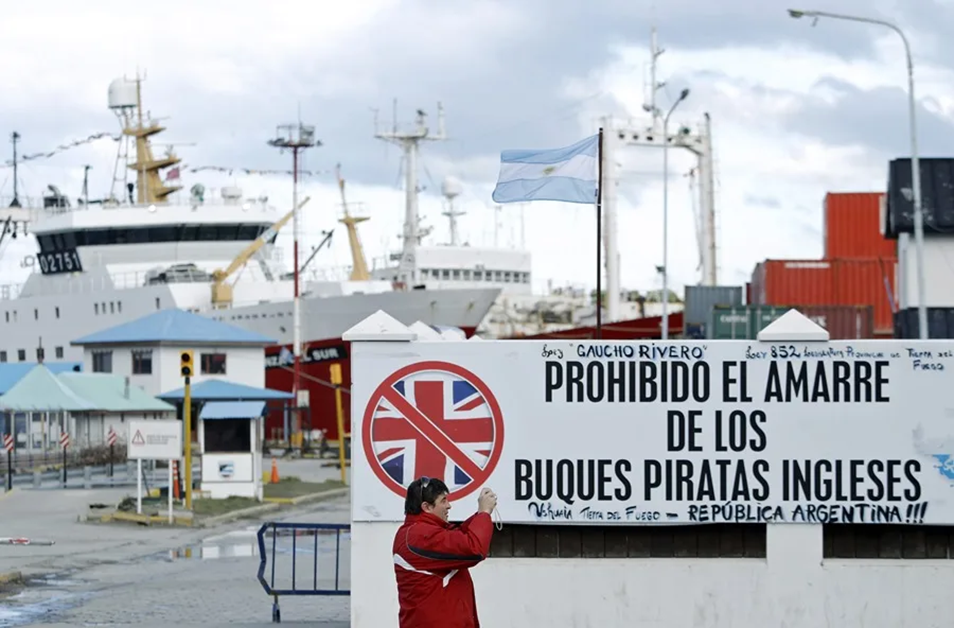
Provincial authorities filed a complaint, arguing that the ship violated restrictions created in response to the sovereignty dispute with Britain. Tierra del Fuego bars British-flagged vessels from remaining, docking or receiving supplies in its ports. The national government answered that the prohibition did not apply.
“The vessel’s actions do not violate any law,” presidential spokesman Adrián Ravier said at a news conference, according to EFE.
Ravier argued that the rule does not ban every ship connected to the United Kingdom. In the federal government’s reading, it applies specifically to vessels involved in exploring or exploiting natural resources in the Malvinas basin. The VS Promise, he said, fell outside that category.
The distinction is narrow, legalistic and politically explosive. In Argentina, the Malvinas claim is embedded in national identity, taught in schools, marked on maps and carried in the memory of the 1982 war. A British flag in Ushuaia does not arrive as neutral cloth.
Tierra del Fuego’s government called the docking “inadmissible,” according to a statement reported by EFE. It argued that Britain continues what Argentina considers an illegitimate occupation of territory belonging to the province under national and provincial constitutions.
Federal Power Meets Provincial Memory
The dispute is also about control of the port itself.
Milei’s administration took control of the Port of Ushuaia in January, prompting the provincial government of Peronist Governor Gustavo Melella to sue the federal state. The VS Promise then arrived where national authority and provincial resentment already overlapped.
The federal government says provincial authorities allowed the vessel to enter so it could load petroleum from a single-point mooring about thirteen kilometers offshore, an installation Ravier described as locally administered. Tierra del Fuego did not respond Tuesday to EFE’s request for comment after the spokesman assigned responsibility to the province.
Each side placed the decisive authorization in the other’s jurisdiction. That shows how Argentina’s federal structure can become part of the Malvinas dispute itself. Sovereignty is asserted outwardly against Britain, but ports, waters and commercial operations are divided internally.
The incident also exposes a tension between symbolic prohibition and economic routine. Ports survive through movement, fuel, cargo and services. Provincial laws seek to deny logistical normality to vessels linked to British power in the South Atlantic. Yet shipping networks do not fit neatly inside political categories. A vessel can be British-flagged without participating in disputed resource extraction.
That decision matters because selective enforcement can weaken a law’s symbolic force, while blanket enforcement can collide with trade and jurisdiction. Milei’s government chose the narrower interpretation. Tierra del Fuego saw a concession where principle should have prevailed.
The argument is especially sharp in Ushuaia. The city is Argentina’s gateway toward Antarctica and one of the closest urban centers to the disputed islands. Geography makes every docking decision feel larger than the vessel involved.
A Peaceful Claim Without a Negotiating Table
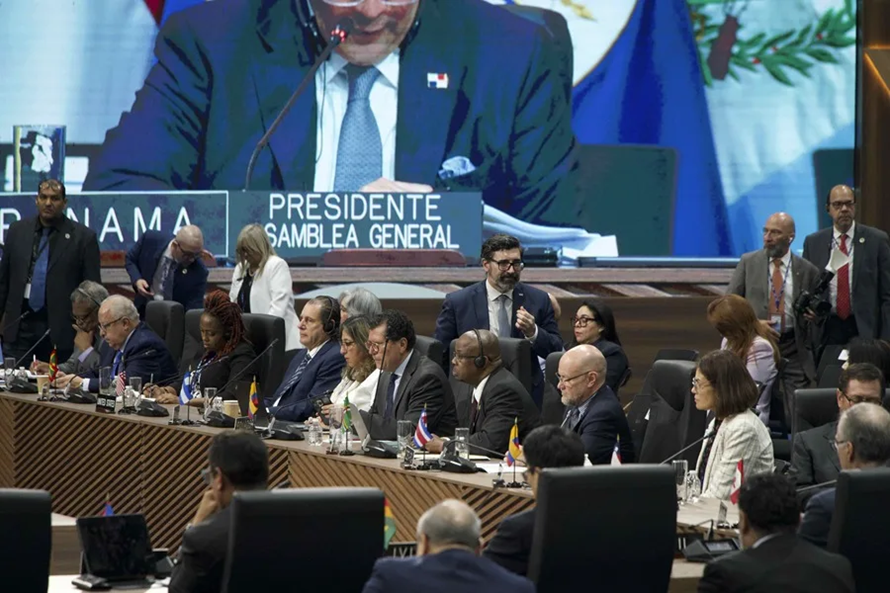
The controversy arrived only months after the Organization of American States again called on Argentina and the United Kingdom to resume sovereignty negotiations.
At its June General Assembly in Panama, the OAS described the Malvinas question as a matter of continuing hemispheric interest and urged both governments to seek a peaceful solution. Argentine foreign policy official Juan Manuel Navarro said his country remained committed to multilateralism and an international order based on rules. He called on Britain to meet what Argentina views as its decolonization obligations, according to EFE.
OAS Secretary General Albert Ramdin said the dispute over the Malvinas, South Georgia, South Sandwich Islands and surrounding maritime areas remains unresolved and should be settled peacefully. The organization agreed to keep examining the issue.
Argentina traces the rupture to 1833, when British forces occupied the islands and removed Argentine authorities. The 1982 war ended in Argentine defeat, but not in abandonment of the claim. Since democracy returned in 1983, governments of different ideologies have pursued it through diplomacy.
Britain points to the islanders’ preference to remain a United Kingdom overseas territory, reaffirmed overwhelmingly in a 2013 referendum. Buenos Aires rejects that vote as invalid within a territorial dispute shaped by colonization. The disagreement pits territorial integrity against the islanders’ stated political preference.
That is why a ship can become a national argument. The VS Promise did not alter who administers the islands, and its brief stop did not erase Argentina’s claim. But it exposed the distance between diplomatic language and daily statecraft.
Argentina can demand negotiations abroad while disputing among its own governments over what sovereignty requires at a fuel berth. In Ushuaia, the Malvinas question did not return from history. It was already there, waiting beside the dock.
Also Read: Hostages Become Human Shields as Haiti Loses Ground in Kenscoff