Mexico’s Blue Demon Jr. Trades Wrestling Glory for Healing Hands
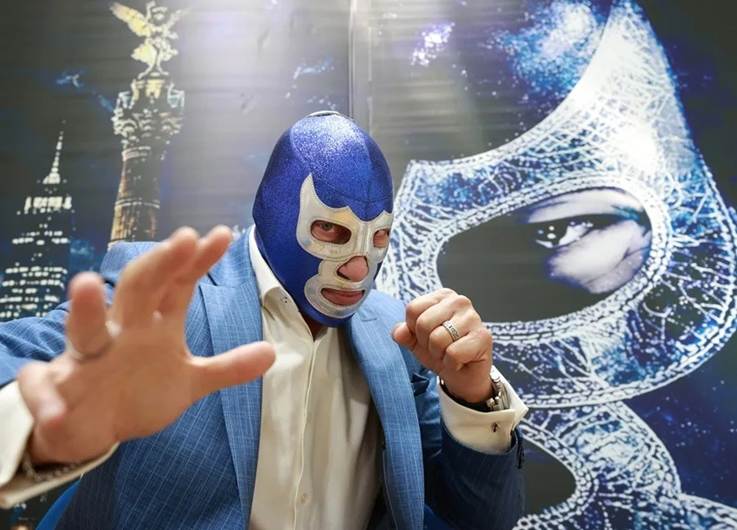
After surviving abuse, stage-four cancer, burns and months in a wheelchair, Mexico’s Blue Demon Jr. is planning his wrestling tour and a second career in regenerative medicine, turning a lifetime of pain into care for the bodies behind the masks.
The Mask and the Man Beneath It
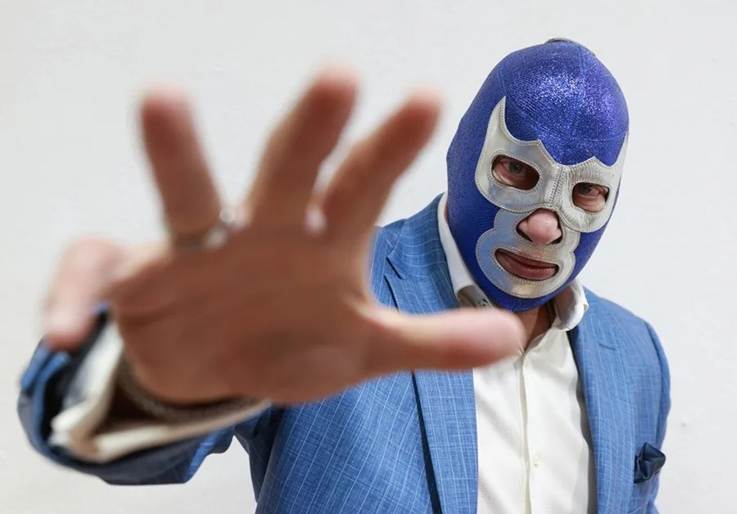
At 60, Blue Demon Jr. still knows how to make a room feel smaller. In the ring, his masked face, elastic movement and physical power carry the authority of Mexican lucha libre, where pain disappears beneath sequins, leather and applause.
Outside it, he speaks less like an invincible gladiator than a man who has spent decades studying what strength costs.
“Lucha libre is a sport for brutes where brutes do not fit,” he told EFE. A brute, he explained, may be strong and know little else. A wrestler must think.
That distinction is central to his life. Lucha libre sells uncontrolled force, but depends on timing, memory, trust and the intelligence to protect two bodies while appearing to destroy them. He won the National Wrestling Alliance world championship in 2008, yet calls survival his greater miracle.
Survival is.
He is the adopted son of Blue Demon, the legendary masked wrestler who gave him not only a home and eventually a famous name, but an exit from childhood violence. His biological mother abandoned him. His biological father beat him and locked him inside a wooden box from night until morning.
At first, the boy cried. Later, he turned the box into an airplane cockpit. In his imagination, confinement became flight.
“The things that do not kill you make you stronger,” he told EFE. Today, he said, the preferred word is resilience. What happened in the box, through illness and afterward, changed how he sees ordinary life. He now values a flower, a sunrise and the people beside him.
The fantasy of flying did not remain imaginary. At 18, he enrolled in Mexico’s Air College and eventually found himself piloting a Cessna. He remembers fear, then freedom. Over time, he accumulated roughly 2,000 flight hours.
“I felt free flying,” he told EFE. “It was something beautiful.”
He represented Mexico at the 1984 Los Angeles Olympics and entered professional wrestling two years later.
A Body Broken, Burned and Crowned
The body that learned to fly also learned how quickly certainty can collapse.
In his early 30s, doctors diagnosed him with advanced lymphoma. One physician advised him to put his affairs in order because death appeared close. Blue Demon Jr. first entered denial, then refused the ending offered to him.
He recovered from stage-four cancer. Later, an injury suffered during a match left him in a wheelchair for six months. In another ordeal, he sustained serious burns. He returned from those too.
Blue Demon Jr.’s career contains a central contradiction. His image depends on seeming indestructible, yet his pride comes from having been broken and rebuilding anyway.
At 42, an age when many athletes have already left competition, he defeated American wrestler Adam Pearce for the NWA world heavyweight championship. He remembers it as one of his greatest nights. Pearce was a natural heavyweight and one of the strongest representatives of American wrestling, he told EFE.
Blue Demon Jr. said he prepared so thoroughly that Pearce lost consciousness after being trapped in a foot hold. The victory was physical, but it also proved his earlier point. Brute strength alone had not won. Preparation, technique and judgment had.
Cancer did not care about lineage. Burns ignored championships. A wheelchair offered no privilege to the son of a legend. His response was to imagine another role.
Healing the Bodies Behind the Masks
Blue Demon Jr. earned a degree in administrative computer systems, but years of injuries redirected his education. He began studying regenerative medicine and expects to complete his qualification within weeks.
His retirement tour is scheduled to continue through August of next year. Afterward, he plans to devote part of his time to helping injured colleagues and to open a wrestling school.
“Because of my injuries, I began studying medicine,” he told EFE. “I know what it is to be hurt.”
The plan matters in lucha libre, where performers often work through accumulated damage because missing matches can mean losing income, visibility or momentum. Durability becomes a trap when pain is treated as weakness and care is postponed.
Blue Demon Jr. wants to place health inside that culture, not outside it. His school would teach movement and character, but his medical training suggests another curriculum beneath the visible one: how to preserve the body that makes the spectacle possible.
His reinvention also challenges the masculinity that shaped lucha libre. He grew up, he said, when machismo ruled. He has watched society demand more equal treatment for women and men. Being beaten as a child, he believes, made him protective rather than cruel.
Asked when he last cried, he answered, “Not long ago.” Memory can still reach the switch. Yet when Blue Demon died in his arms, no tears came. He felt required to be strong.
That silence may be the heaviest mask he has worn.
Now, nearing the end of his wrestling career, Blue Demon Jr. is redefining strength less as the refusal to hurt than as the ability to recognize hurt in others. The gladiator still knows how to make an opponent fall. His final transformation is learning how to help another body rise.
Also Read: Ecuadorean Film Tests Family Loyalty Against Quito’s Violent Criminal Underworld