Lima Unearths Santa Rosa’s Hospital Beneath a Garden of Faith
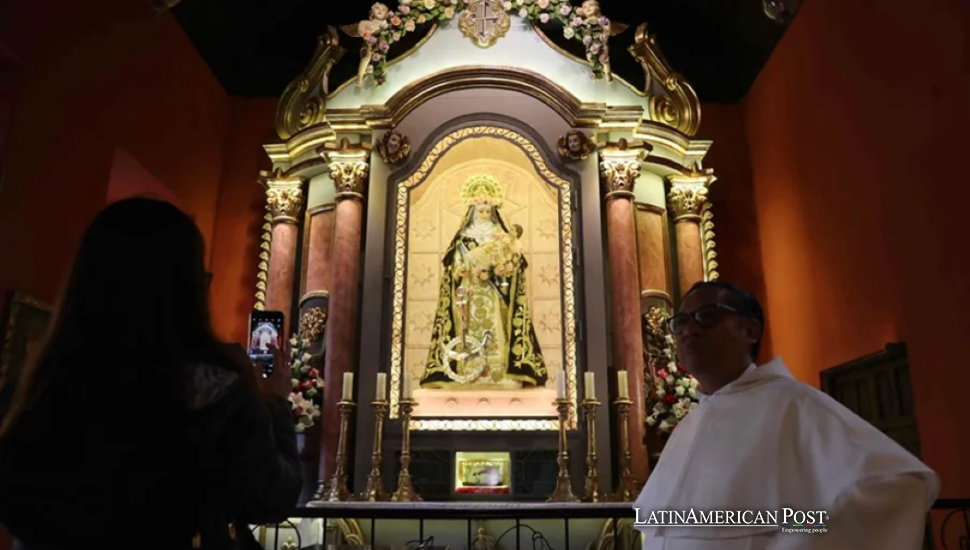
Five days before Peru honors Santa Rosa, Lima opened a buried sixteenth-century hospital where the future saint tended the sick, revealing bones, painted walls and maritime classrooms beneath a sanctuary visited annually by thousands seeking miracles, memory and national belonging.
A Hospital Under the Roses
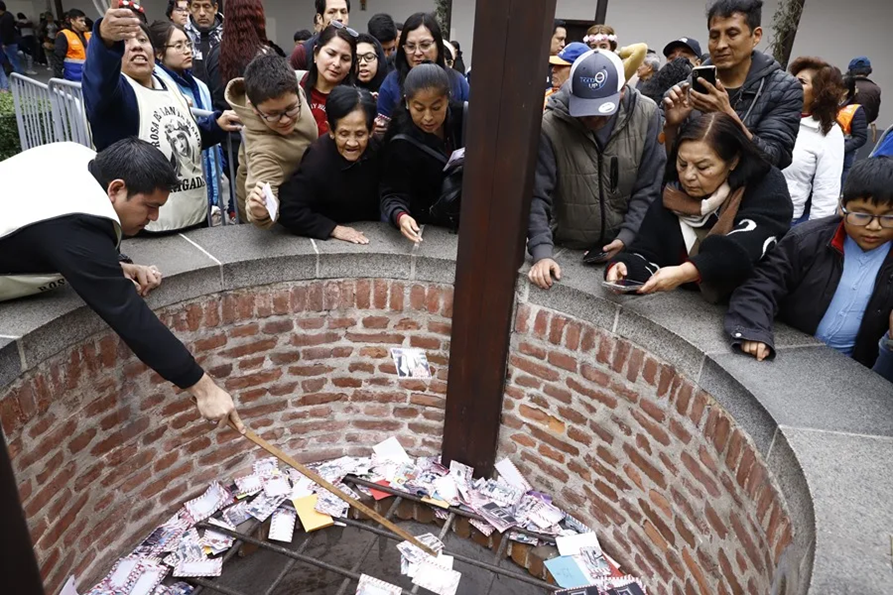
For years, visitors entered Santa Rosa de Lima’s sanctuary carrying letters and private hopes. They crossed a garden of roses toward the well where believers leave wishes every August 30. Few knew another Lima remained below.
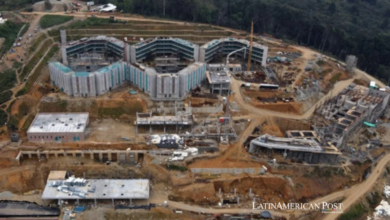
On Tuesday, the Metropolitan Municipality opened the excavated remains of the Hospital of the Holy Spirit, founded in the sixteenth century and later covered by modern construction inside the religious complex. Stone, brick and adobe walls have returned to view. So have burials beneath old brick floors, fragments of Valencian tiles decorated with plants, and traces of mural painting.
The most striking discovery may be the hospital entrance. Its cobbled floor forms a six-petaled flower inside a circle. At the tips, builders inserted pieces of animal bone.
It is a small, intimate detail, yet it captures the world emerging from the excavation: a colonial institution at once practical, decorative, devotional and connected to the Spanish empire. Valencian tiles crossed an ocean. River stones and bones came from nearby. Together they formed a threshold walked by sailors, teachers, patients and, according to municipal historians, the young woman later known as Santa Rosa.
“This space was buried beneath tons of earth and rubble,” Luis Martín Bogdanovich, head of PROLIMA, told EFE. Roses planted above it years ago, he said, concealed a portion of the city’s history.
The image is almost too perfect. A garden honoring Peru’s most famous saint had literally grown over the hospital where her public memory touches the physical lives of the sick.
Medicine, Navigation and Empire
Merchant Miguel de Acosta founded the hospital, which began operating on May 23, 1575, with authorization from Viceroy Francisco de Toledo. Its first patients were sailors and pilots, men essential to the circulation of goods, people and imperial power along the Pacific.
That original mission reveals why hospitals in colonial Lima were never only medical spaces. They belonged to a network of commerce, religion, labor and government. Caring for mariners also protected the routes on which the viceroyal capital depended.
The institution later expanded to other sectors of colonial society and hosted instruction in mathematics, navigation and cosmography. Sickbeds and classrooms shared the complex. Bodies were treated there, alongside the ambitions of an empire that needed to measure coastlines, read the sky and move ships through uncertain waters.
The hospital’s surviving pieces therefore complicate the gentler image of a sanctuary devoted to one saint. Burials under brick floors speak of patients who never left. Decorative fragments suggest beauty persisted beside disease. The classrooms show that knowledge, like medicine, served both human need and colonial administration.
Mayor Renzo Reggiardo described the opening as part of recovering identity and truth. He told EFE he was satisfied that the site was finally being placed before Lima, Peru and the public.
That language matters in a city where layers of construction have repeatedly hidden earlier histories. Recovery is not simply the exposure of old walls. It is the decision to treat what lies beneath contemporary life as evidence rather than debris.
The challenge is preserving the site without reducing it to a decorative footnote. Archaeology can deepen devotion, but it can also ask harder questions: Who received care, supplied labor or was buried there? How did race, rank and gender shape access in colonial Lima?
A Saint Between History and Devotion
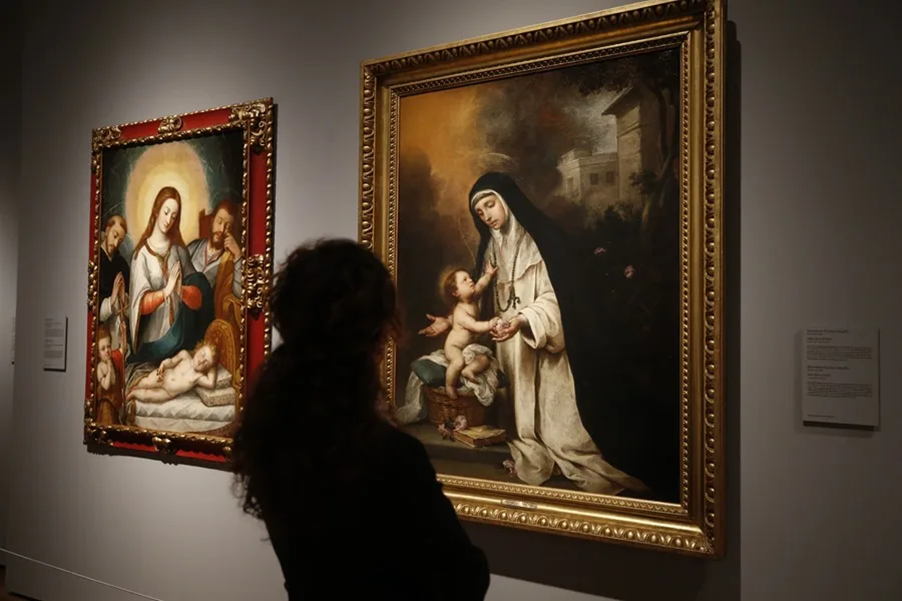
Santa Rosa was born Isabel Flores de Oliva in Lima in 1586, eleven years after the hospital opened. The daughter of a Spanish father and Peruvian mother, she joined the Dominican order as a laywoman and became known for caring for poor and sick people, as well as for severe fasting and penitential practices.
Bogdanovich said she lived alongside and served the hospital’s patients. The excavated rooms give physical weight to a biography often told through miracles, portraits and religious symbols. Here, sanctity appears less as distance from ordinary life than as proximity to illness, odor, exhaustion and bodies requiring attention.
That distinction helps explain her enduring power. Santa Rosa became the first canonized saint born in the Americas and was proclaimed patroness of the New World and the Philippines in 1670, one year before Pope Clement X canonized her. Colonial authorities presented her as proof that holiness had taken root in the empire. Peruvians made her something more local and intimate.
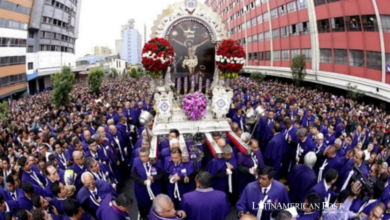
Each August, thousands come to her sanctuary. They attend Mass, visit relics and lower letters into the well, asking for health, employment, reconciliation or relief from grief. The ritual continues.
Now the pilgrims can encounter another form of testimony. Beneath the familiar garden lies a hospital that treated working people, taught the sciences of navigation and buried its dead below brick floors. Its recovered entrance does not erase the devotional story. It makes it denser.
Lima’s archaeological opening is not merely about Santa Rosa standing in a certain place. It reveals the city around her, shaped by faith and empire, charity and hierarchy, imported tiles and local bones.
For centuries, the sanctuary taught visitors to look upward, toward sainthood. The hospital asks them to look down. Under the roses, history was waiting.
Also Read: Panama’s Crocodiles Go Viral as the City Invades Their Rivers