Colombia and Ecuador Court Cartels While Washington Courts the Border
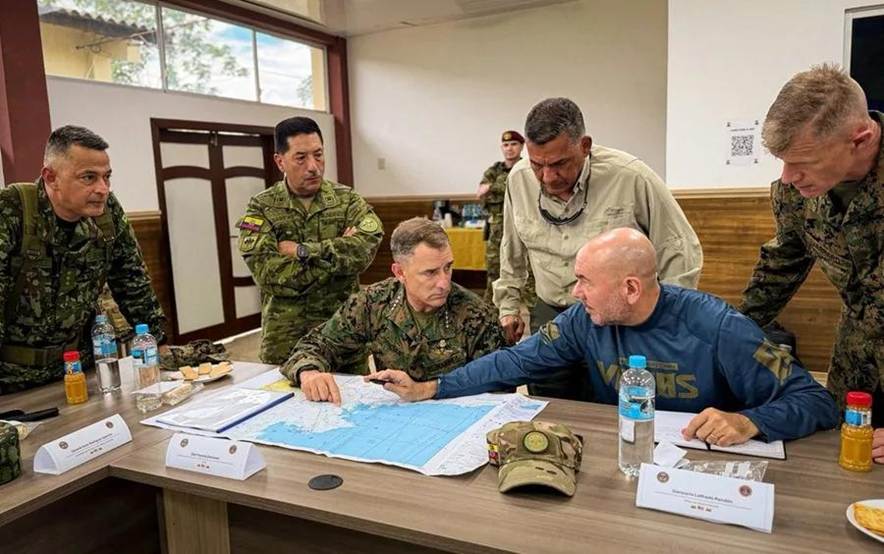
Military chiefs gathered in San Lorenzo to announce a united offensive against border cartels. Cooperation is necessary, but broadcasting strategy before results raises questions about sovereignty, civilian risk, and whether Washington’s renewed security architecture can outlast the next political turn.
Why Announce the Offensive?
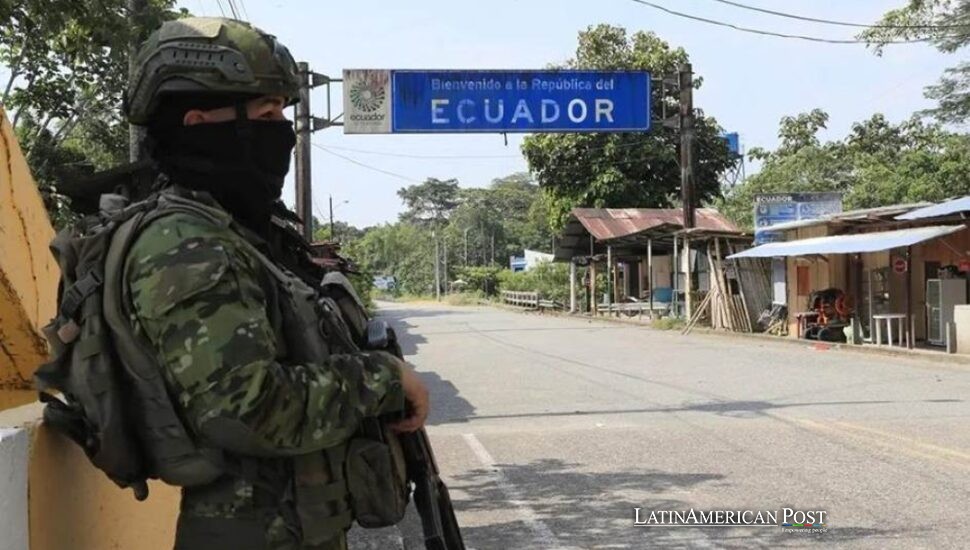
San Lorenzo was chosen because the danger is tangible there. The Ecuadorian town sits beside routes connecting Colombian cocaine regions to Ecuador’s ports and the Pacific. On Thursday, the borderland became a stage for generals.
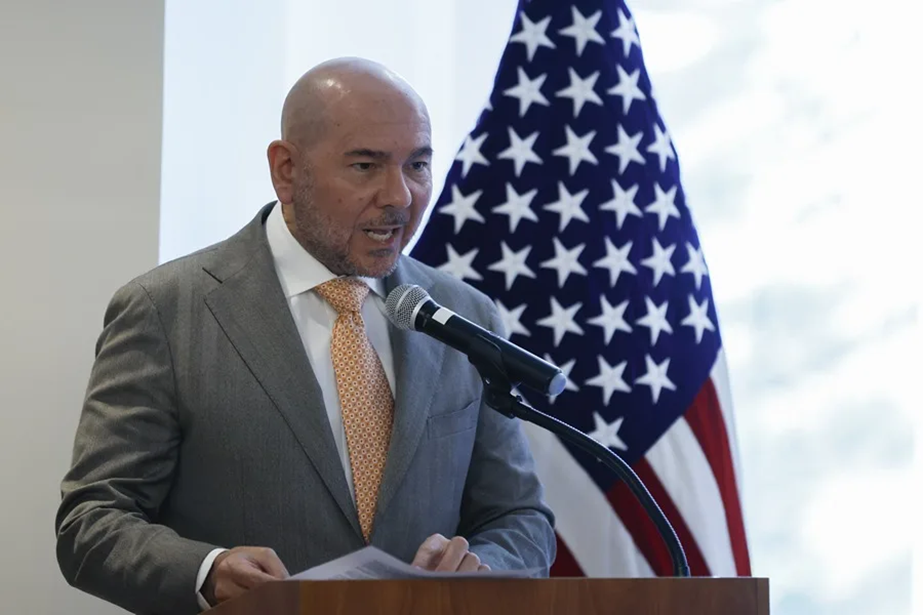
U.S. Southern Command chief Francis L. Donovan met Colombian Defense Minister Jorge Eduardo Mora, Ecuadorian Defense Minister Gian Carlo Loffredo, Colombian armed forces commander Erick Rodríguez, and U.S. task force commander Kevin J. Jarrard. The gathering produced no public map or target list. It produced something more political: unity.
“The border between Colombia and Ecuador is a strategic geographic point that violent cartels have exploited for a long time,” Donovan said in remarks reported by EFE. “Today, we are changing the rules of the game.” He promised a unified strategy to pursue cartel leaders, destroy logistics, and permanently deny safe havens.
Why announce that before proving it?
The charitable answer is deterrence. Cartels should know that crossing a national line will no longer end a pursuit. Border communities should know that Bogotá, Quito, and Washington have noticed their abandonment. Governments also need consent for cooperation involving intelligence, aircraft, and foreign personnel.
The less charitable answer is theater. Criminal organizations already study patrol patterns, corrupt officials, replace commanders, and shift routes faster than ministries publish communiqués. A declaration may reassure capitals while telling residents little about who will protect them after the cameras leave.
There was another audience. In March, a bombing against an alleged Border Commandos training center on the Ecuadorian side was followed by unexploded ordnance found in Colombia. Then-President Gustavo Petro accused Ecuador of crossing the line. Daniel Noboa denied it. Thursday’s photograph signals that the rupture has been politically buried, although the unanswered questions have not.
A Border No Country Controls Alone
Cooperation remains necessary despite the suspicious presentation. These are not local gangs. They link Colombian production zones, Ecuadorian transport networks, Pacific launch points, international brokers, money launderers, and foreign buyers.
EFE reported that a DEA-supported operation this week detained 24 people in Ecuador, including two Mexicans allegedly connected to the Jalisco New Generation Cartel, during about 20 raids across three provinces. Ecuador also receives U.S. support to intercept speedboats and semisubmersibles carrying cocaine toward Central or North America. The chain is transnational. The response must be regional too.
Intelligence sharing can work. Synchronized raids can prevent a suspect from escaping across the frontier. Maritime surveillance can identify vessels one country cannot follow alone. Financial investigations can connect a rural shipment to an exporter and overseas network.
But a military coalition is likelier to produce tactical disruption than lasting victory. Arresting leaders can fracture organizations without eliminating the market. Closing one route can raise the value of another. Bombing a camp can scatter fighters into communities where they become harder to distinguish and easier to replace.
Ecuador’s experience should make triumphal language uncomfortable. Human Rights Watch reported that criminal groups had fragmented while leaders, territorial control, and illicit economies remained largely intact. Its 2026 reporting also raised allegations involving arbitrary detention, torture, destroyed property, and opaque U.S.-Ecuador security cooperation near the Colombian border. Those findings do not negate the need to confront armed networks. They show why force without accountable institutions can create grievances while leaving criminal finance untouched.
Success should be measured beyond bodies, bombs, and cocaine bundles displayed for cameras. The meaningful indicators are prosecutions that survive court, assets recovered, ports cleaned of corruption, extortion reduced, witnesses protected, and communities able to travel without paying armed permission.
The Hemisphere Behind the Border
The San Lorenzo meeting is also a geopolitical marker. Colombia’s entry into the U.S.-led Americas Counter-Cartel Coalition restores Washington to the center of Andean security after years of friction. U.S. officials have discussed joint strikes against Colombian armed groups and described the partnership as potentially deeper than Plan Colombia.
For supporters, this is sovereignty pooled against enemies that already ignore sovereignty. A cartel that buys officials, terrorizes neighborhoods, controls prisons, and crosses borders is not merely a police problem. It is a regional political actor without democratic accountability.
For critics, the architecture resembles an old Latin American pattern: Washington defines the threat, supplies the doctrine, and gains operational reach while local governments carry civilian consequences. Recent U.S. strikes on suspected drug vessels have killed 223 people in 67 attacks, according to an Associated Press count, while Southern Command has often released little public evidence about who was aboard.
That is why making San Lorenzo public is defensible only if the rules become public too. Which country authorizes force? Who investigates a mistaken strike? What evidence is required before a target is labeled a cartel operative? Where can families seek answers?
Cooperation can protect Latin America from organizations that have outgrown national borders. It can also normalize secrecy, militarization, and dependence if citizens receive slogans instead of safeguards.
The meeting’s real test is not whether commanders “change the game.” It is whether people along the border become safer without becoming invisible. If three governments display their unity, they should display their limits, evidence, and accountability with equal pride.
Also Read: Argentina Hears Milei’s Capitalist Gospel as Evidence Enters the Classroom