Venezuela Signs Away a Century to Fuel America’s Oil Ambitions
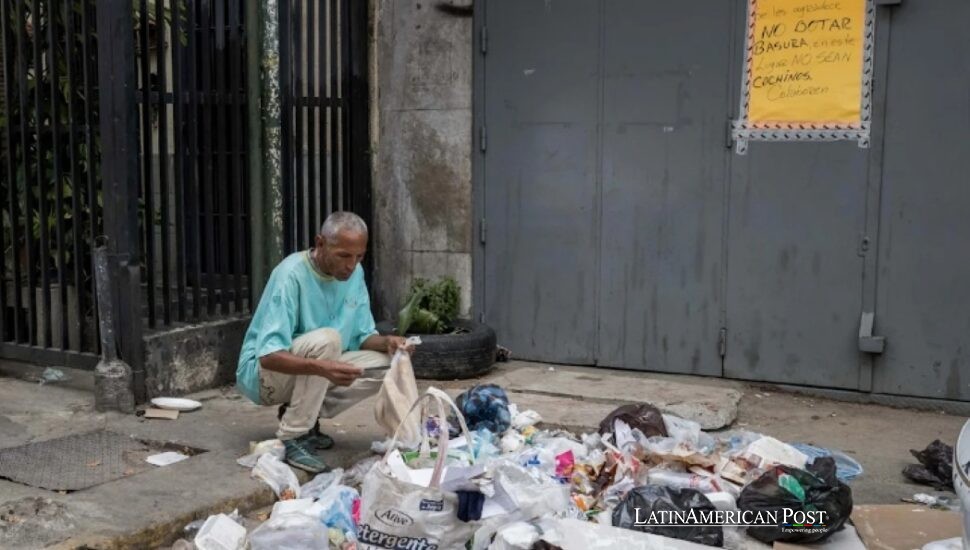
Venezuela’s sweeping oil agreement with Washington promises revival, investment, and cheaper energy. Yet, century-long concessions, Pentagon ownership, and opaque control terms revive a familiar Latin American fear: national wealth may remain sovereign on paper while foreign power directs its future.
A Contract Bigger Than the Present
In Venezuela, oil has paid salaries, financed political dreams, enriched connected elites, and sustained the hope that geological fortune would eventually reach every kitchen table. The newest agreement asks Venezuelans to believe that promise again, with Washington seated inside the company.
President Donald Trump announced that the United States would partner with North American Blue Energy Partners, or NABEP, controlled by Venezuelan businessman Alejandro Betancourt López. The venture covers 17 fields holding 65 billion barrels of proven reserves, roughly one-fifth of Venezuela’s total. Acting President Delcy Rodríguez is granting NABEP rights lasting 100 years. The Pentagon’s Office of Strategic Capital will receive a 35 percent stake, while the State Department can purchase 20 percent of production at cost. Washington will hold veto power over board appointments, most directors will be Americans, and the agreement will operate under U.S. law.
Trump calls that “majority control.” The arithmetic is less simple. A 35 percent equity stake and a right to buy 20 percent of output are different instruments. Yet control also lives in board votes, vetoes, financing, sanctions exemptions, legal jurisdiction, and the power to determine where oil can be sold. Washington may command the venture without owning most of it.
Rodríguez says the project will have a “significant impact on our nation’s revival” and generate more than $200 billion in tax revenue. NABEP has pledged $100 billion for infrastructure. The promise matters in a country whose petroleum industry has been hollowed out by corruption, mismanagement, sanctions, lost expertise, and deferred maintenance.
But large totals hide the calendar. If $200 billion arrives across 25 years, it averages $8 billion annually. Spread across the 100-year concession, it falls to $2 billion. Venezuelans have not been told which horizon applies, how costs will be recovered, or how much remains after financing and operations.
Sovereignty With a Foreign Signature
The agreement touches one of Venezuela’s deepest political nerves. Since oil was nationalized in 1976, control of petroleum has been treated as a measure of sovereignty. Hugo Chávez later made that principle central to Latin American resource nationalism, arguing that regional wealth should finance social independence rather than foreign power.
Now a Venezuelan government is offering century-long operating rights after U.S. Special Forces seized Nicolás Maduro in January and Washington began working closely with Rodríguez. Whatever one thinks of Maduro, that sequence matters. A bargain negotiated after another country’s military removed a national leader will carry a legitimacy problem long after the first repaired well begins pumping.
Future Venezuelan governments may question whether an acting administration could bind generations not yet born. American presidents may also reconsider whether the Pentagon should remain invested in a foreign producer. The contract assumes stability across perhaps 25 presidential terms in Washington and countless political shifts in Caracas.
Betancourt stands at the center of this bridge. NABEP says he has worked in oil for more than 15 years, and that the company has over 5,000 employees and 10,000 contractors. It is Venezuela’s second-largest operator behind Chevron. For oil-town families, a working field can mean a paycheck or a child who no longer needs to leave the country.
Still, direct U.S. backing gives one private company extraordinary advantages. It can unlock financing and equipment despite sanctions, reduce political exposure, and gain protection through American courts and diplomacy. The arrangement risks replacing a state monopoly with a politically protected gatekeeper. Latin America knows this pattern: the resource remains legally national while profitable decisions migrate elsewhere.
The geopolitical transfer is equally important. Russian or Chinese companies previously held some fields. Moving them into a U.S.-backed venture, while Chevron negotiates an expansion, would shrink Moscow’s and Beijing’s position and enlarge Washington’s influence across the Americas. This is not merely an oil rescue. It is a hemispheric realignment written into corporate paperwork.
The Barrel Cannot Beat the Clock
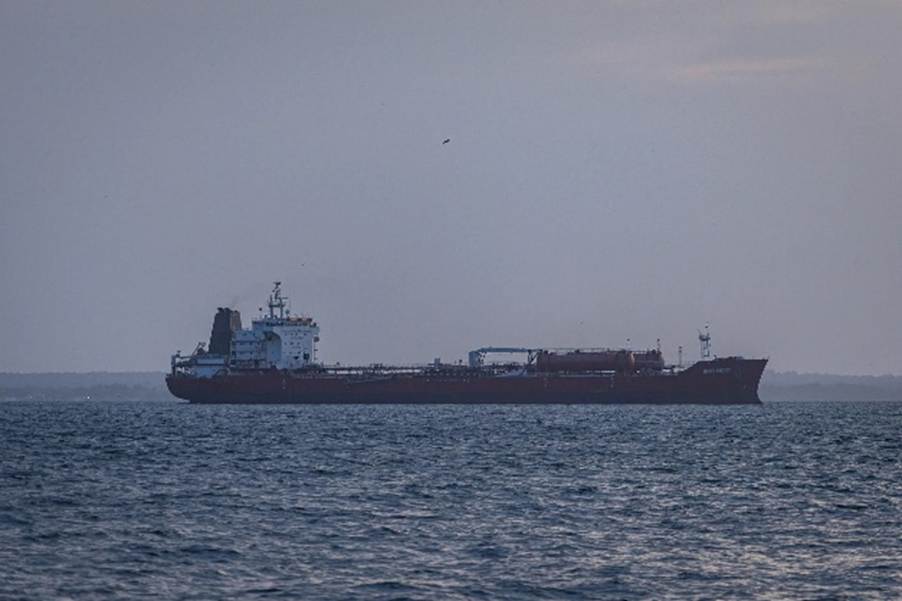
Trump argues that Venezuelan oil will weaken Middle Eastern producers, refill U.S. strategic reserves, support asphalt manufacturing, and eventually lower gasoline prices. That promise is politically useful as war involving the United States, Israel, and Iran constrains shipments and drives energy costs higher. It is also years from becoming measurable.
Venezuela produces a little more than one million barrels daily, about 1 percent of global output. At that pace, 65 billion barrels equal roughly 178 years of the country’s current total production. That is not a forecast, since the agreement covers selected fields and output could rise. It does reveal the distance between oil underground and oil available to consumers.
Reserves do not move by announcement. Wells must be rehabilitated, equipment imported, pipelines repaired, skilled workers retained, financing secured, and heavy crude transported and processed. Trump conceded that lower prices could take time, saying even two years would be short. Venezuela’s decline was built over decades, and geology cannot repair institutions.
The White House describes the project as costing American taxpayers nothing. That ignores the value of government power. Pentagon participation, sanctions relief, purchasing rights, legal protection, and diplomatic support are public assets, even without an immediate check. “Zero cost” may mean no direct appropriation, not zero exposure.
For ordinary Venezuelans, the decisive question is simpler. Will the revenue produce reliable electricity, functioning hospitals, safe water, wages that hold value, and schools that do not empty as families migrate? If the contract cannot answer that, revival remains another word spoken above the wellhead.
A credible agreement requires publication of its full terms, independent audits, clear tax and cost-recovery formulas, enforceable labor and environmental protections, and periodic democratic review. Without those safeguards, Venezuela may keep legal title to its oil while losing practical authority over how it is financed, governed, priced, and exported.
The country has spent a century being told that abundance will rescue it. This deal may rebuild fields and create work. It may also bind Venezuela to a foreign-controlled structure longer than any living citizen can imagine. The oil is real. The promised sovereignty is what still needs proving.
Also Read: El Salvador Farmers Watch El Niño Turn Corn into Dust