Latin America Battles Illegal Gold as Rivers Become Crime Scenes
From Peru’s Nanay basin to Yanomami lands and Colombia’s Pacific forests, illegal gold mining now finances armed groups, poisons Indigenous communities, and captures local institutions. A new Peruvian crackdown matters because South America’s next security crisis may glitter like gold.
The River Is the Front Line
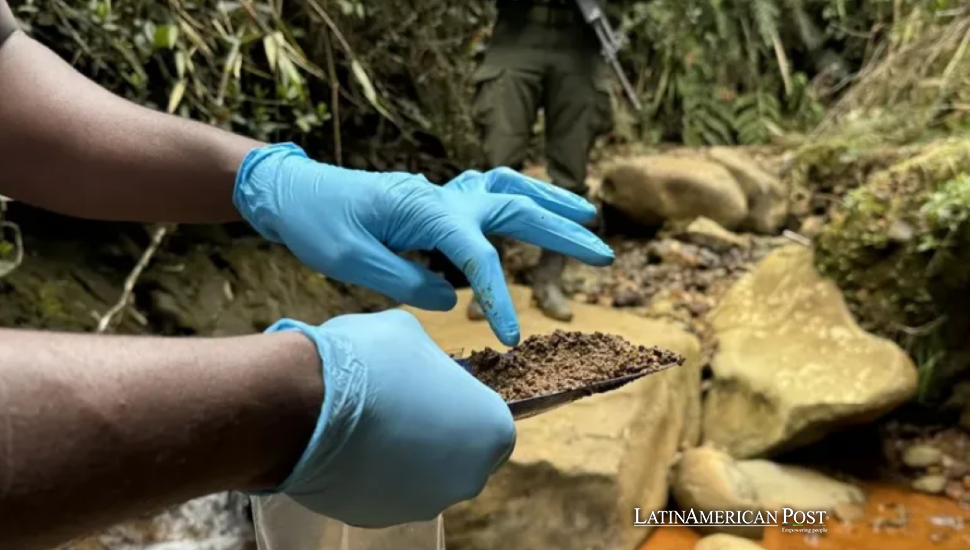
At the Yarana surveillance post in Peru’s Loreto region, the struggle over illegal gold begins before anyone reaches a mine. It begins with fuel, machinery parts, mercury, and boats moving upriver through a landscape where criminal routes can change overnight.
Environment Minister Vladimiro Huaroc visited Friday and promised that President Keiko Fujimori’s government would strengthen the fight against crimes threatening the Amazon.
“As a government, we are committed to strengthening actions to combat the crimes that threaten our Amazon,” Huaroc said in remarks reported by EFE. “We will do so through coordinated work among state institutions and with a greater presence in the territory.”
Yarana sits inside the Allpahuayo Mishana National Reserve, which protects nearly 58,000 hectares of forest in the Nanay River basin. Upstream lies another conservation area. The river is a source of food and water, and now a logistics route contested by mining networks.
The post monitors fuel and supplies headed toward miners higher in the basin. That is smarter than waiting for excavators beside a poisoned stream. Diesel must arrive. Gold must leave. Money must be washed. Officials must be intimidated, purchased, or kept absent.
Peru’s protected-areas agency warned that criminal groups constantly alter routes, requiring coordination among police, the navy, prosecutors, regional authorities, and park rangers. The harder question is whether that presence remains after the minister leaves.
Gold Has Become Organized Crime’s New Currency
Illegal mining is no longer a remote environmental offense committed by scattered diggers. Across Latin America, it has become a parallel economy joining armed control, extortion, money laundering, trafficking, and institutional capture.
Peru sits near its center. The Peruvian Institute of Economics estimates that 44 percent of South America’s illegally exported gold comes from Peru, compared with 25 percent from Colombia and 12 percent from Bolivia. Together, those countries account for 81 percent.
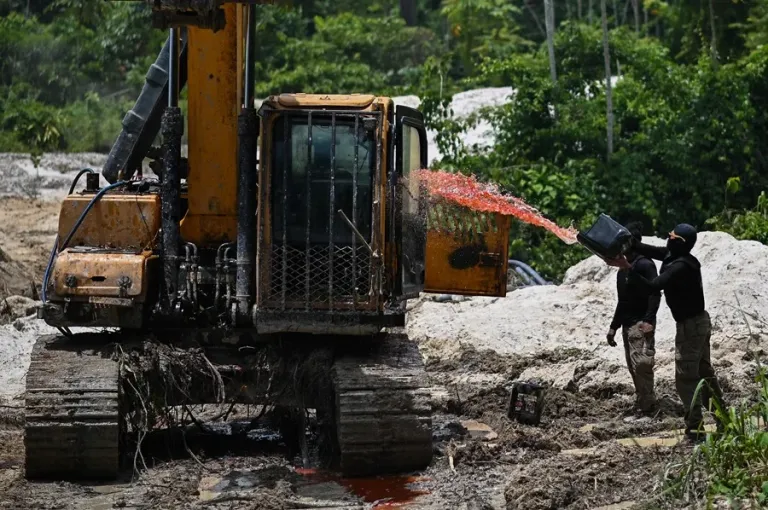
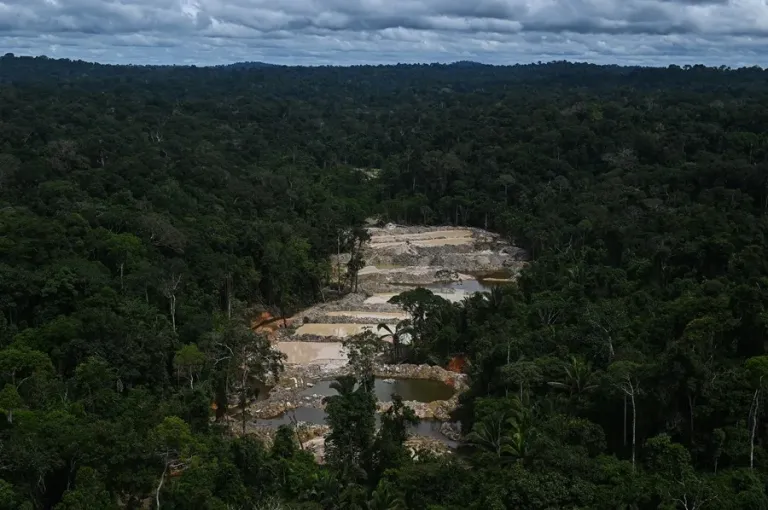
The cost is visible. Thirteen security guards were killed in a recent massacre at a mine in Pataz. La Libertad has been under emergency rule since February 2024. In Madre de Dios, more than 100,000 hectares have been deforested, leaving toxic ponds and stripped earth.
Mercury carries that destruction into fish, kitchens, and bloodstreams. Indigenous communities absorb the health damage while traders convert contaminated landscapes into clean financial value.
Ecuador shows how quickly gold merges with a criminal war. Los Lobos, Los Choneros, and FARC dissidents compete for mining zones. Eleven soldiers were killed in an Amazon ambush attributed to Comandos de la Frontera, while 1,500 hectares have disappeared in Alto Punino since 2019.
The 2024 murders of the mayors of Camilo Ponce Enríquez and Portovelo exposed the real prize. Criminal groups do not want only ore. They want municipal decisions, police information, contracts, and silence.
In Brazil, the convergence is called “narcogarimpo.” The Primeiro Comando da Capital and Comando Vermelho use mining to launder money and control territory. A security study found criminal organizations in at least 178 Amazon municipalities in 2023. Among the Yanomami, 337 people died in 2024 amid the crisis.
Chile Shows Regulation Can Beat Extraction’s Shadow
The regional evidence suggests raids alone cannot win. Destroying a dredge may interrupt production, but another can arrive while gold prices remain high and legal work remains scarce. The durable answer is making illegal gold harder to move, certify, sell, and export.
Chile offers the clearest contrast. Mining contributes about 12 percent of its economy, yet illegal extraction remains limited. Existing cases more often involve theft from active or abandoned mines than criminal control of vast territories.
That difference is institutional. Chile strengthened traceability, export requirements, and oversight. It also reduced mining patent costs for small operators, offering a workable route into legality. Enforcement succeeded because formalization was possible.
Elsewhere, informality becomes a trap. Small miners face rules they cannot satisfy, while criminal intermediaries provide equipment, buyers, credit, and protection. Communities may cooperate because the illegal economy is the only employer that arrives reliably.
Colombia illustrates the result. More than 70 percent of alluvial gold is extracted illegally, affecting 63,000 hectares. The ELN, FARC dissidents, and Clan del Golfo use mining for extortion, laundering, and territorial control. Researcher Sara García of Insight Crime told EFE these are “stable structures” permeating institutions.
In Bolivia’s northern Amazon, mining reaches Madidi National Park and Indigenous territories. An estimated 74 percent of residents in affected regions have mercury levels above the World Health Organization’s recommended limit. Reports of child trafficking show how a mining camp can become an entire economy of abuse. Guatemala documented 105 illegal operations in 2023.
Peru’s commitment at Yarana matters because monitoring fuel before it reaches a dredge attacks the business, not only its aftermath. But the Fujimori government will be judged by whether rivers remain patrolled, prosecutors protected, criminal finances traced, and communities offered legal work after machines disappear.
Gold carries no visible memory of the forest cut for it or the blood spilled beside the pit. The state must create that memory through traceability and law.
At Yarana, the river keeps moving. So do the miners. Peru’s challenge is ensuring the government does not remain the slower force.
Also Read: Mexico Wants El Mayo’s Billions Back as Sinaloa Keeps Bleeding