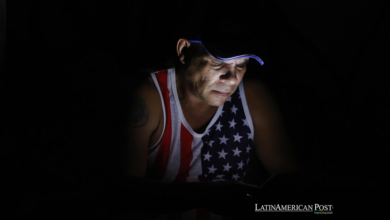
Cuba Watches Havana Nights Go Dark as Crisis Eats Joy

Havana’s vanished nightlife is more than a tourism story. Cuba’s darkened streets reveal how fuel shortages, migration, sanctions, and economic exhaustion have hollowed out one of Latin America’s most symbolic capitals after sunset.
A Capital That No Longer Stays Awake
Havana has always depended on a certain illusion after dark. Even in hardship, the city knew how to live. Music spilled from bars. Cafes stayed open. Theaters glowed. Tourists and locals moved through broad avenues as if rhythm itself could hold the island together one more night.
Now that illusion is thinning badly.
As reported by the AP and Andrea Rodriguez, Havana’s avenues are empty at night. Theaters are closed. Bars and cafes have lowered their curtains. Streetlights are scarce. So are the Cubans who once made money entertaining visitors. Under the pressure of an oil embargo imposed by the second administration of U.S. President Donald Trump, and what the notes describe as the island’s most severe economic crisis in decades, the capital’s nightlife has gone quiet. That silence is not just aesthetic. It is economic, emotional, and civic.
When Yusleydi Blanco says, “I feel empty inside when I see my streets empty. I can’t be happy when my country is sad,” she is describing more than nostalgia. She is naming what happens when a city loses one of its most visible signs of vitality. Nightlife in Havana was never just leisure. It was income, improvisation, dignity, and proof that the city could still seduce the world even while enduring scarcity.
That is why the dark matters. It changes how Cuba feels about itself.

From Tourist Surge to Street Silence
The contrast with only a few years ago is harsh. After the 2016 agreement between Barack Obama and Raúl Castro that eased U.S. travel restrictions, money poured into the island as tourism surged. Private businesses, newly allowed, began to appear. Imported modern vehicles joined the old 1950s classics in the streets. In 2018, Cuba received a record 4.7 million tourists. Hotel capacity was so strained that travelers without lodging were seen sleeping in a park in Viñales, the scenic western town known for drawing visitors and rock climbers.
That period now looks almost unreal, not because it was prosperous in a broad or equal sense, but because it offered breathing room. For a small group of entrepreneurs and workers tied to tourism, Havana felt briefly plugged back into the world. The city’s nights reflected that. The logic was simple. More visitors meant more rides, more drinks, more music, more tips, and a greater appetite for spectacle and service. Even a limited opening could animate an urban economy built on movement and improvisation.
Today, the reversal is brutal. Gasoline sales are capped at 20 liters per vehicle, and owners may wait months for a turn at the pump. Buses stop running at 6 P.M. Airlines, including Air France, Air Canada, and Iberia, have stopped flying to Havana because they cannot refuel there. In El Vedado, one of the city’s most recognizable neighborhoods, the sound of cars has faded enough that birds can be heard again. That is a beautiful image on paper, but in this context, it feels almost cruel. Nature is reappearing not because the city has found peace, but because economic life has retreated.
The tourist collapse is just as stark. The Cuban government reported 77,600 tourist arrivals in February, down from 178,000 in the same month a year earlier. This is the part of the crisis that outsiders can quickly understand because it shows up in a visible absence. Empty tables. Closed stages. Silent blocks. But beneath tourism lies a broader exhaustion that extends to food, water, medicine, and transport.
That is why Dolores de la Caridad Méndez’s remark lands so heavily. She says this is “worse than the Special Period,” invoking the years of devastation that followed the Soviet collapse in the 1990s. In Cuba, that comparison is not used lightly. The Special Period remains the benchmark for national hardship, the era people reach for when they need to explain what true economic contraction felt like in the body. To say this is worse is to say the old memory of survival is no longer enough to reassure.

A Crisis That Empties More Than Bars
The AP notes make clear that the current collapse is not the result of a single bad month or a single failed sector. Trump tightened sanctions beyond what his Democratic predecessors had done, demanding an end to political repression, the release of political prisoners, and a liberalization of the economy. At the same time, Cuba’s everyday life has been remade by persistent blackouts, cuts to the state food ration system, and severe shortages of water and medicine. In that environment, nightlife does not disappear because people suddenly stop liking music or going out. It disappears because the entire chain that makes nightlife possible begins to break.
Electricity becomes unreliable. Fuel becomes scarce. Public transport stops early. Tourists vanish. Artists emigrate. Workers lose hope. A city that once relied on nighttime circulation begins to fold in on itself before sundown.
That folding has also been accelerated by departure. Between 2021 and 2024, approximately 1.4 million Cubans left the island, most of them young people, but also musicians, actors, dancers, and other entertainers who helped animate Havana’s nights. This is one of the quiet tragedies inside the story. A city not only loses customers in a crisis. It loses performers, bartenders, hosts, technicians, dreamers, and the human confidence that keeps the cultural economy breathing after sunset.
Yeni Pérez, owner of the Old Havana cafe Entre Nos, describes the emotional rhythm of trying to survive under those conditions. You wake up ready to conquer the world, she says, determined to sell more than ever. Then no client comes in, and you go home devastated. The next day, you try again. “It’s a time that’s testing everyone’s stamina.”
That phrase may be the most honest summary of Cuba’s current condition. The crisis is no longer just about scarcity. It is about endurance as a daily discipline. Can a business owner keep opening the door? Can a worker keep showing up? Can a city keep imagining itself as alive when the night no longer answers back?
The U.S. severing of Venezuelan oil supply and its threat of tariffs on other countries that sold oil to Cuba intensified the emergency further, leaving the island without a shipment until a Russian tanker arrived in March. But even that brief relief only underscored the fragility. Havana’s nightlife does not depend on one tanker. It depends on a whole social ecosystem of motion, confidence, and exchange, and all of that is now under strain.
What the silence of Havana means, then, is larger than one city’s entertainment sector. It means Cuba’s crisis has moved beyond queues and shortages into the symbolic life of the nation. Havana after dark used to project resilience, seduction, and a kind of battered glamour. If that goes dim, the country loses not just revenue but one of its most recognizable ways of insisting it was still here, still singing, still open to the world.
Andrea Rodriguez’s AP reporting captures that loss in the most human way possible, through people who are not speaking in ideology but in fatigue. A country can survive on endurance for a long time. But when even the night begins to close early, it is a sign that the crisis is no longer circling Havana. It is living inside it.
Also Read: Uruguay Finds Its Heartbeat Again Around One Public Square Table