Cuba’s Revolution Returns to Moscow Through Ink, Cinema, and Memory
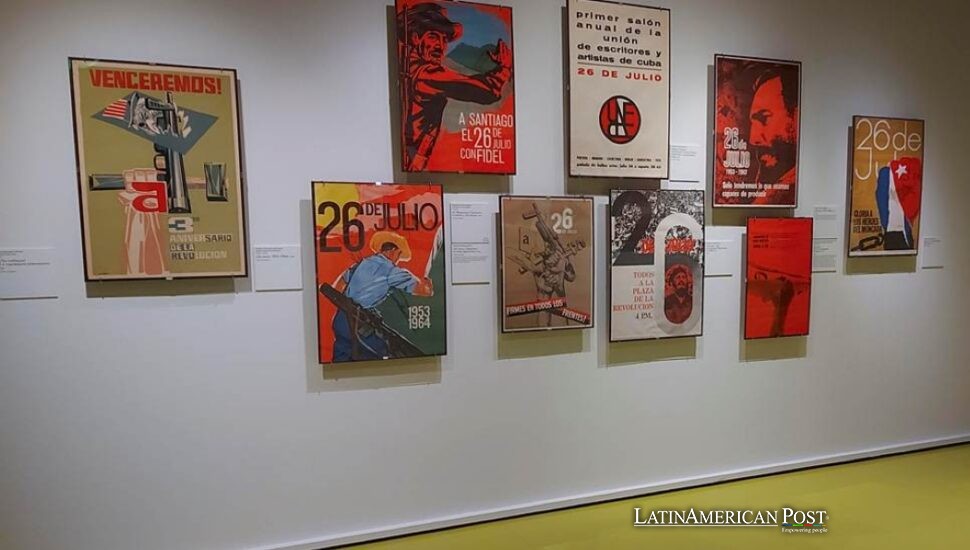
At Moscow’s Pushkin Museum, more than 140 Cuban posters trace a revolution’s visual language, from urgent slogans to playful cinema art, revealing how creative freedom flourished under political discipline before censorship narrowed the island’s boldest graphic experiment in the 1970s.
A Revolution Printed by Hand
Inside a museum known for classical restraint, Cuba arrives in flat fields of color, jagged lettering and images that seem to vibrate against the wall. “Cuban Poster. 1950-1970. Cinema and Revolution,” the first exhibition of its kind in Russia, gathers political, commercial, propaganda, and cultural works from two decisive decades. It opens as Cuba marks Fidel Castro’s centenary, turning an art show into a meditation on how revolutions remember themselves, and how allies preserve that memory.
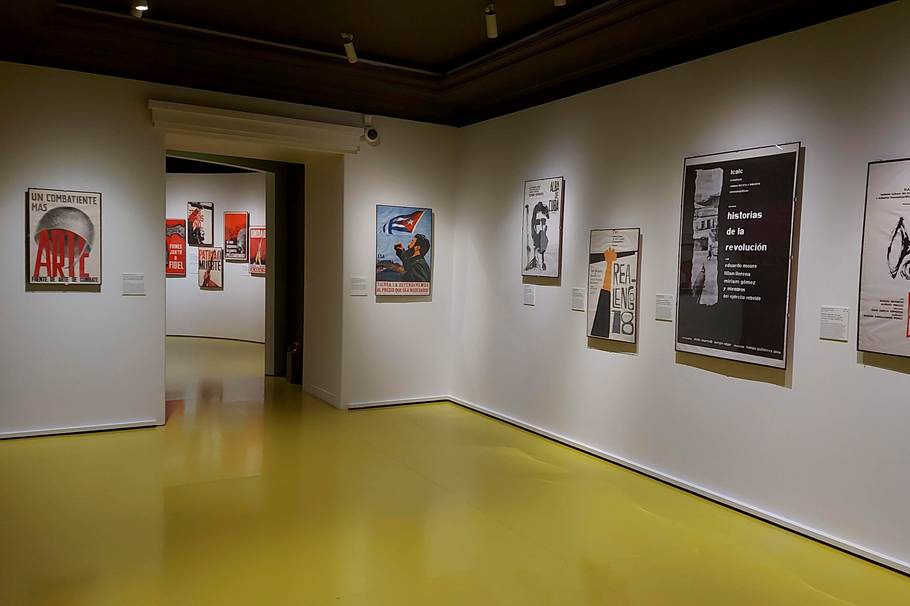
The Pushkin State Museum of Fine Arts is an unlikely host. Its reputation rests on academic traditions and canonical European art, not hand-pulled revolutionary graphics. That mismatch gives the show its charge. Curators have organized the works across roughly 10 thematic rooms, allowing a coherent language to emerge from posters made for sharply different purposes.
Every piece was produced through screen printing, a method now associated with artisanal work but then prized for speed, economy and force. Limited resources became an aesthetic discipline. Ink had to work hard. Texture replaced polish. A few colors carried urgency, wit and ideological clarity across a city wall or cinema lobby.
The exhibition moves from exhortation to everyday instruction. “Death to the Invader” and “Homeland or Death” compress the Revolution into absolute choices. Nearby, Félix Beltrán’s minimalist “Click” asks Cubans to switch off unnecessary lights. A small onomatopoeic word sits against dark blue, transforming electrical conservation into a national gesture.
That contrast explains the Cuban poster at its best. It could thunder, but it could also whisper. It made sacrifice feel monumental and household discipline communal. The state needed messages understood quickly, yet artists resisted mere bluntness. They used metaphor, humor, and surprise to make obedience visually pleasurable.
When Cinema Opened the Cage
Cinema posters offered the widest field for experimentation. Yekaterina Pronicheva, director of the Pushkin Museum, said the moving image served propaganda, education and entertainment at once. Cuban artists created posters for films from around the world, along with the island’s emerging fiction and documentary cinema, she said during the exhibition presentation, according to EFE.
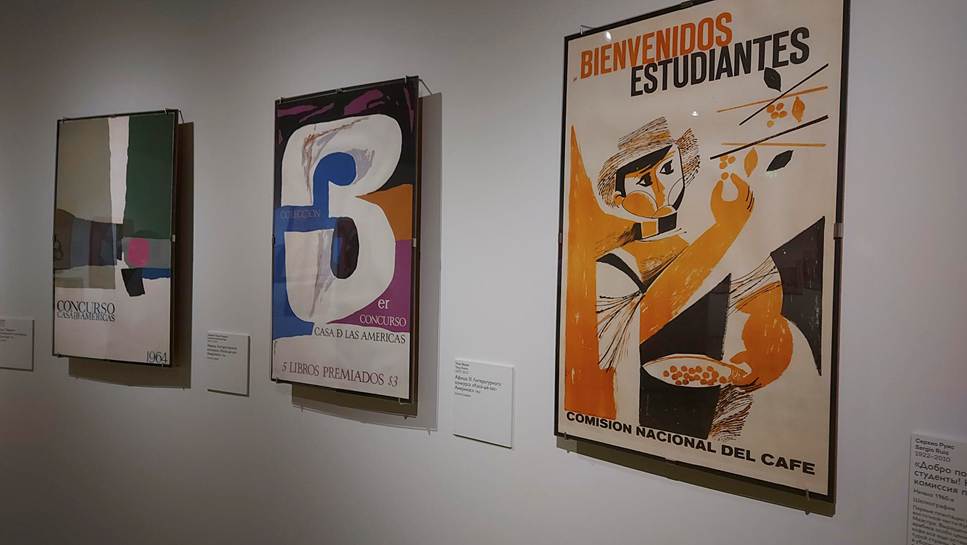
Pronicheva described designers who worked with “absolute freedom” and absorbed modern art without hesitation. Photo collage met pop art, optical illusion borrowed from op art, and psychedelic forms gave political culture a hypnotic pulse. The result was not provincial imitation. It was a Cuban recombination, leaner, hotter, and more improvisational.
Alfredo Rostgaard’s “Congo 1960,” designed for a Fausto Canel documentary, carries the muscular urgency of anti-colonial struggle. Eduardo Muñoz Bachs’s poster for “For the First Time” offers an almost childlike Charlie Chaplin, tender rather than militant. Together, they show that revolutionary culture was never visually uniform, even when institutions demanded political alignment.
The roster reveals how Cuban graphic modernism was built through movement across borders. Muñoz Bachs was born in Valencia and exiled in Cuba. José Luis Posada, affectionately called “the Galician,” though he too was Valencian, became essential to the island’s graphic culture. Madrid-born Rafael Morante joined Cuban-born figures including Beltrán, Rostgaard and Antonio Pérez González, known as Ñiko, whose collaboration helped make the Moscow exhibition possible.
This cosmopolitanism complicates the image of Cuba as culturally sealed after 1959. Its poster art was revolutionary, but also migratory. Spanish exile, Latin American anti-colonialism, Soviet partnership and Western avant-garde technique met on the same sheet. The posters belonged to a controlled system, yet their visual vocabulary crossed ideological borders with ease.
That contradiction was the engine. Cinema let artists serve a revolutionary institution while exploring ambiguity, mood, and symbolism that direct propaganda could not always tolerate. A film poster could suggest rather than declare. It could hide complexity inside color. For a time, the screen created breathing room around the slogan.
The Gray Years Close In
Curator Marina Maslova called poster creation a laboratory where the recognizable Cuban style matured: austere, ingenious and metaphorical. She identified exceptional creative freedom as decisive to that school’s development, EFE reported. The phrase matters because freedom in revolutionary Cuba was never simple. It existed inside boundaries that could suddenly harden.
By the 1970s, those boundaries tightened. The Padilla affair, sparked by controversy surrounding poet Heberto Padilla, helped usher in the Gray Quinquennium. Censorship deepened, intellectuals and artists faced harassment, and socialist realism gained force as the preferred aesthetic. The state that had enabled a brilliant graphic infrastructure increasingly narrowed what imagination could safely do.
Fidel Castro’s formulation, “Within the Revolution, everything; against the Revolution, nothing,” settled the hierarchy. Art might innovate, but political authority retained the final word. The poster’s golden age did not end because artists ran out of ideas. It faded because the permissible territory of those ideas contracted.
In Moscow, that history carries a second political layer. Cuba and Russia maintained ties through Soviet dependence, the shock of the Soviet collapse, and a strategic revival built on credit, energy, trade and diplomatic solidarity. Agreements involving oil, agriculture, tourism and industry have renewed an old relationship, while Cuban leaders have appeared in Moscow at symbolically charged moments.
The exhibition therefore works as cultural diplomacy, but it is more revealing than an anniversary tribute. It celebrates the Revolution’s visual confidence while displaying the moment that confidence became less tolerant of dissent. Russia can admire the posters as shared political heritage. Viewers can also see what becomes possible when institutions fund artists, and what is lost when those institutions fear them.
The strongest Cuban posters do not survive because they explained policy well. They survive because they exceeded policy. Their makers turned scarcity into style, cinema into a loophole, and propaganda into an arena of invention. They still refuse to remain obedient historical artifacts. At the Pushkin, the old ink looks fresh. The politics feel heavier. The images, somehow, keep moving.
Also Read: Mexican Pop Prince Cristian Castro Summons Metal Gods and Memory