Colombia Counts the Cost as Earthquake Rubble Becomes National Reckoning
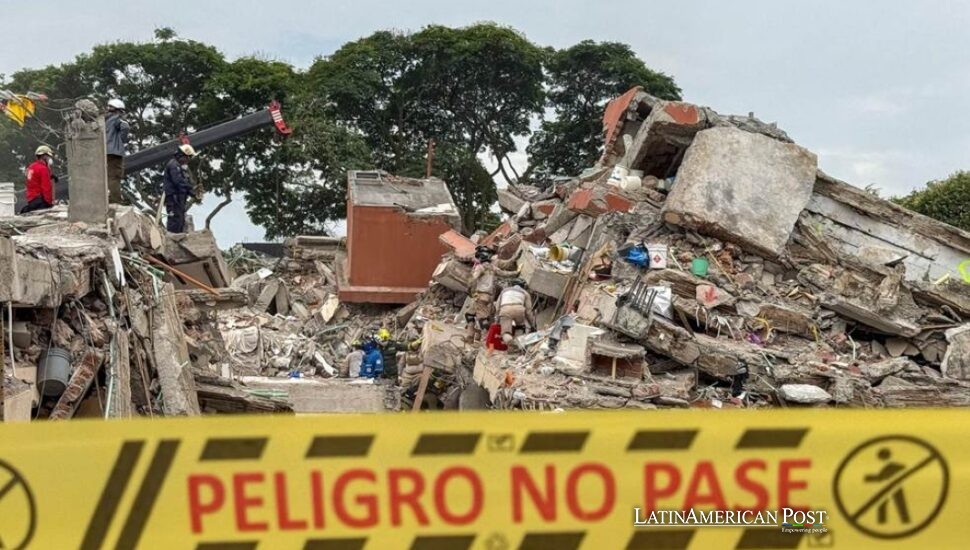
One week after a magnitude 7.4 earthquake tore through western Colombia, rescue crews still search, families sleep beneath plastic, schools remain closed, and a new government confronts a $9.5 billion reconstruction bill that will test the country’s deepest inequalities anew.
The Rescue Gives Way to Reckoning
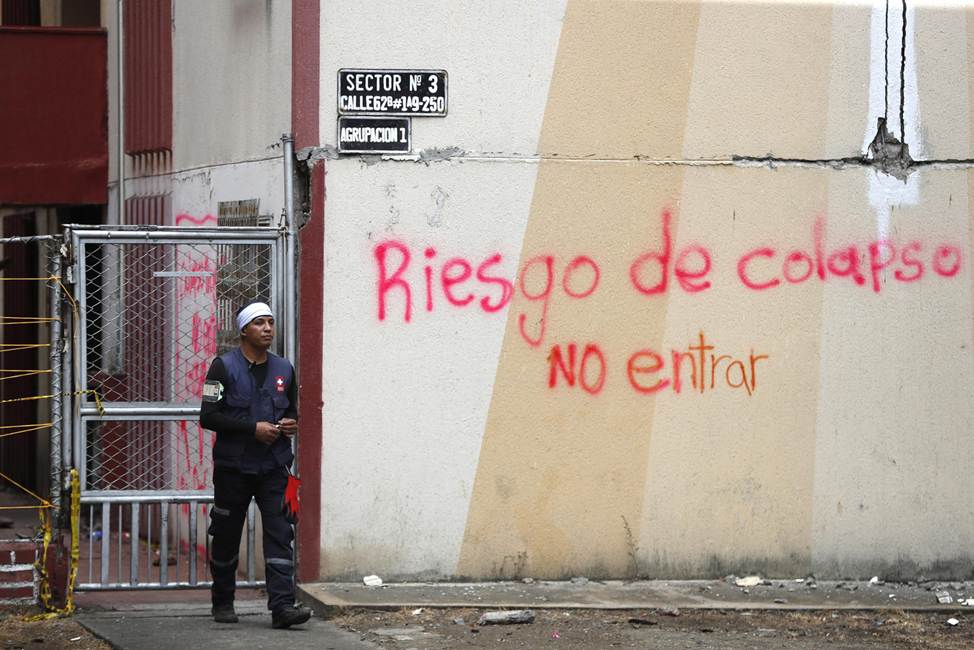
Rain tapped against the plastic roofs in Chiminangos, and every drop sounded like another warning. Families in this battered Cali neighborhood had lost apartments, furniture and privacy. Now they slept in tents, ate from communal pots and waited to enter condemned buildings long enough to recover documents, clothing or an appliance that might still work.
A week after the August 10 earthquake, survival has become a slower struggle. The deeper emergency lives in wet mattresses, school uniforms with nowhere to go, and parents deciding whether scarce cash should cover transportation, medicine, or food.
President Abelardo de la Espriella acknowledged the scale of the task ahead in a nationally televised address Monday night. Reconstruction, he said, will be “hard” and will “require resources,” according to EFE. His government estimates the cost at 30 trillion pesos, roughly $9.5 billion, and has declared an economic emergency while promising housing subsidies and financial relief.
The figure equals about 2.4 percent of Colombia’s roughly $400 billion nominal economy. That burden lands on a country already facing fiscal deficits, stubborn inflation and weak investment. It also arrives days after de la Espriella took office, turning disaster into an immediate test of political credibility.
The government’s preliminary toll stands at 289 dead, 4,187 injured and 143 missing. The National Institute of Legal Medicine, however, reported receiving 304 bodies and identifying 300, including 22 children. Of those identified, 139 came from Cali and 107 from Pereira.
De la Espriella said his administration would release only consolidated numbers “out of respect for the victims and their families,” EFE reported. The uncertainty reflects difficult geography. San José del Palmar, the Chocó municipality at the epicenter, depends on fragile roads and difficult terrain. Damage extends through Valle del Cauca, Risaralda and Caldas, while disrupted routes complicate the movement of rescuers, bodies and supplies.
Rain Falls on the Temporary City
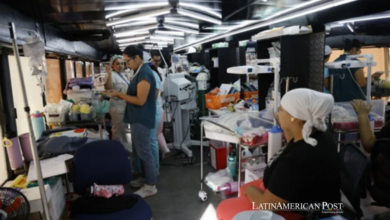
Rains beginning Sunday forced pauses in debris removal and soaked improvised shelters. In Pereira’s Olaya Herrera park, families covered tents with plastic as the ground turned to mud. Flooding reached the San Jorge University Hospital, a reminder that institutions expected to absorb the emergency can themselves become victims.
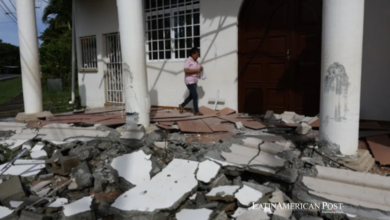
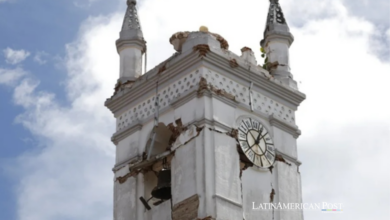
Preliminary assessments describe damage to 407 roads, 44 vehicle bridges and five local airports across 15 departments. Some 285 health centers have collapsed or suffered serious impairment. More than 26,000 homes were destroyed, with housing losses estimated at 24.5 trillion pesos and broader infrastructure damage at another 5.5 trillion.
Reconstruction cannot be reduced to pouring concrete. Western Colombia contains crucial agricultural, industrial and transportation corridors. The affected zone overlaps the coffee heartland and links major markets with Pacific routes. Broken bridges and blocked roads can delay food, fuel and exports, raising prices far beyond the towns where buildings fell.
For an economy driven largely by household consumption and services, the shock cuts several ways. Displaced families stop making ordinary purchases. Businesses lose customers and workers. Agricultural producers face longer routes and higher freight costs. Public money moves toward emergency shelter and away from investment. Reconstruction may later create jobs, but only after financing and access are secured.
The economic emergency gives the government room to move faster, but it also concentrates power when oversight matters most. Colombia’s history includes public works delayed by corruption, political rivalry or the abandonment of peripheral regions after attention shifts. Chocó, long marked by poverty and weak infrastructure, enters reconstruction from accumulated disadvantage.
Humanitarian aid is arriving. Private cars and trucks marked “Ayuda humanitaria” carry food, water, medicines, blankets, mattresses and hygiene supplies. Colombia has received more than 220 tons of international assistance and rescue teams from Israel, Ecuador and the United States. Washington has sent nearly ten tons of shelter, water and sanitation materials and pledged $26.5 million.
Yet aid can stabilize a crisis without correcting the conditions that made it so destructive. A tent keeps out some rain. It does not replace a deed, a livelihood or a neighborhood.
Reopening Schools Will Measure Recovery
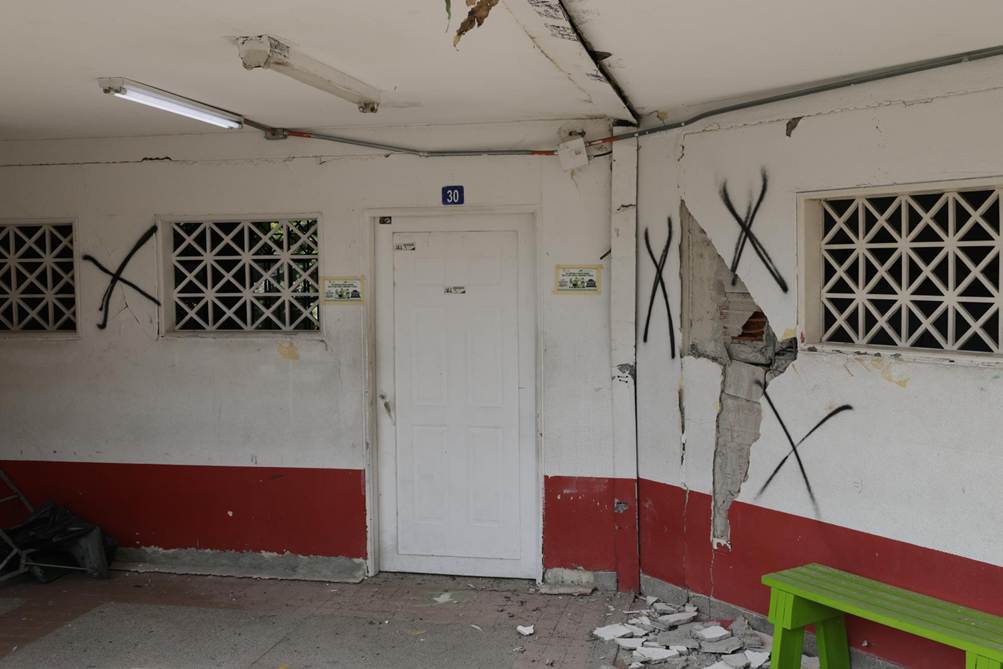
Education may become the clearest test of whether Colombia rebuilds fairly. More than 3,200 schools have reportedly sustained damage, while tens of thousands of students remain out of class. In Pereira alone, more than 58,000 children are temporarily without school after authorities judged conditions critical in 165 campuses.
The proposed shift to online learning exposes another fault line. Many rural communities have neither reliable signal nor enough electronic equipment. A digital substitute that works in Bogotá can be meaningless in a mountain settlement where families share one phone and electricity is uncertain. The earthquake did not create that divide. It exposed it.
Shakira brought international attention to the crisis during a visit to Quibdó with U.S. philanthropist Howard Graham Buffett. The Colombian singer pledged “all her personal efforts” to rebuilding the Technological University of Chocó and announced plans with Buffett to construct ten new schools in the department.
“Every day that children do not go to school is a day when we pause their future, and we cannot allow that,” Shakira said, according to EFE, during a visit to affected areas and the Carrasquilla Industrial Technological School, Chocó’s largest.
Global Citizen and concert promoter Live Nation will each contribute $500,000, creating a $1 million school reconstruction fund. Shakira also urged Canada, Japan, the United Kingdom, companies and foundations to join the recovery. Her appeal recognizes a hard truth: rebuilding Chocó cannot depend on celebrity philanthropy, but philanthropy can force the nation to look at a region it often overlooks.
The government now faces a choice larger than replacing what was lost. It can rebuild the same vulnerable roads, schools and neighborhoods, or treat the earthquake as a demand for stronger institutions and a less unequal geography.
In Chiminangos, that language does not dry a mattress. In Pereira, it does not reopen a classroom. In San José del Palmar, it does not shorten the road to help. But those wet tents and closed schools are where reconstruction will be judged, long after rescue crews leave.
Also Read: Colombia Revives Its Disaster State as Earthquake Bill Comes Due