Cuba Opens Solar Charging Station Amid Its Deepening Power Crisis
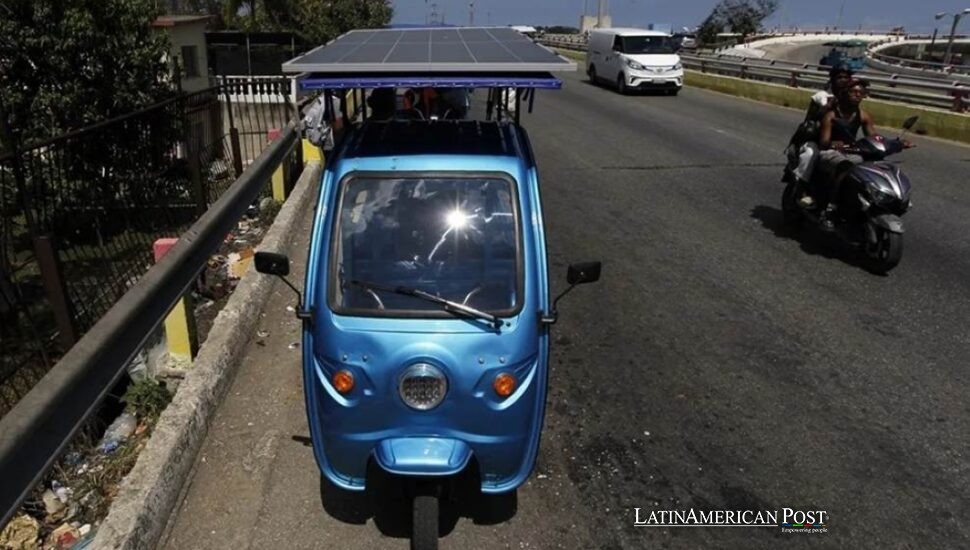
Cuba’s first fast solar charging station rises beside the National Highway as blackouts stretch beyond 20 hours, offering electric drivers a rare island of power while exposing the enormous distance between one private innovation and the country’s collapsing energy system.
A Bright Station in a Dark Country
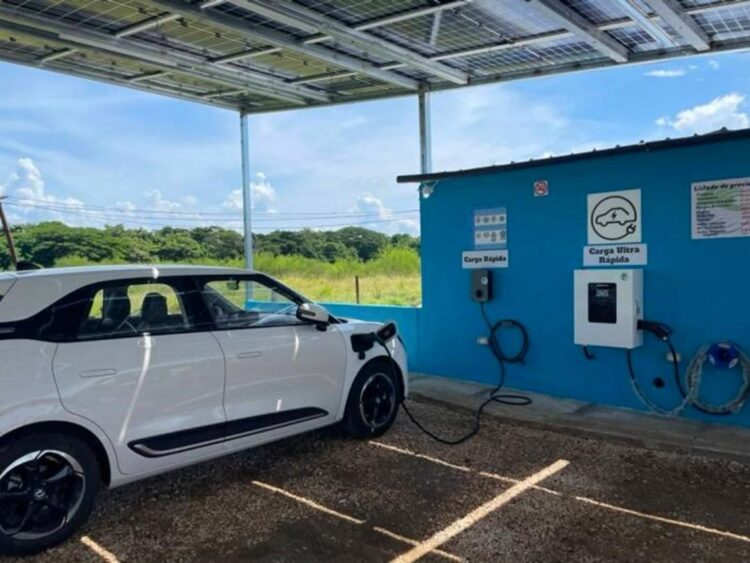
Five kilometers outside Santa Clara, the future sits beneath solar panels. Cars leaving Cuba’s National Highway can connect to the country’s first station offering fast and ultrafast charging through plugs compatible with several international standards. The electricity comes from the sun.
The most revealing detail, however, is not the speed. It is the separation.
Built and operated by the private small business Solguara, the station functions completely outside Cuba’s National Electric System. It does not wait for an aging thermal plant to restart or imported fuel to reach port. EFE reported that the facility can also charge cellphones, rechargeable fans, and lamps for free, turning a transportation project into roadside emergency infrastructure.
That smaller service may matter more to many Cubans than electric cars do. During outages lasting 20 hours or longer, a charged phone can mean the ability to contact relatives or get news about electricity restoration. A fan can make a hot night tolerable. A lamp can keep a kitchen, stairwell, or sickroom usable.
The station carries two stories at once. It is a polished sign of technological adaptation, but it also exists because the ordinary power system cannot reliably provide ordinary power. Its independence is its greatest engineering strength and, politically, its sharpest criticism of the grid around it.
Calling the site a “solinera,” a solar counterpart to a gas station, gives the project a cheerful Cuban practicality. Yet it is not simply an ecological novelty. In a country where electricity has become unpredictable, decentralized power is now a way of keeping daily life moving.
A New Machine Built on an Old Crisis
Cuba’s energy emergency did not begin with the nationwide grid collapses of 2024. It has been developing for more than three decades, through a cycle of dependence, temporary rescue, deferred investment, and renewed shortage.
The Soviet Union’s collapse stripped away the subsidized oil and trade sustaining Cuba. During the Special Period, fuel imports fell by nearly 46 percent between 1990 and 1993, while electricity generation fell by 17.1 percent between 1990 and 1995. Provincial blackouts stretched as long as 16 hours. Cuba adapted, but never eliminated the vulnerability exposed then.
Venezuela later became the new lifeline. A 2000 agreement committed Caracas to sending 53,000 barrels of oil daily in exchange for Cuban services. As Venezuela’s economy deteriorated, average deliveries fell from about 99,000 barrels per day in 2013 to roughly 57,000 barrels per day in 2021. The dependency had changed flags, not structure.
Then the machinery failed more often. Cuba’s thermal plants have endured decades of use, inadequate maintenance, scarce replacement parts, and hard-currency shortages. Since 2020, electricity generation has fallen by about one-quarter, while thermal plants and distributed generators have lost roughly 900 megawatts of capacity. In 2025, daily deficits averaged 1,531 megawatts and peaked at 2,054.
Those numbers dismantle a convenient explanation. Cuba is not suffering because its population consumes electricity extravagantly. Annual use stands near 1,414 kilowatt-hours per person, well below the Latin American and Caribbean average of 2,334. The system strains under comparatively modest demand. This is energy poverty, not excess.
External pressure and domestic failure reinforce each other. U.S. sanctions complicate fuel purchases, shipping, financing, and access to equipment. Decades of delayed maintenance and weak investment also left the grid unable to absorb shocks. Researchers at Columbia University’s Cuba Capacity Building Project argue that long-term choices favored other construction, including the development of underoccupied hotels, while electrical infrastructure deteriorated. Neither explanation cancels the other. Together, they describe a system with almost no margin for error.
The Green Escape Could Become Another Divide
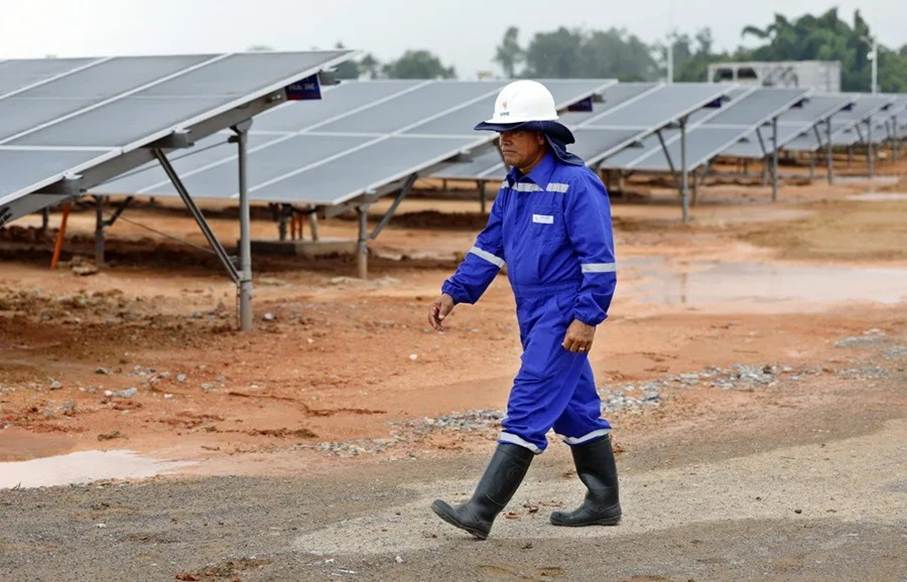
The Santa Clara station arrives as Cuba rewrites rules around transportation and renewable power. Measures effective Aug. 11 permit individuals to import electric vehicles with renewable charging systems and expand incentives for solar equipment. Photovoltaic systems, essential components, and renewable-powered vehicle chargers can receive customs advantages.
Solguara is not operating alone. Another solar charging point in the Virginia community uses 56 panels, provides 30 kilowatts of power, and stores 60 kilowatt-hours of energy. Additional sites serve a 12-story residential building and the José Martí and Ciro Redondo neighborhoods. Together, they suggest resilience built from smaller power islands rather than complete dependence on one grid.
But decentralization can reproduce inequality as easily as it reduces vulnerability. Cubans with dollars, imported vehicles, batteries, panels, and private property can purchase independence. Families living on salaries or pensions may remain tied to the blackout schedule. Solar power can become a public transition, or a collection of private escape routes.
That is why free charging for phones, fans, and lamps is more than a charitable extra. It partly bridges the gap between an electric-vehicle owner and a resident stranded with a dead battery in a dark apartment. Still, a single station cannot preserve refrigerated food across a city or keep hospitals and water pumps operating during a national collapse.
Official figures reveal the distance ahead. EFE cited Energy Ministry reports stating that fossil fuels still account for 95 percent of the national energy matrix and that renewable generation could reach 6.3 percent this year. Other ministry estimates put renewables near 10 percent at the end of 2025 and target 15 percent in 2026. Both remain far from Cuba’s goal of 24 percent renewable electricity by 2030.
The solinera is neither salvation nor spectacle. It is a working prototype for what Cuba increasingly needs: local generation, battery storage, flexible connectors, private initiative, public access, and systems capable of operating when the larger system fails.
On the highway outside Santa Clara, the panels keep collecting sunlight whether the national grid is stable or dark. An electric car makes the project look futuristic. The free charge for a lamp tells the deeper Cuban story.
Also Read: Colombia Finds Water Democracy Beneath La Mojana’s Ancient Raised Fields