Panama Turns Caribbean Sargassum Crisis Into Unexpected Weapon Against Deadly Malaria Threat
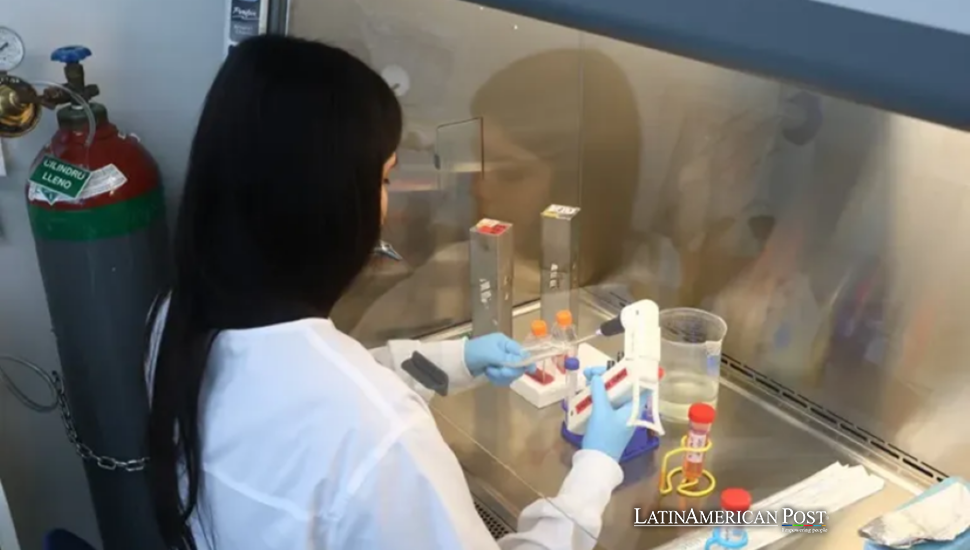
A school science project in Panama has transformed an environmental nuisance into a promising biomedical lead. Researchers found that Caribbean sargassum extracts strongly inhibited Plasmodium falciparum, raising hopes that a regional ecological crisis could someday contribute to fighting malaria.
From Beach Menace to Laboratory Surprise
It began with curiosity, not a grand medical strategy.
In 2023, two researchers and a high school student in Panama started studying sargassum, the floating brown macroalgae that has become one of the Caribbean’s most visible environmental headaches. They were working through the Young Scientists Program of Panama’s National Secretariat of Science, Technology and Innovation, better known as Senacyt.
What followed was unexpected.
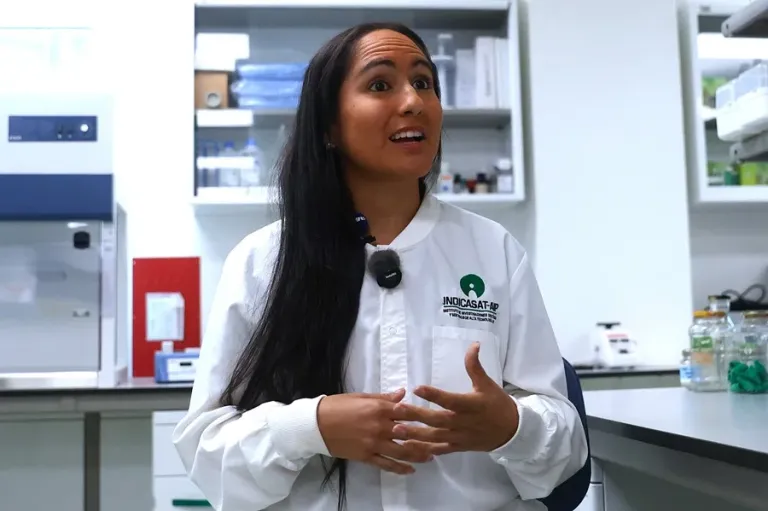
Lorena Coronado, a biotechnology researcher at Panama’s Institute for Scientific Research and High Technology Services, told EFE that the team watched in astonishment as compounds extracted from the algae showed strong activity against Plasmodium falciparum, the parasite responsible for the deadliest form of malaria.
The striking part was not only that the parasite’s growth was inhibited.
The extract also appeared not to harm healthy cells in the initial laboratory testing.
“It was a wow,” Coronado told EFE, describing the result as especially encouraging because the compound was highly active against the parasite without showing the same toxicity toward normal cells.
That combination matters. Many substances can kill parasites in a laboratory dish. Far fewer do so selectively enough to justify the long, expensive road toward a potential medicine.
The research remains preliminary. No one should interpret the findings as evidence that drinking sargassum tea can prevent malaria. The scientists still need to identify the exact active compounds, understand their mechanism of action and eventually test safety and efficacy in animals before any human application could even be considered.
Still, the discovery is significant precisely because it emerged from something so ordinary.
The researchers collected fresh Sargassum fluitans and Sargassum natans from Panama’s Caribbean coast, dried it, ground it and prepared an aqueous extract. Coronado described the process almost playfully as making a little tea.
The project initially went in another direction. The team first tested the extract against cancer cells. It did not produce the result they hoped for.
That failure hurt.
Then they tried malaria.
The disappointment became excitement.
Their findings were published in July in Integrative and Comparative Biology, a journal from Oxford University Press, giving the study an academic platform beyond Panama.
A Caribbean Problem With Global Stakes
The scale of the disease they are targeting makes the result more than a laboratory curiosity.
In 2024, malaria caused an estimated 282 million cases worldwide and roughly 610,000 deaths, according to global health figures cited by the researchers. Africa carried the overwhelming burden, accounting for about 95 percent of cases and deaths.
The Americas accounted for a much smaller share, with more than 536,000 cases and 136 deaths.
Yet Plasmodium falciparum remains particularly feared because it can produce cerebral malaria, a severe neurological complication that can progress rapidly and kill without prompt treatment.
That gives the Panamanian work an unusual geopolitical dimension.
Latin America is not the center of the global malaria burden, but the region contains many of the ecological conditions in which malaria persists: tropical forests, vulnerable rural communities, remote river systems and weak public health access in border zones.
The Amazon basin remains especially important, but Panama occupies a different strategic geography.
It connects South and Central America, sits between two oceans and has long served as a biological, commercial and migratory crossroads. A biomedical discovery emerging there carries symbolic weight because it reverses the usual direction of scientific dependency.
Instead of importing a technology developed elsewhere, Panamanian researchers are studying a regional environmental problem as a possible source of a globally relevant treatment.
That matters in Latin America, where scientific institutions often operate with limited budgets and where promising research can stall after publication because funding for the next experimental phase never arrives.
Coronado and her colleagues are already confronting that reality.
The team needs financing to determine exactly how the sargassum extract affects the malaria parasite. A later phase would involve testing in mice. Without sustained support, the project could become another example of a promising regional discovery that stops before reaching its most important questions.
There is another layer.
Sargassum itself has become a transnational Caribbean crisis.
Since around 2011, massive blooms have increasingly washed ashore across the region, affecting Mexico, the Dominican Republic and other Caribbean coastlines. Once piled on beaches, the algae begins decomposing rapidly and can release gases such as hydrogen sulfide and ammonia, creating health concerns for workers and nearby residents.
Tourism suffers too.
Beaches turn brown. Swimming becomes difficult. The smell can drive visitors away.
For economies that depend heavily on coastal tourism, sargassum is not merely ugly. It is expensive.
That means the algae connects climate, health, science and development in one strange package.
Latin America’s Waste Could Become Scientific Capital
Noemí León de Santos, the biology teacher and algae researcher who helped launch the project, told EFE she chose sargassum because, as of 2023, there was little record of the species reaching Panama’s Caribbean coast being investigated against disease.
Her instinct reflects a larger scientific opportunity.
Latin America contains extraordinary biodiversity, but much of that biological wealth remains underresearched or is studied primarily by institutions outside the region.
Sargassum complicates that picture because it is both biological resource and ecological burden.
Warmer waters, changing ocean conditions and nutrient flows have contributed to massive blooms across the Atlantic and Caribbean. That creates costs, but it also creates biomass.
If researchers can identify useful compounds within that biomass, the economics change.
The problem does not disappear, but part of it may acquire value.
That possibility should be handled carefully. Turning sargassum into a commercial resource will not automatically solve beach accumulation or climate pressures. Harvesting at scale can also produce environmental effects of its own.
But the scientific logic is powerful.
A region overwhelmed by unwanted organic material may contain within that material pharmaceuticals, biomaterials or chemical compounds not yet understood.
And then there is Isaac Almanza.
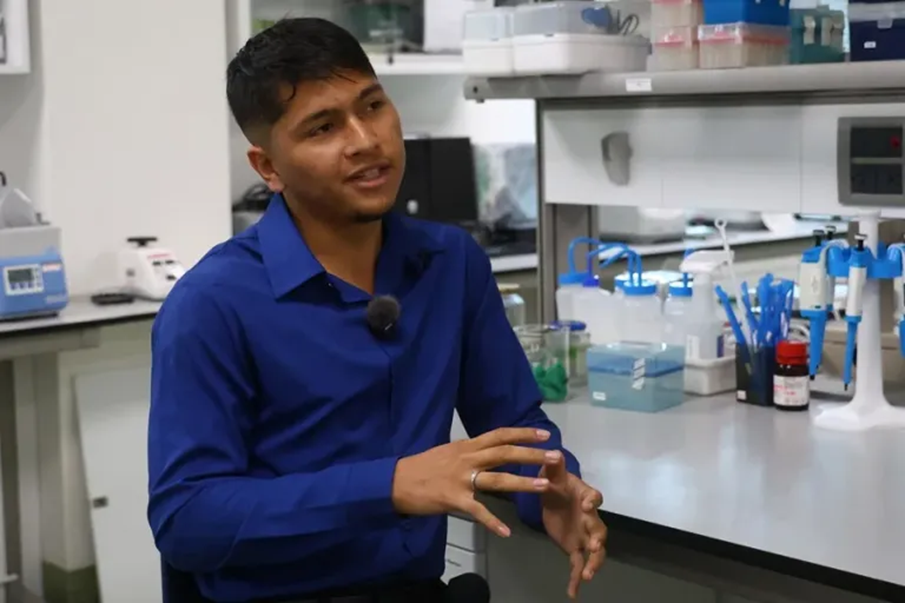
He was still finishing high school when he joined the project. Now 21 and studying at university, he told EFE that the experience awakened his curiosity and made him want to continue researching.
His story may ultimately be as important as the compound itself.
Latin America frequently loses talented young scientists because research careers appear uncertain, underfunded and distant from everyday life. Programs that place students inside real laboratories before university can change that calculation.
Isaac entered a project about seaweed.
He ended up helping investigate a parasite responsible for hundreds of thousands of deaths.
That is the deeper promise of the Panama study.
Its greatest discovery may eventually be a molecule.
Or it may be something broader: proof that a regional environmental crisis, a public research laboratory and the curiosity of one student can combine to produce knowledge with global consequence.
Also Read: Peru Unearths Chan Chan Tombs and Finds Power Has an Afterlife Too