Latin America Chases Space Race Billions but Must First Deliver on Earth
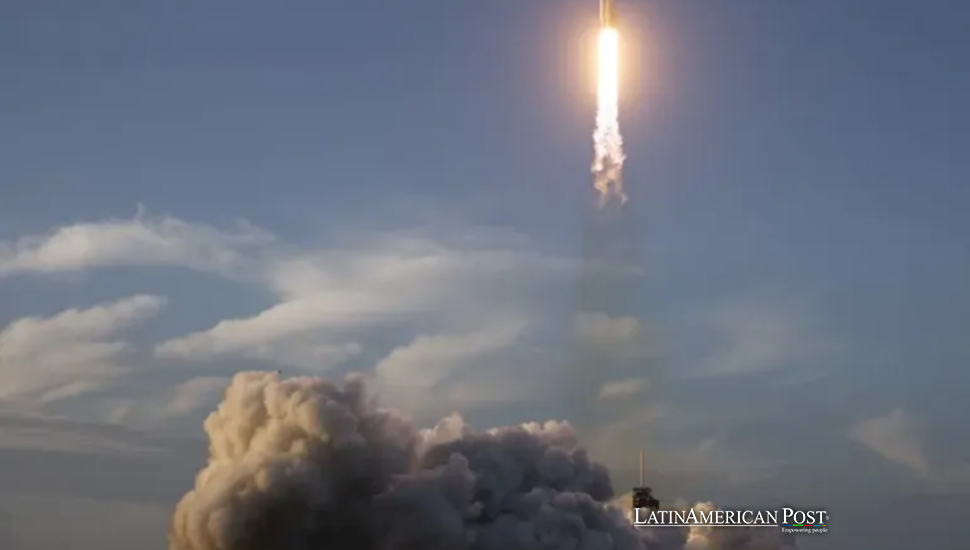
From Ecuador’s equatorial coast to Brazil’s launchpads, Latin America is courting a booming space economy. But behind ambitious investment proposals lies a harder question: will rockets build local prosperity or merely carry foreign technology over another strategically valuable landscape?
Geography Offers a Head Start
In a chain hotel restaurant in Guayaquil, Robert Aillón described a future considerably larger than the room. The former banker told Americas Quarterly about plans for a private spaceport near Ecuador’s commercial capital. His company, Leviathan Space Industries, was considering three sites. “What’s coming is big,” he said.
The physics is attractive. Guayaquil lies roughly two degrees south of the equator, where Earth’s rotation reaches about 1,040 miles per hour. That rotational assistance can reduce launch fuel requirements and increase payload capacity. Yet the same coastal economy attracting aerospace entrepreneurs is struggling with organized crime around its seaports. Geography offers an advantage, not immunity from life below.
The World Economic Forum and McKinsey project a global space economy worth $1.8 trillion by 2035, compared with $630 billion in 2023. That implies roughly 9% annual growth. It does not mean launch operators can collect that entire sum, or that every new spaceport will find enough customers.
Aillón described his company’s $800 million fundraising target. The Dominican Republic has announced a roughly $600 million project with U.S. company Launch on Demand. Peru’s proposal carries a $270 million estimate. Together, that is approximately $1.67 billion in ambitions, not completed investment. Fundraising targets and projected construction costs should not be mistaken for cash already secured.
The distinction matters. A launchpad without customers is infrastructure waiting for an economy.
Brazil Knows the Cost of Waiting
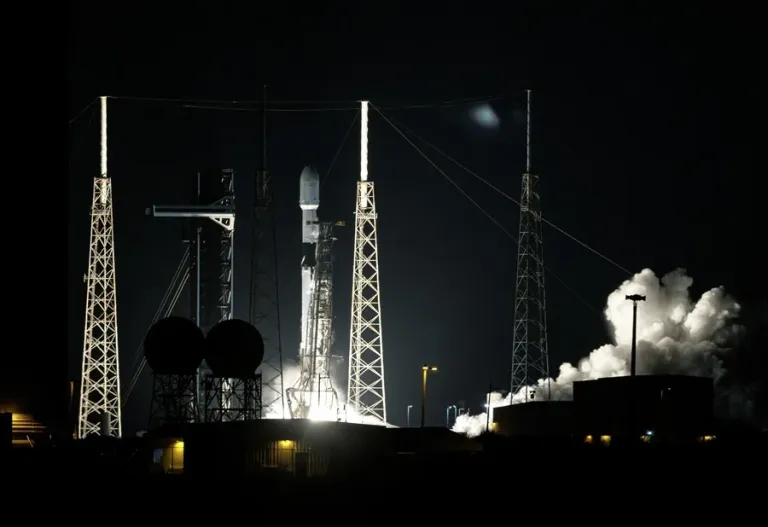
Brazil’s Alcântara center has offered advantageous latitude since its creation in 1983. In 2003, a launchpad explosion killed 21 engineers and technicians. Any talk of frustrated potential must begin with those lives, not with revenue projections. In December 2025, an Innospace rocket crashed less than a minute into the facility’s first commercial launch.
Alcântara demonstrates why location cannot substitute for sustained technical capability. Brazil’s National Confederation of Industry calculated that public space funding amounted to $47 million in 2023, just 0.002% of GDP. Put differently, the country allocated about $20 for every $1 million its economy generated.
That mismatch between strategic aspirations and financial support is revealing. One year’s budget cannot explain decades of difficulty, but the scale raises an unavoidable question: who sustains the engineers, testing and institutional knowledge between launches?
Brazil’s 2024 space activities law seeks greater legal certainty for operators. Regulation is not the enemy of this industry. As space policy specialist Victoria Valdivia told Americas Quarterly, attractive ventures still require an organizational framework. An investor presentation cannot replace environmental permissions and flight rules.
The Dominican proposal illustrates the same dependence in a different way. Launch on Demand chief Burton Catledge described presidential intervention that helped open bureaucratic doors. He also pointed to government-promoted port and airport development. Private launch financing, in other words, does not eliminate the need for functioning public institutions. Pedernales, at roughly 18 degrees north, also shows why proximity alone is insufficient. Catledge cited open water, low population density, and favorable winds. A site must work as a complete logistics and safety system, not simply look promising on a map.
The company’s agreement with Santo Domingo’s INTEC to train aerospace specialists offers a more tangible test of development. Can a Dominican student gain a lasting technical career, rather than watch imported expertise arrive for a launch and leave afterward? The answer will matter long after the inauguration photographs.

Sovereignty Is More Than a Launch
French Guiana already shows that reliable launches from South America are possible. Europe’s spaceport began operating there in 1968. But its success also exposes the distinction the new ventures must confront: having launch infrastructure on the continent does not mean Latin American countries control the technology or capture its highest-value work.
Above these commercial calculations sits a familiar geopolitical struggle. A U.S. congressional report cited by Americas Quarterly counted 11 Chinese satellite communications and radio telescope facilities in Latin America. Washington worries about military applications. Such concerns require scrutiny, but they do not establish that every scientific installation serves a military purpose. According to the reporting, American pressure has complicated Chinese-linked projects in Argentina and Chile. For host countries, the danger is accepting a false choice between technological dependence on Beijing and technological dependence on Washington. Changing the foreign partner does not automatically change who controls the knowledge.
Peru provides a useful reminder to separate milestones from promises. NASA’s November 2024 agreement concerns studying a potential suborbital research campaign, not guaranteeing a commercial orbital spaceport. Peru’s broader proposal still requires technical and legal assessment. A declaration of national interest is a political decision, not proof of commercial viability.
The region’s existing satellite production in Argentina and Brazil points toward a less theatrical payoff: assessing crops and improving disaster management. These applications connect orbital capability to decisions made by farmers and public officials. Their value need not wait for interplanetary travel.
Latin America should judge this race by what remains on the ground. Contracts that develop local expertise and protect public oversight would make strategic geography genuinely productive. Otherwise, the region risks becoming a landlord beneath somebody else’s technological future. The rocket may rise. The harder achievement is ensuring the country rises with it.
Also Read: Honduras Turns Lasers on Copán’s Hidden Maya Past Before More History Disappears