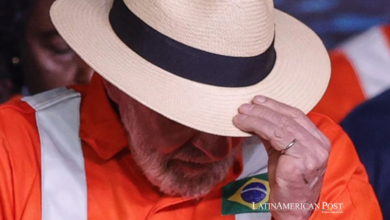
Brazilian Dos Santos Hurdles into Latin America’s World Record Club

Alison dos Santos’s stunning 45.80 in Zurich joins Brazil to a rare Latin American record circle. Yet celebrating him alongside Javier Sotomayor and Yulimar Rojas requires a correction: another regional athlete still owns a world mark beyond the Olympic spotlight.
Fourteen Hundredths, Five Years
The number was 45.80. Alison dos Santos went looking for his coach.
“I was the one running, but he is the one who made this possible,” he said in comments published by the Diamond League. After the fastest 400 meters hurdles race anyone had ever run, the Brazilian wanted to find Felipe de Siqueira, the man who had helped him become this athlete.
At Zurich’s Letzigrund Stadium on Thursday, August 27, dos Santos broke Karsten Warholm’s world record by 0.14 seconds. The Norwegian was there, finishing second in 46.69. Nigeria’s Ezekiel Nathaniel followed in 47.50. The new mark remains subject to World Athletics’ usual ratification procedure.
Fourteen hundredths sounds almost negligible. It represents a reduction of roughly 0.30 percent from Warholm’s 45.94, set at the Tokyo Olympics in 2021. But dos Santos also removed 0.49 seconds from his own best, the 46.29 that won the 2022 world title. At this level, cutting more than one percent from an already exceptional lifetime best is a substantial leap.
The victory margin, 0.89 seconds, tells a different story from the record margin. One measures Thursday’s separation from Warholm. The other measures separation from everyone who has ever contested the event. Winning comfortably and rewriting history are not the same achievement. Dos Santos did both.
Tokyo had already demonstrated the difference. His 46.72 in Tokyo earned bronze despite beating Kevin Young’s former world record of 46.78, which had survived nearly 29 years. Three men outran that old standard in one Olympic final. The Brazilian still finished third.
He attributed the breakthrough to changed training and racing, specifically a faster start and a stronger finish. That explanation matters: the performance was something he and his coach worked to construct, not simply await.

The Club Has Another Member
His arrival among record holders creates a powerful regional portrait: dos Santos beside Cuba’s Javier Sotomayor and Venezuela’s Yulimar Rojas. Calling him the third current Latin American record holder, however, is accurate only with a defined boundary.
For individual disciplines on the Olympic stadium program, that trio holds the outright world standards, counting the Brazilian’s pending mark. It is not a complete count across all senior World Athletics record categories.
Sotomayor cleared 2.45 meters in Salamanca on July 27, 1993. His record was already nearly seven years old when dos Santos was born. It has now survived 33 years, proof that being a current record holder does not require remaining an active competitor.
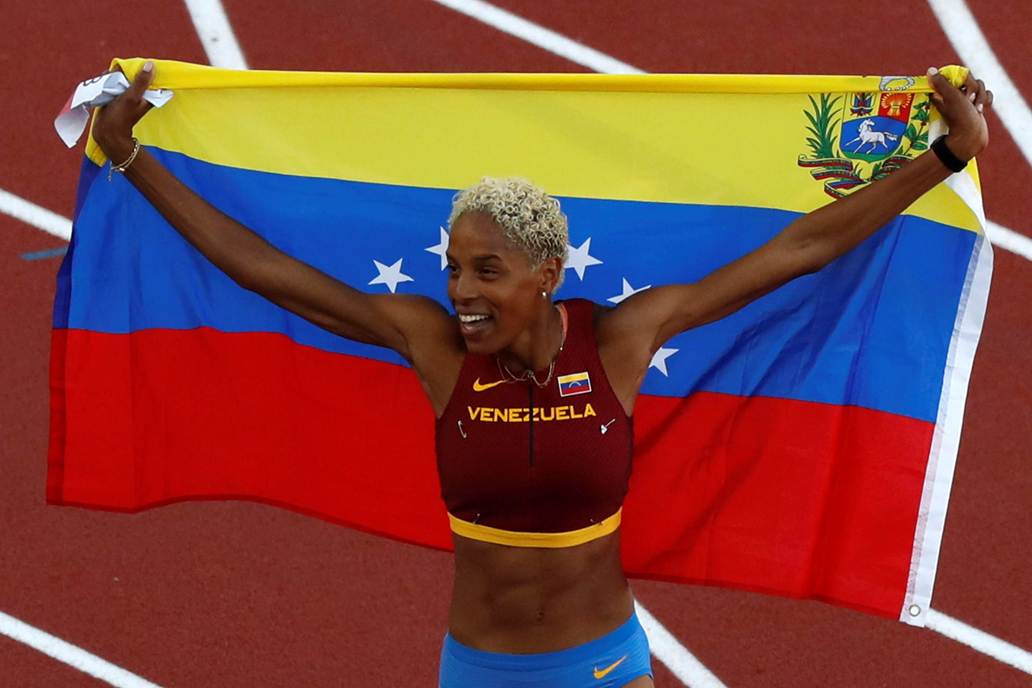
Rojas jumped 15.74 meters in Belgrade on March 20, 2022. Although achieved indoors, that is the outright women’s triple jump world record, not just a separate indoor achievement. Her 15.67 at the Tokyo Olympics remains the longest jump achieved outdoors. The roof does not diminish the greater distance.
Then comes the name missing from the three-person celebration. Mexico’s Bernardo Segura still holds the men’s 20,000-meter track racewalking record, 1:17:25.6, established in Bergen on May 7, 1994. World Athletics explicitly lists it as a world record.
That means 50 laps of a standard track, not the separately recorded 20-kilometer road event. Including Segura brings this broader tally to four, with dos Santos awaiting ratification. An event’s smaller television audience does not erase its place in the record book.
The People Behind the Clock
Brazil, too, has a longer history than a sudden breakthrough suggests. Its athletics federation identifies dos Santos as the country’s fifth senior world record setter, following three triple jumpers and marathoner Ronaldo da Costa. He is its first in a senior track event.
The distinction restores perspective. Adhemar Ferreira da Silva first matched the triple jump world record in 1950. Da Costa’s 1998 marathon breakthrough belonged to the roads. Dos Santos has opened a different chapter, not invented the book.
His route began in a community sports project in São Joaquim da Barra. Today he represents São Paulo’s Pinheiros club and trains with Siqueira in Clermont, Florida. The federation’s account credits a support team and the Brazilian Olympic Committee alongside the athlete and coach.
Rojas offers a parallel rather than an identical story. She moved to Guadalajara, Spain, to train with Cuban Olympic champion Iván Pedroso. Latin American excellence here travels through relationships: local discovery, regional knowledge and access to training beyond national borders.
Longevity complicates national celebration. Two of these four marks date from the 1990s. Their survival demonstrates extraordinary individual performance, not necessarily the present health of the systems that produced it. A record book is not an infrastructure audit.
These careers do not prove that difficult beginnings automatically produce champions. They suggest the opposite: ability needs someone to recognize it, then the time and resources to develop. Celebrating an exceptional athlete should sharpen interest in the opportunities that made the exception possible.
The Diamond League final in Brussels on September 4 and 5 presents the next contest. A world record does not award the next trophy in advance.
But Thursday changed the reference point. Sotomayor’s bar remains high, Rojas’s landing remains distant, and Segura’s laps remain unmatched. Now a Brazilian has supplied another number everyone else must chase. After making history, he looked for his coach.
Also Read: Brazil’s Chapecoense Bets on Carvalho While Relegation Shadows Gather Again